
From Diane Ravitch’s blog — incredibly important response to slight of hand “research”:
David Berliner Responds to Economists Who Discount Role of Child Poverty.
From Diane Ravitch’s blog — incredibly important response to slight of hand “research”:
David Berliner Responds to Economists Who Discount Role of Child Poverty.
Filed under Data, politics, Shared Posts, Social Justice
Opponents of current reform trends in education (and even just those with some skepticism) have had few ways to get their messages out in the past decade. While charter school chains have found wealthy investors and enthusiastic politicians, public school teachers have traditionally relied upon their unions to publicly advocate on their behalf. However, until very recently both the AFT and the NEA have openly supported reforms such as the Common Core State Standards despite rank and file concerns, and both unions offered endorsements to Democratic candidates who have openly courted the same money that has backed charter school expansion, CCSS and evaluating teachers by high stakes tests, many teacher concerns have had limited means to reach the public. Add to that a media that has seemed completely incapable of asking a single teacher about the combination of reform forces that have potential to greatly damage public education, it has been lonely work to try to raise alarms.
That may be changing.
First, there are some in the media actually asking hard questions about how such a narrow slate of characters have managed to push nearly all 50 states in the same curriculum direction without having a robust public debate. The luster of charter schools as the proposed cure all for urban education is coming under question with more and more reporting of the opportunists who have rushed into the poorly regulated sector of education. As Common Core has begun to reach classrooms with plans to begin mass testing of students and to implement value added measures for teacher evaluations, union leaders have backed away from initial support of the standards themselves. They are joined by a small but growing movement of parents at the grassroots who are choosing to “opt out” their children from the increasing testing regimen that has characterized education reform of the past decade and a half.
These are all developments that promise to change the direction of our education reform discourse. But it is likely not enough. Proponents of Common Core, mass testing, test-based teacher evaluations and the rapid expansion of charter schools have the ears of major media figures, federal and state governments and are able to call upon deep pocketed allies to pummel those who try to slow down their goals. Eva Moskowitz’s allies unleashed more than 3 million dollars in a 3 week advertising blitz against New York Mayor Bill de Blasio when he dared give her only 80 percent of what she wanted. They also seem to recruit new front people easily — former NBC and CNN personality Campbell Brown has joined Michelle Rhee’s campaign against teacher job protections by taking the Vergara lawsuit on its first cross country tour to New York.
The balance of voices is changing.
The AFT announced the formation of a new lobbying group, Democrats for Public Education that will be chaired by former Ohio Governor Ted Strickland, former Michigan Governor Jennifer Granholm and DNC vice-chair Donna Brazile. Ms. Brazile addressed the AFT convention:
Why does this change the balance? For starters, it says that the leadership of America’s teacher unions is pivoting from hoping that reforms will be both disruptive AND productive to realizing that many reforms threaten the very nature of public education. More importantly? It provides media allies for defending public schools and their students and teachers. Although the research on many reform efforts’ problematic outcomes is solid and growing, voice and access has been much slower. What does Donna Brazile bring that academic research and the concerns of parents and classroom teachers does not? Access. Ms. Brazile’s phone calls get returned. Mr. Strickland and Ms. Granholm are known in all 50 state capitols and Washington. While Bill Gates, Michelle Rhee, Joel Klein and pro-reform politicians have had the media’s ears all to themselves and have, to date, successfully portrayed their opponents as not caring about kids, now there is an organization headlined by well-connected and well-known allies to provide the alternative perspective. In an age of media driven by sound bites 24/7, that matters.
How did Democrats for Education Reform, the hedge-fund financed group that has donated to numerous Democrats in exchange for support of charter school expansion, respond to the announcement? “Welcome to the jungle, baby” was it.
Think about that for a second. They could have written about welcoming a public debate. They could have written about their “disappointment” that such prominent people could not see the value of their ideas, but that they look forward to engaging the public. They could have written a spirited defense of charter school innovation for students.
Instead, they offer what could be Gordon Gekko’s back-up tag phrase. Someone is either arrogant or worried — and someone is not thinking about the kids first and foremost.
Filed under Activism, charter schools, Common Core, DFER, Media, politics, Unions
Valerie Strauss of the Washington Post wrote last week that President Obama and Secretary of Education Arne Duncan had a meeting with teachers over lunch. Her column provided space for the 2007 Arkansas Teacher of the Year, Justin Minkel, to offer his insights into how the meeting went and what the President and Secretary heard from the teachers present. Mr. Minkel, who is a member of both the National Network of State Teachers of the Year and the Center for Teacher Quality and who blogs for Education Week and for CTQ, wrote cogently and intelligently about four key points:
1. There’s Nothing Wrong With the Kids
2. “Responsibility and Delight Can Co-exist”
3. It’s not about good and bad teachers. It is about good and bad teaching.
4. If we want students to innovate, collaborate, and solve real-world problems, we need to make it possible for teachers to do the same things.
These are outstanding points, and I thank Mr. Minkel and his fellow teachers for communicating them directly at such a high level. There are, of course, many other points that the President and his Secretary of Education need to genuinely hear and know. I would like to offer my own four points to build upon these:
1. You are looking for teacher effectiveness in all the wrong places
Teachers matter. Nobody should ever suggest otherwise. But No Child Left Behind and Race to the Top both represent sustained efforts to locate how teachers matter in standardized test scores, and since Race to the Top, the strongest proxy for teacher effectiveness written into state and federal policy has been annual student progress on standardized testing. This is a flawed approach for several reasons. To begin with, the tests that are designed to demonstrate if a student has mastered a body of knowledge or a set of skills are designed for that purpose and that purpose only. As Dr. Nunoz of Concordia University Chicago notes, testing and measurement is a precise field and it is improper and inaccurate to use an examination for a different purpose because it would not be designed the same way. The American Statistical Association released a statement on value added measurements earlier this year that clearly stated that the association does not believe any examination currently used to measure teacher effectiveness meets the strict criteria necessary for such a test, and they noted that most studies on VAMs find that teachers’ input only accounts for between 1-14% of the variability among student results on such tests. Looking for teacher effectiveness in the results of standardized examinations is essentially playing dice with teachers’ futures.
Even the research that claims such models are useful is suspect. As Dr. Jesse Rothstein of U.C. Berkeley found, even the Gates Foundation funded research on “Measures of Effective Teaching” makes claims that are poorly supported by their own data. Despite the MET study’s endorsement of VAMs, Dr. Rothstein notes that “teacher evaluations based on observed state test outcomes are only slightly better than coin tosses at identifying teachers whose students perform unusually well or badly on assessments of conceptual understanding (p. 5),” and goes on to note that teachers whose students did well on standardized exams did far less well on measurements of critical thinking. Using standardized examinations as a measure of teacher effectiveness can reward a weak teacher who focuses on test preparation and punish a highly skilled teacher who emphasizes higher order thinking and creative problem solving.
Teachers, of course, do make a difference for students. And there are teachers who do not teach well, and there are teachers who excel at the work. But the impact of that teaching is simply poorly represented in paper and pencil standardized examinations. It can be found in student produced artifacts that explore rich content in creative and insightful ways. It can be found in a classroom that “buzzes” with the constant hum of excited work. It can be found in the individual lives of children who are inspired to explore a field they never knew held interest before. It can be found in the children who find a mentor and reliable adult among the body of teachers in a school and stick with their education when nobody thought they could. It can be found the eyes of a student whose talents and passions are affirmed for the first time in his or her young life. This is what happens in millions of classrooms across the country on a daily basis that cannot be captured on a standardized examination.
Taylor Mali, teacher and poet, captures quite a lot of that nicely in this poetry performance:
2. It’s the poverty
You’ve been told by a lot of current reformers that talking about the extraordinary difficulties of educating children born into poverty is just “making excuses” for “bad teachers”. I cannot say not only how much this refrain hurts teachers who have dedicated themselves to working with our most needy students, but also how much it hurts those very same students. It places upon the teachers a burden to, on their own, lift children of poverty to a level playing field with their more advantaged peers. It thrusts upon those children schools that keep cutting out critical thinking and aesthetic enrichment in favor of test preparation because of draconian layoff and reorganization threats while offering the students a brutally unlevel playing field if they graduate. I can think of few practical jokes more cruel than this.
Poverty is not an “excuse”; it is a fact that broadly impacts the earliest childhood of 22% of our young people. It is a fact that we do much less to alleviate poverty’s deprivations than our peer democracies in the West. And because our residential income segregation is very high and has risen by over a third since 1980, it is a fact that poverty disproportionately impacts specific schools and school systems.
And it is not a fact that is fully constrained to those meeting the federal definition of poverty. Income, housing and food insecurity impact the lower middle class, many of whom are clinging to that status solely because of federal assistance programs and the Earned Income Tax Credit. In 2011, only North Dakota and New Hampshire had child food insecurity rates below 15%. The Hamilton Project report also notes that food insecurity can have potentially life long consequences in both educational outcomes and economic security, but teachers are going to be held accountable for children who will suffer lower birth weights, worse lifetime health outcomes and lower economic outcomes because Congress refuses to fund expanded SNAP benefits that amount to less than half of the cost of USS Gerald Ford.
This is not meant to “excuse” those teachers and administrators who give up on children in poverty or near poverty and do not do their utmost to educate, inspire and mentor those in their care. However, it is intellectually and morally bankrupt to ignore that our much lamented gap in PISA can be located almost entirely within our poverty level, and to blame teachers and schools for failing to single-handedly overcome a phenomenon much larger than our schools and about which the billionaires driving today’s “reforms” refuse to discuss.
3. There is no “secret sauce” for educating our most struggling children
Former White House Chief of Staff and current Chicago Mayor Rahm Emanuel opined that Noble Network of charter schools in Chicago had the “secret sauce” for motivating students to perform. An element of that recipe? Collecting $400,000 in disciplinary “fines” from its students since 2008. Advocates of the rapidly expanding charter sector of education like to paper over such practices, but it is vitally important to expose them because while their sponsors and leaders like to hype test performance, they often achieve those results at the expense of up to half of their students.
This should be absolutely clear: with 1000s of charter schools across the country, there must be many schools and teachers who do a genuinely great job with the students in their care. Unfortunately, they are overshadowed by the high profile charter schools that are essentially corporate entities and that tout themselves as miracle factories based upon high test scores. They consume public dollars, refuse public accountability, have astonishing attrition rates usually at the expense of the neediest children enrolled in them, and have formed powerful lobbies to influence politicians to continue to favor charter schools over fully public schools.
This is not to say that none of these schools do a good job of educating the students that they do accommodate and that there are not students and families who are sincerely grateful to be in those schools. But it does mean that they cannot legitimately claim to have found any “secret sauce” for educating our neediest students when they engage in extreme cream skimming, refuse to let the public examine their finances and rely upon their extremely wealthy patrons to strong arm politicians on their behalf. To put this in perspective: In 2012, the NEA spent $13 million in campaign contributions total across the country, and the AFT spent $5.9 million. Success Academy Charter’s supporters spent $3.6 million in THREE WEEKS just because Mayor de Blasio slowed down the expansion of the network.
Truly working with our neediest takes far more than advertising and cherry-picked student bodies.
4. Arts and the humanities matter
Despite very shaky evidence to back up the claim, we have been treated to nonstop rhetoric about our “crisis” in graduates with STEM degrees, and policy has pushed hard to create more pipelines for people to enter such fields regardless of the actual employment picture for them. There is, however, evidence that in the age of test based accountability, we have marginalized endeavors that are critical to both our civic life and our general well being. Social studies instruction has shrunk from 9.5% of instructional time to 7.6%, meaning that our students spend less time today learning history and engaging in critical thinking about their civic life. While instruction in the English Language Arts has increased because of its status as a tested subject, there are legitimate concerns that the emphasis on reading informational texts in the Common Core State Standards and associated testing, will drive more classrooms away from reading great works of literary fiction and poetry.
And then there is the long term and precipitous decline in arts education which fell below 50% for 18 year olds in their childhood education in 2008. That means that half of the children in America born in 1990 received no arts education in their entire education K-12. Research is very clear that participation in the arts has a wide range of academic benefits from higher test scores to higher rates of college completion among low income students. Eliot Eisner of Stanford University notes the lessons that the arts teach such as: making judgments about relationships, seeing multiple answers to problems, accepting multiple perspectives, complex problem solving, learning that cognition is not limited by language, seeing large effects from small differences, and thinking through materials to fruition of an idea. It is not hard at all to see the connection between these capacities and the capacities that lead not simply to STEM competencies but also to STEM understanding and innovation. No wonder, then, that there is a small but growing movement to “move from STEM to STEAM” and place arts at the center of our drive for more STEM education.
While this is admirable, it is also not enough to envision the importance of the arts and humanities as a partner to scientific and technological advancement because they possess their own warrants. Eisner’s “ten lessons” also include: teaching children how to say what “cannot be said” via “poetic capacities,” experiencing things that cannot be experienced in any other way and exploring one’s capacity for feeling, symbolizing what is important in society. The arts and humanities, therefore, enrich us in ways that cannot be measured via test based accountability but which are part of our essential humanity. That 50% of our young people experience no arts education means that their education was fundamentally inattentive to their humanity. As we advocate for literature, poetry, music, visual and performing arts for all children, we must remember this — the arts and humanities cannot become yet another preserve of the wealthy and we cannot allow test based accountability to squeeze what is left of them from our public schools.
Filed under charter schools, Common Core, DFER, politics, schools, Social Justice, Testing, Unions, VAMs
In his 2010 State of the Union address, President Obama reviewed the legislation his administration had passed as favoring “reform” and “innovation” in our schools, and observed that “In the 21st century, the best anti-poverty program around is a world-class education.” Since that address, we have seen the “reform” and “innovation” that the President was talking about: CCSS, high stakes testing, teacher evaluations tied to those evaluations, charter school expansion. And now former members of the President’s administration are joining corporate reformer Campbell Brown in an effort to sue away teachers’ workplace protections.
But is the underlying assumption of the President’s statement that is driving all of these efforts to replace public education as we have known it with an amalgam of public and public-in-name-only schools with teachers who lack strong union protection and who are assessed primarily via student test scores even accurate? Does a “world class education” function as the “best” anti-poverty program or was the President engaging in dangerously simplistic rhetoric that places a burden on primary, secondary and higher education without asking what conditions need to exist in the market for labor?
There isn’t a simple answer for this, and there are plenty of competing voices. For example, the Bureau of Labor Statistics estimates that only 27% of the workforce need college degrees for our jobs, and they project only 23% of the labor force will need college or post graduate degrees in 2022. This is disputed by Anthony Carnevale and colleagues at the Georgetown Center for Education and the Workforce, who note that the “college wage premium” has grown 37% since 1976, indicating that employers are currently willing to pay a premium for graduates with post secondary education.
Recent data and analysis suggest that college is worth the effort and even the debt in gained economic output over the course of one’s career. The Federal Reserve notes that those with a bachelors degree are likely to earn up to a million dollars more over their lifetime than peers with only a high school education, and even those with associates degrees earn 100s of thousands more. Once cost of money out of pocket for the degree and inflation are considered, that still amounts to an additional 500 thousand. However, these numbers should be read with additional research on the lifetime cost of debt accrued in obtaining the degree which can amount to over 200 thousand dollars in net assets by retirement and which disproportionately effects minority college graduate who take out higher debt loads on average.
So is that case closed? Everyone should aspire to college education and secure themselves in the middle class? Not so fast.
While a premium exists in wages for college graduates over their peers, that premium has gone up for reasons other than demand for college educated workers. Pew Social Trends demonstrates that one contributing factor in the increased gap is the sharp drop in wages for non college educated citizens even while wages for those with a college degree have remained stagnant when adjusted for inflation. In 2012 dollars, a Millennial with a college degree earns $6600 more than a “Silent Generation” graduate in 1965, but only $730 more than a “Late Boomer” did in 1986. Meanwhile, those Millennials without a college degree earns almost $3400 less today than in 1965. College education, then, is indeed becoming a minimum requirement, but just to keep up at current, stagnant, levels of opportunity and to not fall off the cliff into chronic economic insecurity.
And this is where the decline in union representation in the workforce needs to be discussed. It does not appear to be enough to grow a healthy and vibrant middle class simply to say that all middle class aspirants need to attend college, especially when the gap between college and non college income can be at least partially attributed to falling wages. According to a paper from the National Bureau of Economic Research by Emin M. Dinlersoz of the Census Bureau and Jeremy Greenwood of University of Pennsylvania, the decline of organized labor can be attributed to technological innovation that either replaced or outsourced non-skilled jobs that traditionally enjoyed union representation. While there is no doubt that globalization and technology have been highly disruptive forces to organized work forces, it is also insufficient an explanation. To begin with, trade agreements and tax policies that lead to jobs being sent offshore are partially the result of choices made by elected officials as well as the result of innovation. Second, the drop off in labor unionization is distinctly steep in the United States compared with other industrialized economies. If labor’s decline in the United States was solely the result of especially “creative destruction” in the economy and not at least partially the result of choices made by those who influence the economy, our labor decline would be far less steep.
Labor’s decline and the overall dismal growth of inequality in our economy have marched hand in hand since the late 1970s. In this video, Colin Gordon of the University of Iowa maps the decline of union participation in the United States with the steady growth of the Gini coefficient:
Correlation may not be causality, but certain trend lines call our attention to possible causes, and Gordon reports research that notes up to a third of the rise in inequality in the 1980s and 1990s can be attributed to the decline of labor. If we want to address what has been happening to America’s widely stagnating middle class and especially to the cratering lower middle class, we must look at the decline of unions. While labor unions cannot revitalize by organizing jobs that no longer exist, there are credible arguments that even large swaths of the IT sector could benefit from unionization.
Which is why the full frontal assault on teachers’ unions since the Great Recession is both disheartening and an existential threat to the remains of the middle class. The NEA and AFT represent more than 4 million unionized teachers, but more than that, their representation provides those teachers with an ability to negotiate openly and fairly for their wages, working conditions and job security. Those negotiations help our children’s teachers maintain a middle class status they might not be able to achieve individually, and the due process rights they obtain from negotiations protect them in a job environment that has inherent political elements and can risk confrontation with the community. Given the mass of new job pressures layered on to the teaching profession since No Child Left Behind and Race to the Top, it is unthinkable that teachers’ collective bargaining rights and job protections should be subject to legislative and legal challenges across the country.
But that is exactly what is happening, and it isn’t merely a challenge to teachers’ due process rights — it is aimed directly at one of the largest bodies of unionized middle class professionals left in the country. Where will our Gini coefficient be in ten more years if teaching is no longer a unionized work force?
The contradictions of what we demand of teachers and with whom we entrust them and the goals of anti-union “reform” efforts to reduce teachers’ job securities and ability to negotiate fair wages and benefits are manifest. President Obama tasks a “world class education” with reducing poverty in the face of the multitude of social and economic factors that have entrenched poverty in our society. Every parent who sends a child to public school entrusts the teachers of that school with the well being of that child. That breaking the strength of teachers’ collective bargaining rights has appeared as an urgent need to make education better belies are far more malicious intent behind the well financed campaigns of Michelle Rhee and Campbell Brown. Teachers should not be the only ones who take notice — the entire middle class should as well.

From Mike Thompson of the Detroit Free Press
Filed under Activism, politics, Social Justice, Unions
United States Secretary of Education Arne Duncan announced a new focus on special education on Tuesday of this week. The federal government will shift its resources for monitoring state compliance with the Individual’s with Disabilities in Education Act (IDEA) from examining procedural compliance and begin looking at “outcomes” for students with disabilities using a new framework called “Results-Driven Accountability (RDA). This new framework will include participation in state curriculum assessments and data on reading and mathematics achievement for disabled students using the National Assessment of Educational Progress (NAEP) the examination sponsored by the DOE every two years to gather a snapshot of national trends in education. According to the Washington Post:
To calculate how states stack up under the new criteria, the department is using a complex matrix that weighs several factors, including how well students with disabilities perform on the National Assessment of Educational Progress, or NAEP, a test the federal government gives to a sampling of students in every state every two years.
NAEP is designed to offer a snapshot of academic performance. This marks the first time the government has tied NAEP scores to consequences.
Duncan brushed aside the suggestion that the new approach adds to a climate of high-stakes standardized testing. “I wouldn’t call it high-stakes,” he said.
Given that the federal government allocates 11.5 billion dollars a year to the states to assist with special education, that assurance is likely to ring hollow to state and local officials charged with compliance.
I will give Secretary Duncan credit for one factual observation in his conference call with reporters; most students who qualify for an individualized education plan (IEP) do not have cognitive disabilities that severely limit their ability to engage with a challenging curriculum. But pretty much every other underlying assumption of this shift to an RDA compliance system is problematic.
Let’s start with the existing compliance of states under previous federal guidelines. The DOE notes that under previous compliance guidelines, 38 states were in compliance with IDEA and under the new guidelines that number will drop to 15. I would suggest that if previous compliance standards which focused upon procedural compliance told the federal DOE that 38 states were in compliance with no need of assistance or intervention then those procedural guidelines were hideously flawed. The Bay Area NBC station found over 10,000 families in California went to court over disputes with districts over special education services, and that number represents only the fraction of families that had the resources to pursue their dispute to that level. Even Massachusetts, a state that pioneered services for disabled students and which meets the new requirements, is not precisely immune from being sued for noncompliance. While states are rated on their compliance, it is up to actual districts and schools to implement the provisions of special education law, and many districts, suffering from budget restraints and state aid cuts, have to be sued in order to even begin an evaluation process for a potential special needs learner. Secretary Duncan made some deal about the DOE’s 11.5 billion dollar commitment to special education in the country, but with 6.5 million students eligible for services, that amounts to an underwhelming $1,769.23 per student nationwide, and the Council of Exceptional Children (CEC) notes that in 40 years, the federal government has NEVER fulfilled its promise to fully fund IDEA.
If Secretary Duncan wants to improve services for special education students, he could start by endorsing full funding of IDEA and actually determine if states are even in procedural compliance with far better measures than currently employed.
Another flaw of this plan resides directly in the use of state assessments and the NAEP for purposes of assessing state compliance and, eventually, adding punitive measures for states whose disabled students do not make regular improvement on those exams. Placing this requirement on the NAEP would be tremendous mistake for several reasons. NAEP is designed to provide a snapshot of the educational landscape in the United States, and part of its usefulness is tied the lack of any significant stakes attached to it. By potentially tying special education compliance to the NAEP, the incentive will exist for states and districts to make special education students’ education consist of test preparation. Mr. Duncan can breezily dismiss that concern all he wants, but the best way to assure that special education students across the students find themselves in self contained classrooms aimed at test preparation is to measure compliance this way. We have some idea about how this unfolds from NCLB already.
Secretary Duncan also made major mistakes in his assessment of special education students’ “rising to the challenge.” I must emphasize again that he is partially correct: classified students CAN and, in fact, DO achieve within materials similar to or identical to their general education peers. Very few of the students who qualify for IEPs under federal law are significantly cognitively disabled, and it is an article of faith among professional teachers that “all children can learn”.
BUT — that article of faith comes with an important caveat: All children can learn to the degree of their ability when provided with appropriate accommodations and when measured in a manner that allows them to demonstrate their understanding. In a way, this corollary applies to all children, but general education students are more likely to cluster around a set of skills and capacities that distribute normally on a standardized examination. By definition, many students with disabilities do not, and this does not mean that they are incapable of learning.
It means we are often incapable of measuring their learning in a fair and accurate way via a paper and pencil standardized test.
This does not require a lot of imagination. Picture a child with severe dyslexia or ADHD. This is certainly a child who is capable of learning, and a skilled general education teacher working with a child study team and following a well designed IEP can create assessments of learning and supplemental experiences in the classroom where that child demonstrates substantial learning. That same learning may not be on display during a paper and pencil standardized examination that requires hours of time in a seat. This can apply to a child with sensory issues or a behavioral disorder. It is not that schools should or do abandon such a child to not learn within the goals of a general education curriculum: it is that the entire process of special education is meant to serve accommodations that allow the child to engage the material and demonstrate learning in appropriate ways with input from experts on learning.
Mr. Duncan, do you have a standardized exam that does this?
But this is the problem with the federal DOE under Secretary Duncan. Having committed to big data sets as the be all and end all of understanding what is going on in education and having determined that standardized test scores are the most important measure of educational accomplishment, we now have a special education compliance policy that is going to try to force the most square of pegs into Secretary Duncan’s round hole of test based accountability.

Image from Toothpaste for Dinner: http://toothpastefordinner.com/archives/2011/Jun/
Before ramming 6.5 million special education students into test based accountability, I would suggest several alternative approaches:
1) Vigorously advocate for the CEC’s proposal to FULLY fund the Individuals with Disabilities in Education Act.
2) Monitor GENUINE procedural compliance with the provisions of IDEA.
3) Add new compliance measures such as parental satisfaction surveys with special education services provided.
4) Assist states with creation of qualitative measures of special education students’ progress.
5) Add federal assistance to community agencies that help connect families in poverty to special education services
NAEP data can remain what it ought to be: a snapshot of student skills that can inform the creation of further policy, but not be linked to consequences.
Following the Vergara decision in California where a judge declared that teacher labor protections violated students’ rights to a quality education, former NBC news and CNN personality Campbell Brown announced she would help bring a similar suit to New York State. This is not Ms. Brown’s first foray into anti-union activism aimed at teachers. In 2012, she unleashed a series of tweets that attacked New York City’s United Federation of Teachers for allegedly placing protection of accused sexual predators over children, and she penned an editorial for the Wall Street Journal demanding that the New York City Chancellor of schools be given absolute authority to fire teachers so accused without the use of an independent panel. Brown provided no evidence for accusations that this was a significant and mounting problem as she portrayed it, preferring a classic line of argumentation that any outcome a large number of people can agree is potentially wrong must mean the entire system needs to be turned upside down. In this case, the UFT defended maintaining due process rights for teachers accused of misconduct, which prompted Brown to insist they wanted genuine sexual predators returned to the classroom — without Brown bothering to examine details such as what percentage of accused teachers were actually cleared of wrong doing or what percentage were fired and prosecuted.
Brown portrayed herself at the time as simply a mother of two who was concerned about the effects of union job protections on children, but other sources have demonstrated she has a deeply personal conflict of interest that may be influencing what causes she is championing. Ms. Brown is married to Dan Senor who was the chief spokesman for the provisional authority following the invasion of Iraq, and in 2012, he was a senior adviser to Republican Presidential candidate Mitt Romney. Further, Mr. Senor sits on the board of StudentsFirstNY which is a part of Michelle Rhee’s network that expressly fights against teacher unions. In response to union supporters and other journalists noting her apparent personal stake in making teacher unions a source of public outrage (a Romney administration certainly would have helped Mr. Senor’s career), Brown took the pages of Slate.com to sarcastically express her surprise at the push back and to take a little dig at her critics.
It is two years later, and Campbell Brown is delighted at the Vergara decision, and she is now partnering with high profile former Obama administration officials to craft similar lawsuits elsewhere beginning in New York. The outcome is uncertain even though the Vergara case was based on exceptionally poor reasoning: many of the plaintiffs could not demonstrate that they have had “grossly ineffective” teachers, the judge misused the expert testimony and relied upon highly controversial research findings to determine the scope of damage that can be tied to a student having a poor teacher. Brown, now allied with Obama spokesmen Robert Gibbs and Ben LaBolt, given pro bono legal services from former Bush administration adviser Jay Lefkowitz and presumably bankrolled by Michelle Rhee and her corporate allies, will likely bring a sharper and slicker case to New York.
This case is the apotheosis of corporate reform of our schools. Teacher unions, while not perfect, stand as a safeguard that the people closest to the children in the classroom can negotiate for fair compensation and work with knowledge that they have due process in employment despite the highly public and sometimes contentious nature of their work. Moreover, the teachers who make up their unions are the people, after parents, most connected to the individuality of the children entrusted to their care. But corporate reform insists that looking at individual factors and looking at community factors is “making excuses” and that what you need are common standards, high stakes testing associated with those standards, teacher evaluation based upon test scores and then firing the “right” teachers based on those measures. Corporate reform is decidedly uninterested in discussions about poverty and rising income segregation and insists that every problem in school can be laid at the feet of “bad teachers”.
The only major, organized, groups in the way of that are unions.
Rhee’s “Students First” organization should really be renamed “Teachers Last” because the main purpose of its legislative and litigation strategy is to put parents against teachers and to capitalize on America’s 30 year labor decline to break the AFT and NEA. Michelle Rhee is a formidable organizer and fund raiser, but she is also under scrutiny for lacking real substance behind her thinking and for the practical outcomes of her approach to school system management. After her politically strained tenure as Chancellor of D.C. public schools that contributed to the defeat of the mayor who recruited her, Rhee is not a public face for corporate reform who can go to the cameras without getting scrutiny.
In steps Ms. Brown as a fresh face for corporate reformers. By now, many of the players are well known. If you are talking about attacking teacher unions, you are talking about Michelle Rhee. If you are talking about Common Core State Standards, you are talking about Bill Gates. If you are talking about standardized testing, you are talking about the Pearson Corporation. If you are talking about mass data mining and technology, you are talking about Rupert Murdoch. We know this by now, and even some mainstream media sources are making the connections.
Campbell Brown presents herself as a media savvy personality who is in this fight as a “concerned mother” while Rhee and other anti-union forces provide the strategy and financing.
But when you see Campbell Brown, you see Michelle Rhee. And when you see Michelle Rhee, you see Eli Broad. And that just isn’t a pretty sight for teachers.

Campbell Brown

Michelle Rhee
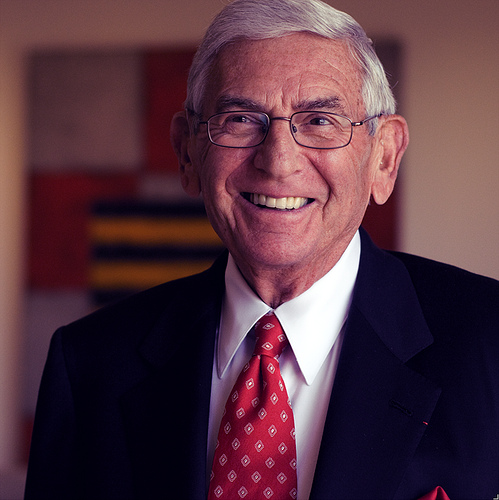
Eli Broad

Brown-Rhee-Broad — This face keeps me up at night….
The founding class of Eva Moskowitz’s Success Academy chain of “no excuses” charter schools graduated from eighth grade last week. Of the original class of 73 students who enrolled in 2006, 32 made it to last week, and, according to Juan Gonzalez of the New York Daily News, despite 27 of those students sitting for the entrance exams to New York City’s highly selective public high schools, no Success Academy graduate qualified for admission. Moskowitz has widely touted her schools’ closing of the achievement gap between racial demographics on state issued standardized tests, and while the city’s elite high schools are rightly criticized for their low enrollment of black and Latino children, Gonzalez notes that the overall 12% acceptance rate for black and Latino students taking the test should have given as many as 3 acceptances from Moskowitz’s school.
This is not news that should produce any satisfaction even among Ms. Moskowitz’s most fierce critics, nor should any criticism be aimed at the young children involved. Despite my serious reservations about the atmosphere and techniques employed by Ms. Moskowitz’s charter chain, I have no doubt that the young people who have been at Success Academy 1 since 2006 are admirable and hard working young people, and it is my sincerest hope that they have bright futures ahead of them. Nor do I want my criticism of Moskowitz’s methods and self promotion to second guess the parents who have sought out and appreciated her schools’ focus on discipline and raising test scores. However, Ms. Moskowitz has applied to the state for another 14 Success Academies and under the current state budget deal approved in Albany, New York City will have no say in granting these charters and will have to provide space for the schools or pay Moskowitz’s rent in another facility. The sharp decline in the enrollment of her first graduating class and her curriculum’s inability to place graduates in the city’s most selective high schools (despite her claims of closing the achievement gap) requires the asking of some sharp questions.
And it is well beyond time that Ms. Moskowitz answer questions of the public that is required by law to pay for her schools.
Ms. Moskowitz is not controversial merely for her confrontational manner nor for her refusal to let the state examine how her chain uses the substantial sums it gets from taxpayers. Success Academy is part of the “no excuses” camp of education reform that insists if you fire the right teachers, insist upon extreme personal rigor and focus upon the “basics” that you can close the historic achievement gap between white and Asian students and their black and Latino peers. The school of thought has powerful advocates among the likes of Michelle Rhee and Joel Klein and demonstrably has the ear of Secretary of Education Arne Duncan and the rest of the Obama administration. It has a certain appeal if you do not think about it too hard. These critics decry those who focus on anti-poverty and anti-racism efforts as “excusing” bad teaching and claim that if people just work hard enough, historic gaps in academic progress, and presumably economic progress, would close. In doing so, however, they take up two exceptionally pernicious implied arguments. The first is that the well-demonstrated deprivations of poverty do not matter so long as the school demands enough out of its students. The second is that the existence of children who demonstrate the desired perseverance proves that others are just slacking and could overcome if only they just worked hard enough. Both of these beliefs diminish genuinely complex issues to slogans and side step societal responsibility to address poverty.
Moskowitz’s schools take this to extremes. The New York Times reported in 2011, when the Success chain had only 7 schools, how children who do not fit into its very narrow mode find themselves subjected to excessive punishments and ongoing suggestions that they should leave. In less than a month of Kindergarten at Success Academy 3, Matthew Sprowal was subjected to so much pressure and punishment (he has ADD) that he was throwing up most mornings, and his mother received direct communication from Moskowitz herself strongly implying her son should be at another school. This is not an isolated case. In 2010-2011, Success 1 suspended a fifth of its students at least once. Public schools in the same neighborhood suspend 3% of students in a typical year. Further, evidence exists that the schools place special pressures on the parents of disabled students to seek different schools. A parent at Upper West Success taped school officials saying they could not properly accommodate her Kindergarten student’s IEP and offering to find him a public school placement.
Charter schools like Success Academy take students from a lottery, and in theory, that lottery ensures that they are not selective like exclusive private schools, but practices like those reported by former Success Academy families demonstrate that the schools do not abide by a spirit of inclusiveness (and may actually violate state and federal law). Moskowitz repeatedly tells the media that she is succeeding with the city’s neediest children, but her schools clearly enroll far fewer children on free and reduced lunch, fewer children with disabilities and fewer children who are second language learners than her neighboring district schools, and the pattern of those students who leave the schools in the early grades is not random.
It is true that Success Academy students get higher than average scores on state tests, but this is coming from a population of students who have already had those most likely to struggle on the tests weeded out — and it comes with the cost of extreme test preparation rolled in the curriculum. A Success Academy teacher, writing on terms of anonymity, gave the following account to NYU’s Dr. Diane Ravitch:
“Custom Test Prep Materials: I think many schools use practice workbooks from publishers like Kaplan, etc. We have people whose job it is to put together custom test prep packets based on state guidance. Much more aligned to common core and closer to the test than the published books I’ve seen. Also, teachers are putting together additional worksheets and practice based on what we see in the classroom. Huge volume of practice materials for every possible need (and we use it all, too). Also many practice tests and quizzes that copy format of the test.
“Intensive organization-wide focus on test prep: For the last months and weeks before the test, everyone from Eva on down is completely focused on test prep. Just a few examples….
“We have to give kids 1/2/3/4 scores daily. Kids are broken up into small groups based on the data and get differentiated instruction. If they get a 1, they stay back from recess or after school for extra practice.
“Thousands of dollars spent on prizes to incentivize the kids to work hard. Some teachers have expressed concern about bribing them with basketballs and other toys instead of learning for the sake of learning. The response is “prizes aren’t optional.”
“We get daily inspirational emails from principals with a countdown, anecdotes about the importance of state tests, and ever-multiplying plans for “getting kids over the finish line” (these get old fast).
Excessive test preparation is a concern for all New York City schools, and the teacher evaluation incentives implemented as part of Race to the Top have not helped. The New York legislature passed a law this Spring mandating that test preparation can take up no more than 2% of instructional time in public schools. Charter schools were exempt, which is a relief for Ms. Moskowitz’s schools who would apparently lose months of their planned curricula.
In a follow up message, the same teacher forwarded a message to Success Academy teachers from a senior administrator giving his ideas on why they have been “attacked” in the media. The message contrasts their work to the work of “failure factories”, claims to have found the “solution” to urban education, claims that people are jealous of their schools and frames Success Academy, which can raise over 7 million dollars in a one night fundraiser, as victims of teacher unions.
Missing in the self congratulatory rhetoric and the extreme test preparation? The children pressured and forced out of the network’s schools for reasons no public school could ever employ. There is no “solution” for urban education that involves losing over half a graduating class of students between first grade and eighth. There is no “solution” for the challenges of educating students with learning disabilities, behavioral disabilities or who are learning English that includes pushing them off on to other schools.
Which brings me back to the first graduating class of eighth graders at Success Academy 1. I genuinely wish them well, and I certainly admire the qualities they must possess to thrive in an environment like the one described above. But the children Ms. Moskowitz failed to mention in her address to her first class of “scholars” are the ones she failed to get to that day. Those are the children she refused to accommodate and whose education she washed her hands of.
And she should be made to account for every single one of them before New York grants her a single new classroom.
Filed under charter schools, politics, Social Justice, teaching
President Obama says unions must be strengthened. Meanwhile Secretary of Education Arne Duncan has openly praised the Vergara decision…which deprives California’s unionized teachers of due process rights:
https://twitter.com/arneduncan/status/476439303015628800
Empty lip service on a Friday makes me grumpy.
This is one of the strangest stories of the week or month or year. President Obama spoke in Pittsburgh about the importance of strengthening unions.
Unions are under siege and have been for several years, but I can’t remember when the President stepped up to defend them.
On June 10th, California Judge Rolf M. Treu declared that teacher tenure laws in California deprive students of their right to an education and declared them unconstitutional. The provisions that were specifically targeted were the time frame for awarding tenure to California teachers, seniority rules on firing of teachers colloquially known as “last in, first out” and rules for due process before removing a teacher after the initial probationary period. Judge Treu grandly compared his decision to Brown v. Board of Education and sent shock waves through the mainstream teacher community.
I do not think the ruling is likely to survive a challenge.
First, the evidence that Judge Treu said “shocks the conscience” and was presented by the plaintiffs is not precisely rock solid. Relying heavily upon the work of Professor Raj Chetty of Harvard University, the plaintiffs claimed that even one “grossly ineffective” teacher had long term lasting harm on student’s achievement and future economic success, and they claimed California’s tenure laws subjected students to such “grossly ineffective” teachers. The problem here is not that there are not a discernible portion of teachers who ought to be removed, but that the Chetty research, indeed most of the research used by the plaintiffs is, to put it mildly, disputed.
Dr. Audrey Amrein-Beardsley of Arizona State University writes the blog Vamboozled to discuss research and policy around the use of value added measures of teacher performance (VAMs), and she has taken on the flaws of Dr, Chetty’s work on numerous occasions, notably here and here. Dr. Amrein-Beardsley links to critiques from other scholars as well, and the obvious message that Judge Treu missed is that this scholarship “shocks the conscience” most powerfully when one thoroughly ignores that does not represent a professional consensus among education researchers. Indeed, it is easy to portray the handful of researchers who insist that single teacher impacts can be measured this way as outliers. So with appeals in the works, it is hard to believe that Judge Treu’s wholesale ignoring of contrary evidence will be replicated by every judge who reviews the evidence.
Second, as Dr. Diane Ravitch of New York University explains here, the plaintiffs in the Vergara case are of questionable standing. If the argument is that “grossly ineffective” teachers have damaging lifelong impacts on students, it would stand to reason that the plaintiffs could clearly demonstrate that they had been subjected to such teachers. Not so much. In fact, some of them apparently claimed that a given teacher was bad at teaching when those same teachers were widely recognized as excellent:
One of the plaintiffs (Monterroza) said that her teacher, Christine McLaughlin was a very bad teacher, but McLaughlin was Pasadena teacher of the year and has received many awards for excellent teaching (google her).
Dr. Ravitch refers to briefs by the defense that go on to note how none of the plaintiffs could tie any of the supposedly poor teachers to the specific statutes that were challenged in the lawsuit. Appeals attorneys were certainly make use of this, and given judges more inclined to consider all the evidence, they may have successes.
I am, therefore, tentatively hopeful that this case will die or be substantively altered on appeal. But I am still worried, and the reason is that the case provides a much desired legal win for a coordinated set of interests that have teacher unions firmly in their sights. The plaintiffs were sponsored by the group “Students Matter” which is funded by Silicon Valley technology entrepreneur David Welch and is financially allied with charter school funders and Michelle Rhee’s “Students First” organization that similarly attacks teachers’ union protections. Given the partisan position of the lawsuit’s backers, it was extremely troubling, if not surprising, to see Secretary of Education Arne Duncan welcome a decision that greatly undermines teachers’ workplace protections:
With strong financial backers like Welch, Rhee and organizations like the Walton Family Foundation and tacit approval from the administration, we can expect similar lawsuits in pretty much every state over the next few years. It fits one of the favorite narratives of the education “reform” camp: that everything hinges on teachers and if we only fire the right teachers, schools, everywhere, will improve dramatically

This is pernicious for a number of reasons. First, it relies of the very shaky and often laughable claim that all it takes to close the achievement gap is enough “great teachers” in a row. Michelle Rhee loves to repeat this claim, but the claim does not stand up to very strong scrutiny, most notably that the research basis for the claim merely extrapolated from one year gains in classrooms with an identified effective teacher instead of studying students over time.
Further, we should question the value of the metrics used to rate teacher effectiveness in the first place. As I have written previously, the American Statistical Association’s statement on the use of VAMs warns that only 1% to 14% of student variation on test scores can be attributed to variation in teacher quality. The does not mean, by the way, that teachers have no effect, but that statistically tying the achievement gap among students as measured by standardized testing to variability in teacher quality is looking at a very narrow slice of that gap’s origins. What else can account for persistent gaps in student test scores? Los Angles has a Residential Income Segregation Index of 51. 54% of children in the central city live in poverty. The impacts of poverty on children are by now well documented and cannot be excluded when considering school performance. Classrooms in Los Angeles are overcrowded, sometimes to a shocking extreme. California’s woeful education expenditures place it in the company of Arkansas and below West Virginia. But according to the proponents of the Vergara case, the only thing that matters is teacher effectiveness as rated by the test score gains made by their students, regardless of all of the other factors that may effect those scores.
And this is painful ground for teacher and student advocates. It sounds like I am saying that teachers have little impact, but what I mean to say is that teachers matter, but not in ways that are effectively measured by the value added models based on standardized testing. Professor Jesse Rothstein’s review of the Measures of Effective Teaching study funded by the Gates Foundation demonstrated that teachers who did very well in their value added measures did far less well in measures of students gaining higher order thinking skills, so it is highly possible that the measures favored by Vergara’s so-called expert witnesses improperly favor the wrong teachers. Anecdotally, such measures of effectiveness miss the realities of how teachers work with students. The worst teacher of my entire life was my seventh grade mathematics teacher who was a bully and the most demotivating individual I have ever known in my life. However, in a community where 95% of high school graduates went on to four year colleges and universities, the depths of his ineffectiveness would have been masked by the external advantages of his students. Influence and impact upon students can frequently be hard to see in any numbers, but they are real regardless. I have had former students contact me via social media to express appreciation for the role I played in their development towards adulthood, and not all of those students were long term academic successes (they are, however, remarkable people…testing misses that).
That is because an effective teacher is not merely a person who extracts a pre-determined gain in a standardized test over the course of one year. Effective teachers inspire students to take risks that may result in messy but instructive failures. Effective teachers help student manage social and emotional challenges to become more skilled at collaboration and leadership. Effective teachers challenge students to, as Maxine Greene phrased it, “stir” themselves and see the world in different and transformative ways. Effective teachers may simply convince a struggling student to stay in school for the stability it provides in his or her life.
As we prepare to challenge the Vergara decision and to brace ourselves for the flood of similar suits that the likes of Michelle Rhee are undoubtedly planning, it is vital that we not only confront the highly flawed assumptions of test based teacher competence, but also that we uplift a better vision of the importance of skilled and experienced teachers.

The place for thinking Black folks
Florida women take on culture and stuff.
What They Don't Teach You in Teacher Ed
2026 is the End of the Line ~ The No Bullshit Tour
A site to discuss education and democracy
The blog of Academe magazine
Scholar/ Practitioner's thoughts on education
Supporting public schools and the children they serve
Redefine Excellence & Interrupt Inequity in Education
A website focused on education and social justice research
A Collaborative Effort of NJ Education Policy Scholars
I am a reader, a teacher, a writer, a thinker, a reviewer, and a dreamer of dreams.
a site dedicated to the United States’ public school system: examining the impact of the Common Core, the free market, and privatization on education
and they're not the only ones...
because founder shouldn't have to be a death sentence.
Yinzer Nation + Education = Yinzercation
A Grassroots Education Movement and Real Reform Studios Production
The Lakeland Federation of Teachers is a union representing the teachers, nurses, and therapist in Westchester County’s largest suburban school district
notes from a teacher educator
A group for future teachers with a common radical vision for the future of education.
A Parent's Thoughts on Education in the Era of Reform
Dedicated to truth-telling for democracy.
A site devoted to opening and changing our minds about public education
Smile! You’re at the best WordPress.com site ever
An insider's look at education, teaching, parenting and coming of age.
educator, public scholar, poet&writer - academic freedom isn't free
A Public Access Television Show, Princeton Community TV
thoughts on education by Grant Wiggins
An indie authors website and blog
The musings of a sarcastic, low-maintenance mom/wife/former teacher/writer
By L. Beth Brady, Ph.D. Special Education
A blog about education by a math teacher
a project of the curmudgucation institute
The intersection of education and politics
Exploring and venting about quantitative issues
Education as it should be - passion-based.
the blog of Carol Burris
"To sting people and whip them into a fury, all in the service of truth."
All truths are easy to understand once they are discovered; the point is to discover them. Galileo Galilei
A Teacher Speaks

 Daniel Katz, Ph.D.