Category Archives: schools

Announcing the iSchool, or Something

Apple CEO Steve Jobs was not known as a philanthropist during his lifetime, but his wife, Laurene Powell Jobs, had a significant track record in philanthropic endeavors by the time of his death in 2011.  Educated with a Stanford MBA and with experience as a trader in Goldman Sachs, Ms. Powell Jobs has an extensive record in philanthropic activities since at least 1997, and education appears to be a specific interest. Beginning with a mentoring program for first time minority college attendees, she now sits on the boards of a number of familiar organizations such as Teach for America, New Schools Venture Fund, and Stand for Children.  According to her “Inside Philanthropy” profile, Ms. Powell Jobs is interested in education reforms that are “results driven” which is education philanthropy speak for “raises test scores”.  Hardly surprising, since her board memberships are groups that contribute to the deprofessionalization of teaching (TFA), raise capital for charter school ventures and advocate legislatures to allow charter school teacher training “academies” (New Schools Venture Fund), and which consistently attack teachers’ workplace protections and advocate for increasing the role of test scores in education and teacher evaluation (Stand For Children).

It should not, therefore, be a great surprise when The New York Times announced that she would donate $50 million towards a new education venture “to rethink high school.”  The effort is called “XQ: The Super School Project” and Ms. Powell Jobs said in an interview, “The system was created for the work force we needed 100 years ago. Things are not working the way we want it to be working. We’ve seen a lot of incremental changes over the last several years, but we’re saying, ‘Start from scratch.’ ”  This “from scratch” take on the American High School essentially looks like a grant program from the pot of $50 million that will eventually be distributed to 5 to 10 grantees sometime in the next year.

I know they are serious about this.  They’re advertising on bus kiosks in Manhattan:

super schools

The project website tells you precious little about the values of the project itself, which might be a good sign if they are serious about soliciting widely for actual, community based, ideas for school experimentation instead of just opening the doors for a bunch of ready made “disruptors” already at work tearing down public education.  The composition of her core team as reported in The Times is not encouraging. There is a consultant named Keith Yamashita who has worked apparently mainly in technology and start ups.  Russlynn H. Ali is the former undersecretary of education for civil rights under Secretary Arne Duncan and has been working with Ms. Powell Jobs’ Emerson Collective.  More troubling is the presence of former senior adviser to New York City Schools Chancellor Joel Klein, Michelle Cahill.

Education blogger, author, and Louisiana teacher Mercedes Schneider once dubbed Chancellor Klein as “The Man From Whom Nothing Good Comes,” and I’d daresay he earned the title.  Certainly, the Klein Chancellor’s office unleashed a fair deal of havoc on Newark when Mark Zuckerberg’s 100 million dollar grant to remake the city’s schools was announced.  Former Klein insider, Chris Cerf, created a consulting firm that hoovered up a fair amount of the available cash, and Cerf himself moved in 2010 to the New Jersey State Commissioner’s office, meaning he was now overseeing the district. Klein’s NYC department of education also provided Newark with Superintendent Cami Anderson, whose disastrous tenure is chronicled by retired Star Ledger journalist Bob Braun.  Cerf and Anderson are most directly responsible for turning the Zuckerberg donation into the “One Newark” system, and Mark Webber helps fill in the holes in the most recent accounts of how that has turned out – especially in regards to Brick City’s charter sector.  Short version: Joel Klein’s office provided a significant portion of the reform “talent” that spent lavishly on consultants and threw the city’s schools into an incompetently and callously managed mess that has benefited the biggest charter operators most of all.

So let’s just say that the presence of another member of Joel Klein’s inner circle in a grant program to “rethink” schools requires serious skepticism.  At least the amount of money being spent is only half of a Zuckerberg, and it will be spread around rather than dropped into a single school district with the intention of blowing the entire kit and caboodle up.

However, I’d like the challenge two premises of the entire endeavor.  The first premise is that we still have the high school we created “for the workforce 100 years ago.”  In some respects this is actually true.  The school model based upon a set of discrete subjects taught in Carnegie units with students moving from subject to subject during the day was an organizational choice of the early 20th century.  Similarly, the comprehensive high school and extra curricular activities and sports with which we are familiar were choices incubated in the Progressive Era — none of these came down with Moses on Mt. Sinai.  However, to suggest that the school structure you recognize as school is somehow rooted in place, unchanging and incapable of meeting more modern needs, is not supported by evidence.

For example, that same school structure that Ms. Powell Jobs says was created for the workforce “100 years ago” has also graduated the workforces of the 1950s and 1960s as well as the workforces of the 1980s and 1990s – all economic periods vastly different than 1915. If one were to cite threats to the workforce in 2015, one would have to look at falling union membership, declines in wages for recent college graduates, a young work force burdened by mounting debt, corporate hoarding, unmet infrastructure needs, and taxation policies that have abetted income inequality before looking at how most ninth graders will study English for 50 minutes before moving on the their Algebra class.  Schools contribute to the shaping of the workforce, but they do not create the economic demands for workers that necessitate that workforce on their own.  And the reality is that the American economy has grown leaps and bounds with this same school system.  In fact, from 1929 to 2015 “real” Gross Domestic Product in 2009 dollars (opens in Excel) grew from 1056.6 billion dollars to 16,324.3 billion dollars — all with that school system lamented as being designed for the workforce of 1915.  Not bad.

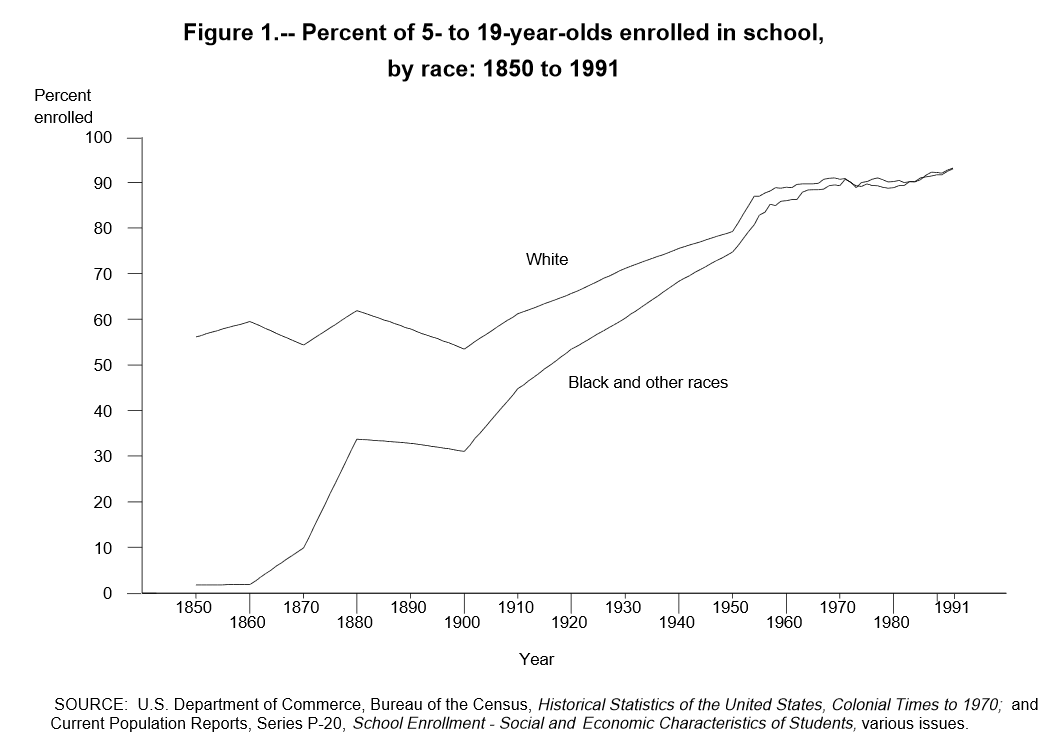
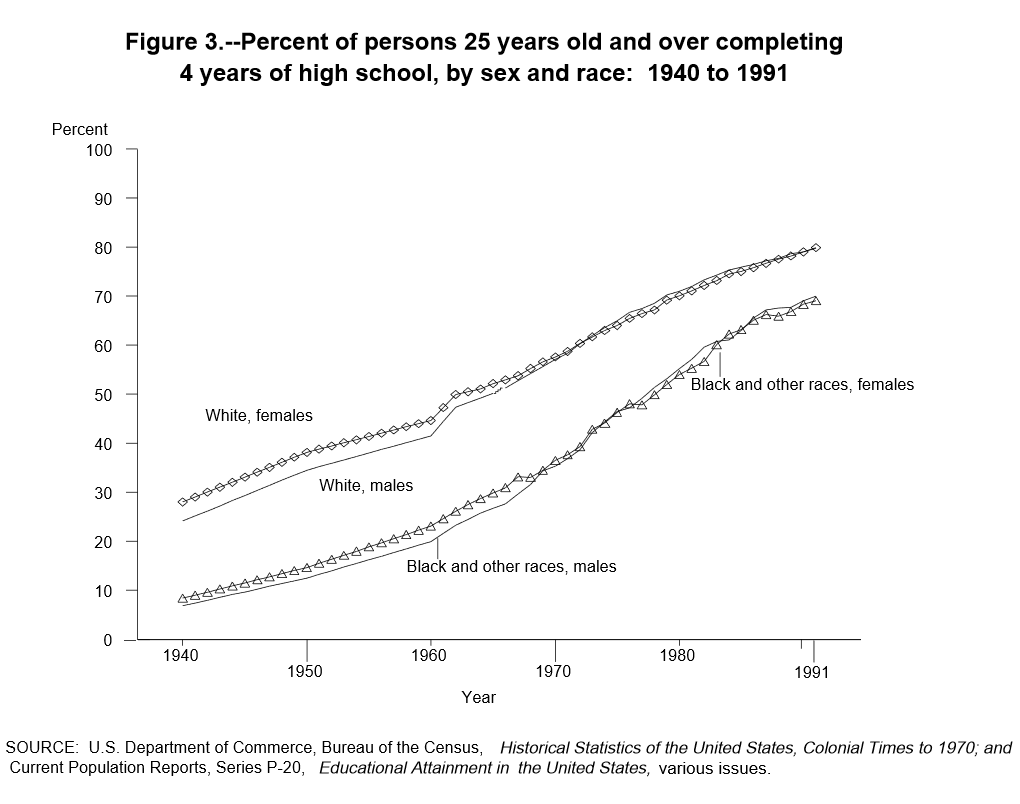
Further, schools have changed in the past century, in meaningful and significant ways.  The landmark report, 120 Years of American Education: A Statistical Portrait from the Department of Education’s Center for Education Statistics details a school system that has made vast developments in both the reach and equity of the system over time.  From the general formation of the comprehensive high school, the institution has continued to expand both the population it includes and the services it provides within its walls, reflecting major changes in how society views the reach of the political franchise.  Consider these two charts:

Total School Enrollments 5-19 year olds

Total high school completion by race

Similar progress and change can be seen in statistics relating to the educational attainment of women and to the number of children with disabilities being accommodated within public schools.  And these statistics on increased participation, completion, and services provided do not account for changes in subject matter content over time as well. The fact is that there are many things about our high schools that have been significantly dynamic over the past 100 years.

The second premise that needs to be challenged is that the schools we need should represent a “start from scratch” approach.  There are powerful ideas for change that many districts could implement with very little difficulty.  In their historical study Tinkering Toward Utopia: a Century of Public School Reform, scholars David Tyack and Larry Cuban demonstrated that many “big ideas” for school reform tended to be changed by school as much as they changed school, but that certain little ideas can have substantial impact.  For example, a simple offset of classroom walls creating niches changed the way teachers used their space substantially.  So while the XQ little marquee questions “What if we take our desks outside?” “What if learning is a game?” “What if we knock down these walls?” – I am left wondering “what more will you get with $50 million than 5-10 boutique programs that may not be scalable while you could be trying to leverage more meaningful changes within the existing system that already serves almost 15 million high school students?”

The fact is that we have some pretty good ideas already about what would leverage substantial change in our schools. Some of these ideas are larger than others and would require significantly more political capital to achieve.  However, if Ms. Powell Jobs is actually serious about our schools being “the great equalizers they were meant to be,” she should shake off the “disruptive start up” mentality of the XQ project and put her talents to work on some of the following ideas that never seem to make it into education reform’s portfolio of strategies:

  • Integration: It matters, for both the majority and minority populations that are integrated, and we have historic evidence to demonstrate this.  The decrease in achievement gaps between white and black students as measured by the National Assessment of Education Progress closed rapidly and for a sustained period of time in the 1970s and early1980s before the cumulative impacts of white flight and abandonment of fair housing and integration policies stalled progress.  Since then, racial and economic segregation have increased vastly, to the great detriment of our students and their schools which saw an initial, large, burst of the gap closing after NCLB only to see it stall again.  While the issue of the achievement gap is extremely multifaceted and overlaps with declines and rises in child poverty, integration of our communities and schools remains an important and currently unutilized tool in school improvement.
  • Fair Funding: Advocates of current reforms like to scoff at school funding, but the reality is we maintain a perversely unfair and inadequate system of school finance that all but guarantees wealthy communities can fund the schools that they want while the rest of the system struggles to get sufficient state and federal aid to plug the holes in their budgets.  Resources and policies the reduce inequality cost money, and the reluctance to fund those resources and policies is one of the greatest stumbling blocks to educational improvement.
  • Class Size Reductions: Among the policies that can cost more money that politicians are reluctant to spend is class size reduction. It works.  It works well.  It works even better for poor and minority students. Increasing class sizes causes real and long term harm.
  • Teacher Retention and Development: This will come as a surprise to the organizations on whose boards Ms. Powell Jobs sits, but experienced teachers are better than newcomers.  The exuberance of youth is fantastic and necessary in the ongoing work of school, but it is best paired with experienced teachers who know what they are doing and who are willing to mentor their younger colleagues. If we want to improve schools, we should be looking at improving teacher retention, starting with a hard look at working conditions.
  • Reverse High Stakes Testing’s Detrimental Impacts: We’ve increased the amount of testing.  We’ve increased the stakes on testing.  To the surprise of nobody who understands policy incentives that means we’ve increased the amount of time spent teaching to the test and to test preparation, to the detriment of a rich curriculum and especially to the detriment of students attending majority minority schools threatened with closures and other punitive measures due to test scores.  The narrowing of the curriculum also has a detrimental impact on the very skills so-called education reformers claim our students need the most in the 21st century.  If Ms. Powell-Jobs really wants to improve high school, she could do a lot worse than to imitate her late husband’s business practices and to try very hard to kill off something that Bill Gates has worked to promote: high stakes testing in teacher evaluation.

$50 million is going to buy the XQ project a handful of high schools that may or may not be innovative and which may or may not be able to be scaled.  Or it could begin the process of lobbying policy makers to endorse what we actually knows works in education.  It would certainly be a lot better to see on the side of a bus kiosk.

7 Comments

Filed under Funding, Newark, schools, standards, Testing

Welcome Class of 2019: What We Owe Your Future Students and Their Parents

Today, I get to meet the next class of students who have entered my university seeking to become high school teachers.  This is always an exciting time in no small respect because being a part of their journey from student to student of teaching to teacher is some of the most rewarding work of my life, and I am consistently grateful for how their energy and optimism help revive my own year after year.

In recent years, that energy and optimism have been even more impressive because the in public battles over education and active disruption of today’s education “reform” have impacted these young people more than their counterparts in previous times.  The morale of their teachers has been dropping during their time in the classroom, and the inherently busy and often confusing world of the classroom has been increasingly stressful to those with whom we entrust our children.  If we accept what I believe is the very valid premise that the choice to become a teacher actually begins during one’s time as a student in teachers’ classrooms, then the students I meet today are among a remarkable group of young people who remain energized by education’s possibilities rather than discouraged by current circumstances.  Nationwide, it is getting harder to find such young people to enter the teacher preparation pipeline.

And I have good news for them – there are excellent reasons to expect growing and vocal support from the parents whose children they will eventually teach, and those reasons should both encourage and inspire them.

The annual PDK/Gallup poll on the public’s beliefs about education was published recently, and while the results should be the subject of much debate and no small amount of disagreement, two messages ring out clearly: First, the public does not buy high stakes standardized testing as the best measurement of what teachers do, and second, the people who know our schools the best are the most positive about those schools.

Every demographic surveyed said that there is too much emphasis on standardized testing by very wide margins.  64% of the national sample and 67% of public school parents believe so as well as 57% of African Americans, 60% of Hispanics, and 65% of whites in the national sample.  Support for opting out of standardized examinations showed more variation, but considering how test refusal was barely an issue a few years ago, the numbers in the survey may very well be surprising.  Nationally, 41% of those surveyed agreed opting out should be allowed, and 47% of public school parents agreed it should be allowed.  Whites agreed with allowing parents to opt out by 44% while 35% of Hispanics thought it should be allowed and 28% of African Americans thought it should be allowed.  This poses a challenge to opt out advocates, certainly, who have made only modest inroads in urban communities so far.

Parents who say they themselves would opt out was as high as 31% of public school parents with similar differences among different ethnic groups.  However, readers should remember that New York State, a national leader in the parental opt out movement, posted a test refusal rate of 20% for the 2015 examinations (which nearly matches the 21% of African American parents who would personally opt their children out), so there is room, given just this year’s support, to grow test refusal by significant numbers in the next year, complicating plans to evaluate teachers using test scores.

Survey respondents might not mind that, however, as they clearly find standardized tests a poor source of information on how teachers teach and how schools perform.  All demographic groups said that student engagement, students’ hopes for the future, and the percentage of students who graduate and go on to further education are vastly more important measures of school effectiveness than standardized test scores.  Similarly, all groups believed that samples of student work, teachers’ written evaluations, and teacher given grades were vastly more important indications of student progress, and all groups believed that teacher quality, expectations, principal leadership, and increased funding were more important tools for school improvement than measurement via standardized testing.  African American parents were most interested in using standardized test scores to compare students with students in other communities, states, and countries, but that support was only 34% saying it was “very important” and overall support at that level was only 22% of all public school parents.

Parents and others similarly disagreed with using student test scores to evaluate teachers.  Nationally, 43% of all those surveyed agreed with using student test scores that way, down from the slight majority who supported it in 2012 and up 5 points from last year’s survey.  Public school parents were most vocal in opposition with only 37% in support and 63% opposed.

The PDK/Gallup poll reaffirms a long term trend in the survey over the years: people tend to think their local schools and the schools their children attend are better than schools nationwide.  Local support for public schools remains robust in this year’s poll with 51% of the national sample giving their local schools a grade of A or B, and with 57% of public school parents saying the same.  Worryingly, only 23% of African Americans and 31% of Hispanics felt similarly, highlighting known discrepancies in our highly segregated schools.  Nationally, when public school parents were asked what grades they would give to the school attended by their oldest child, 70% said an A or a B.  All respondents noted funding as a key issue for schools and quality as well with all demographics citing it as the most important problem facing schools and citing it as very or somewhat important for school improvement.

With trends like these emerging from the polling data, it is not surprising that direct action movements from parents and students to highlight dilemmas facing their schools and to challenge unpopular policies have emerged.  The Opt Out movement is a large, growing, example of parental activism in communities across the country aimed at relieving schools of over testing.

In other communities, activists have come out to support their public schools via direct action as they’ve come under attack.  In Newark, NJ, students of the Newark Student Union have been leading a movement to demand attention for how school “reforms” have harmed them and their community.  Even more inspiring is the story in Chicago, where a dozen parent activists, having tried every possible means to save the last open enrollment high school in their community of Bronzeville, are beginning the third week of a hunger strike to save Dyett High School.  While the press has been slow to notice the story in Bronzeville, it has caught the interest and support of public school advocates across the country.

So as I welcome my new class of future teachers to their first college education classes today, I also have a message for them:  It is tempting, even easy, to spin a story of public education under attack and of those attacks winning, but you must also remember that you have the confidence and trust of parents in communities across the country, parents who understand the value of the work you have committed yourself to learning and doing.  Year after year in polls, their faith and belief in you is clear.  In the growth of Opt Out, their understanding of why the test and punish era of school accountability needs to be rolled back is evident.

And in communities like Newark and Bronzeville, students and parents are putting their very bodies on the line to support the importance of a fully public education.  You owe them nothing less than full reciprocation and your every effort to justify their trust.  Let’s get to work.

1 Comment

Filed under #FightForDyett, Activism, Newark, Newark Students Union, Opt Out, politics, schools, teacher learning

Frank Bruni, See Me After Class

Hey, New York Times, I’d like to offer a deal.  Please stop letting Frank Bruni write about school. In fact, get a clever programmer who can arrange so that any time he writes the words “school” “teacher” or “student” his keyboard gives him an electroshock.  In return, I will never again complain that you charge my family $20 a month for an electronic subscription that doesn’t include the cell phone app and which still has advertising.  I’ll even promise to refrain from leaving comments on any David Brooks column where he opines about the nature of character.

Do we have a deal?

I have good reason to want Mr. Bruni off the education beat.  In 2013, he briefly suggested that Secretary of Education Arne Duncan was “impolitic” to place opposition to the Common Core State Standards upon “white, suburban moms” who don’t want to find out that their children are not brilliant — just before he jumped in and declared that Secretary Duncan was right to be concerned that “a laudable set of guidelines” would be rejected for making kids work too hard, characterized most opposition to the standards as “welling hysteria” from the right and left wing, and chided parents concerned about the increasing lack of joy in school with declarations that portions of school ought to be “relatively mirthless” while blaming stories of students breaking down from stress upon their parents. A year ago, he jumped into the teacher tenure debate with a breathtakingly one sided column that could have read as a press release from Campbell Brown’s anti-tenure lawsuit — shocking, given his personal friendship with Ms. Brown — and relied upon precisely ONE former Teach For America alum and current State Senator from Colorado as a source.  Mr. Bruni went even further in late October last year with an entirely uncritical review of former NYC Chancellor Joel Klein’s book on education, despite the fact that Mr. Klein is a serial misleader about his personal biography and that his record as Chancellor does not actually stand up to scrutiny.  Mr. Bruni tossed 27 words about respecting teachers into the mix while calling on them to “partner” with people like Mr. Klein who want to diminish their workplace protections and offer pay for increasing standardized test scores while completely ignoring issues like persistent and rising poverty.

So when it comes to education, and to teachers in particular, Mr. Bruni is something like William Kristol opining on foreign affairs — always wrong and frequently advocating for disasters.

Mr. Bruni was struck over the weekend by Times education reporter Motoko Rich’s story on the nationwide scramble to find credentialed teachers and the precipitous drop in college students seeking teaching degrees:

And he followed it up yesterday in his on Opinion page column, “Can We Interest You In Teaching“?  His opening laments the state of affairs in the teacher preparation pipeline and supposed competing draws for potential teachers:

When the economy improves and job prospects multiply, college students turn their attention elsewhere, to professions that promise more money, more independence, more respect.

That was one takeaway from a widely discussed story in The Times on Sunday by Motoko Rich, who charted teacher shortages so severe in certain areas of the country that teachers are being rushed into classrooms with dubious qualifications and before they’ve earned their teaching credentials.

It’s a sad, alarming state of affairs, and it proves that for all our lip service about improving the education of America’s children, we’ve failed to make teaching the draw that it should be, the honor that it must be. Nationally, enrollment in teacher preparation programs dropped by 30 percent between 2010 and 2014, as Rich reported.

Keep in mind, this lamentation of the lack of “honor” given to teaching as a profession comes from someone who has repeatedly taken the standard reformer line that all of the ills in our education system can be traced back almost entirely to teachers themselves and who has advocated for policy makers who diminish teachers’ workplace protections and their autonomy and who want to tie opportunities for greater compensation to standardized test scores.  It should be no real surprise, therefore, that Mr. Bruni’s exploration of the growing teacher shortage is focused not upon what people have done to teaching over the past 15 years in the name of “reform” but upon the profession itself.

To give credit where credit is due, Mr. Bruni has expanded his usual Rolodex for this column and has consulted with people actually connected to the world of teachers and teaching.  His spoke with Randi Weingarten who is the President of the American Federation of Teachers, the nation’s second largest teachers union with over 1.5 million members.  He also spoke with a representative of “Educators Rising,” a project of Phi Delta Kappa International seeking to help guide young people to teaching as a profession. PDK is a professional association in education which runs various programs for teachers, collaborates annually with Gallup on a poll of the nation’s education perspectives, and publishes Kappan Magazine, a forum on practice, policy, and research.  Among the members of the PDK boards advising Educators Rising is Dr. Sharon Robinson, President of the American Association of Colleges of Teacher Education.  So Mr. Bruni actually sought input from sources that know a few things about teachers and schools (even if Educators Rising has a logo unfortunately reminiscent of Enron’s).

Sadly, he “balanced” that by seeking input from “Educators 4 Excellence,” one of those imitation grassroots outfits that all have suspiciously similar web page design and sprang up right about when Bill Gates was spreading around tons of money to promote the Common Core State Standards and assessing teachers by value added modeling.  And, sure enough, E4E’s “declaration” includes language endorsing teacher assessments using value added modeling of standardized test scores, a method which is only slightly more reliable than throwing darts randomly at a wall.  Mr. Bruni also spoke to Kate Walsh, the head of the self-appointed national “watchdog” on teachers and teacher preparation, National Council on Teacher Quality, an organization whose caliber of research into the state of American teacher preparation is so rigorous that they mostly read course catalogs and syllabi available online without bothering to visit a single campus. This “method” of “research” is so weak that it produced errors throughout their entire original rating report at such a laughable rate that the organization should be shunned by anyone who bothers to check their record.  So while Mr. Bruni actually spoke to some people who know about teachers and schools, he balanced them with the usual suspects of agenda driven and fact deprived actors.  This is a bit like writing on climate change by speaking with scientists at NOAA and then seeking “balance” from the public relations office of Exxon.

Both Walsh and Evan Stone of E4E basically reiterated very old talking points of teacher professionalization.  Stone claimed teachers are concerned they will be “doing the same thing on Day 1 as they’ll be doing 30 years in” and called for a “career ladder” in teaching while Walsh repeated her contention that most students see teacher preparation as an “easy” major and steer away from it.  Making teacher preparation more rigorous is a well trodden path now that we are 32 years past A Nation At Risk, and Walsh flatly ignores or discounts the decades of work to increase teacher preparation standards and increase clinical practice time for prospective teachers in favor of her organization’s shockingly weak research.  Stone’s contention that teachers want a gradated career ladder is not an especially strong one, and while there is validity to a career structure that places experienced teachers into mentoring and leadership roles, most of the pathways that have been proposed over the years would, of course, require significant investments of time and resources that are notably absent from many reformers’ plans.  None other than Michelle Rhee herself decided that National Board certification was something prestigious but not worth the cost while she was Chancellor in Washington, D.C.

Mr. Bruni’s representative from Educators Rising, Dan Brown, suggested that teaching could use its own “Flexner Report,” the document from the early 1900s that set medicine to its current high status in society.  I am at loss to imagine what another round of report writing would do that we have not already had from the Carnegie Corporation, The Holmes Group, John Goodlad, The National Commission on Teaching and America’ Future, or the Interstate Teacher Assessment and Support Consortium.  For three decades, researchers and policy analysts have advocated for and demonstrated value of various ways to improve teacher preparation that reflect the necessary balance of theory, pedagogy, practice, and contact with skilled veterans who inform preparation through their own teaching.  Policy makers, however, have rarely seen fit to fund it.

The biggest disappointment of the article is Mr. Bruni’s conversation with Randi Weingarten of the AFT.  It was not because President Weingarten missed the important message, but that Mr. Bruni gave it so little notice.  President Weingarten stated that teachers wanted “a voice, a real voice,” and she referred Mr. Bruni to the AFT’s collaboration with the Badass Teachers Association on the Quality of Worklife Survey.  Mr. Bruni, however, given a wealth of information on teacher concerns, only mentioned being left out of decision making as source of stress.  What did Mr. Bruni miss?

  • 79% of teachers feel disrespected by public officials.
  • 77% feels disrespected by the media.
  • 73% feel their workplace is often stressful.

While stressed teachers did feel they had less decision making power, Bruni missed that:

  • 55% said negative portrayals of teachers and schools in media caused stress.
  • 71% cited adoption of new requirements without training or support as causing stress.
  • Time pressure was a major source of stress.
  • As were mandated curricula, standardized testing, and lack of administrator support.

He also failed to notice:

  • A full 30% of teachers said they have been bullied in the workplace.
  • Including, 51% of teachers with disabilities, 38% of LGBTQ teachers, 36% of ethnic minorities, and 38% of religious minorities.
  • 26% said that in the past month their mental health was not good for 9 days or more.

Having a voice in decision making is certainly an important part of treating teachers as professionals, and it may even be true that teaching could be made more attractive with certain changes to the professional environment and professional preparation of teachers.  However, it is absurd to speculate that a reported teacher shortage is truly tied to these issues when we have had a similar career structure for teachers for decades without seeing such dramatic declines in number of college students willing to become teachers.  What Frank Bruni misses entirely is that teaching is deeply wrapped up in a sense of vocation as well as professionalism.  People going into teaching have always accepted that they are giving up some economic and social status in favor of enacting a career where they believe they can make a substantial difference in people’s lives.  They are drawn to teaching by positive experiences with teachers and with learning, and they develop a fondness and respect for school and its mission.

But with the clear evidence that reform efforts of the past 15 years to place the entire burden of lifting children out of poverty upon schools and teachers have led to serious degradation of workplace life, it is hardly surprising that young people who would be normally driven by their sense of purpose towards education would look elsewhere. They are seeing fewer and fewer role models who are allowed to practice their profession and their craft to not merely raise test scores, but to inspire and ignite young minds.  The data from the Worklife Survey should scream this message to anyone who looks at it, but instead Mr. Bruni chooses to emphasize warmed over servings of 1980s and 1990s era professionalization literature.

Instead of looking to make teaching look more like medicine, we should consider how to make teaching look like teaching again, and that will begin by listening to what teachers have to say about their working conditions.

2 Comments

Filed under Media, NCTQ, schools, standards, teacher learning, teacher professsionalism, teaching

Teachers: Chris Christie Wants to Punch You “In The Face”

New Jersey Governor Chris Christie is fond of saying that his preferred method of dealing with bullies is to “punch them in the face”.  It is the sort of “tough guy” talk that has served him up to this point of his political career and which used to earn him legions of fans who delighted in his outbursts of temper aimed at critics.  On Sunday of this week, he appeared on Jake Tapper’s “State of the Union” show on CNN, and when the host asked him “At the national level, who deserves a punch in the face?” he did not hesitate for a moment before saying “The national teachers’ union.”

(Mr. Tapper followed up this statement by a really hard hitting question asking Governor Christie why he was now saying his favorite New Jersey Musician is Jon Bon Jovi over Bruce Springsteen.)

So there you are — the very first people or entity that Governor Chris Christie thinks of when he contemplates a national level “punch in the face” are teachers and the union made up of millions of them.  Not the near historically ineffective legislative branch.  Not K Street’s infamous lobbying industry where former law makers go to get rich.  Not even the national press, attacks against whom have been red meat for conservative voters for decades.  The “national teachers’ union” which Chris Christie calls “the single most destructive force in public education in America.”

Observers of Governor Christie are hardly surprised by this as the governor, in his words, has been “saying this since 2009” when he sought the Governor’s office in New Jersey, and he has not let up his assault on the Garden State’s teachers since then.  In a New Hampshire Town Hall in June, Governor Christie gave a laugh line where he said that our national education system was a threat to the country equal to ISIS, and he went on to insult the work of the teachers he just compared to a fanatical terrorist organization:

“It’s the same as it was in the 1800s, for God’s sake. It’s a row of desks. Facing forward to a blackboard or a whiteboard. A person standing in the front of the room talking to the people in the desks. And they do so from roughly 8:30 to roughly 2:30 or 3 o’clock, and they’re off four months a year…We don’t have it (a longer school year) because the teachers’ union likes to be off 4 to 5 months a year.  They like to get a full time salary for a part time job.”

Governor Christie may have tried to give himself wiggle room by saying “teachers union,” but there is no doubt that he meant “teachers” – who make up the union membership, elect the union leaders, and about whose work he offered the most foul and disrespectful caricature this side of Bart Simpson’s relationship with Mrs. Krabappel. Chris Christie has zero respect for teachers whose work he thinks consists of talking at students for 6 hours a day and lazing around for a quarter of the year with nothing to do.

New Jersey teacher and researcher Mark Weber offers this definitive catalog of how often Governor Christie has used his office to denigrate teachers.  Amidst the outrageous accusations, such as saying teachers used students as “drug mules” for a social studies assignment, an interesting pattern stands out that also explains why the governor feels the need so often to punch people who offer public criticism.  Namely, famous “tough guy” who is always “telling it like it is” can dish out the punches, but he certainly cannot take them.  Consider Governor Christie’s assertion that the New Jersey Education Association said that he “hates children and loves millionaires.”  This was obviously in reference to a billboard campaign urging people to “Tell Governor Christie to protect our schools; not millionaires.”  Direct, but hardly an accusation that he hates children.  Further consider Weber’s documentation of Governor Christie claiming that NJEA officials prayed for his death when the “prayer” in question was a moderately tasteless joke.

More recently, Governor Christie has demanded that union leaders and rank and file “get realistic” over New Jersey’s ability to keep its pension system afloat, and accused those calling for him to abide by the 2011 pension reform plan that he himself championed –  and then abjectly refused to fund – of “gluttony.”  This is an astonishing effort to portray himself as the victim in the pension fight when he won the legislative fix he sought, refused to make the promised payments into the pension system, simultaneously gave management of huge portions of it to hedge funds that increased the state’s management payments to over $1.6 million a day, and is now crying poverty when unions and law makers demand that he keep his promises.

At the heart of Chris Christie’s most bellicose moments — with teachers and with others — is this same pattern: outrage at being challenged, portrayal of himself as the victim of others’ attacks, and using anger and energy to hide the fact that he has no real answer for the challenge presented. Even while asserting that as President the first people to get a “punch in the face” will be unionized teachers, he claims that he has “got the scars to show” that the unions are “the single most destructive force in public education.”

Any scars Governor Christie has are, in fact, self inflicted.  Pushing through and touting a pension reform plan that the NJEA accepted without threats of labor actions but then saw the Governor refuse to fund? Self inflicted.  Repeated encounters with professional teachers that show just how much Governor Christie enjoys punching down on those far less powerful than he is? Self inflicted. Pandering to primary voters at the expense of every school in the state that has been working overtime to keep up with the pace of reform demands in Trenton? Self inflicted.

Who has the real scars in New Jersey?  Teachers trying to work in schools that remain underfunded, and who are subject to performance evaluations based on ill thought out and invalid methods. Students whose educations are being distorted by a confusing and punishing system of high stakes evaluations that incentivize teachers and school districts to teach to the test. Families, and indeed entire cities, subjected to poorly and callously planned school “choice” plans that separate siblings and unleash chaos on schools without sufficient benefits.

That Governor Christie continues to portray himself as a “victim” in a drama where he is the main antagonist is no longer surprising.  What is hopeful is how few people seem to be buying it either in New Jersey or nationally.

6 Comments

Filed under Chris Christie, One Newark, politics, schools, Unions

Truthiness and Lack of Consequences

New York Governor Andrew Cuomo wants his education tax credit, which critics have identified as a backdoor voucher plan for private and parochial schools, and he wants it so badly that sources in Albany are saying he is trying to entice hesitant Democrats by tying strengthened rent regulations to passage of the credit.  This is a familiar tactic for Governor Cuomo who originally tied the tax credit together with the Dream Act and whose budget negotiation stance insisted that any increase in state aid for public schools had to be connected to his test-centric teacher evaluation plans.

Now, in the waning days of the legislative session, the Governor is charging hard at Assembly Democrats who have not signed on to his plan for the education tax credit.  The complex plan, which is being advertised as a boon for schools and struggling families, is a pool of $150 million with different set asides for getting money to different constituencies.  If enacted as proposed, the bill will provide $50 million in tax credits for donors to scholarship funds for low and middle income attendees at private and parochial schools, and it provides $20 million in credits for donations to public schools.  Donors could reduce their tax liability by 75% of their donations up to a full million dollars. Under the Governor’s proposal, another pool of $70 million will be set aside for credits to families who make up to $60,000 a year to help offset tuition at private and parochial schools for a total of $500 per family.  The Governor has also proposed a pool of $10 million for teachers at fully public schools and at charter schools to make up for out of pocket expenses for classroom supplies.  The state Senate, controlled by the Republican caucus, has passed its own version of the legislation.

Tax credits are different from tax deductions.  Deductions reduce your taxable income while credits typically are a dollar for dollar reduction in your total tax liability.  So while under the old charitable tax deduction available for donations to scholarship funds, a family donating $1 million could take a maximum deduction of $22,000 on state taxes, under the new tax credit, they could reduce that tax liability by $750,000.  This basically means that for a million dollar private donation to a scholarship fund for children attending private and parochial schools, the state will pay $750,000 of that by relieving the donor of that amount of his or her tax burden.  Although proponents insist that most recipients of the scholarships will be low and middle income, the proposal allows for scholarship money to go to families making as much as $300,000 a year.  The $500 a family credit is limited to families making less than $60,000 a year, but again, as a tax credit, this is basically a direct transfer of taxpayer money to a private or parochial school.  The teacher benefit is set at $200 per teacher.

Let’s be absolutely clear: a donation of a million dollars will be subsidized by tax payers to the tune of $750,000 for scholarships that might go to people earning $300,000 annually while genuinely needy families will get a $500 coupon for tuition (which is about 1/24 the average cost of tuition at a Catholic school in the United States) and teachers will get slightly less than the cost of 10 packs of multi-colored Sharpies.

At the end of the day, no matter what it is called, the bill is a complex transfer of public money to private hands with little guarantee that genuinely helpful sums of money will ever make it to genuinely needy families.

This is the proposal aggressively pushed by a governor who is billions of dollars behind the state’s constitutional obligation to fund public schools equitably, who continues to use accounting tricks to cheat school districts out of millions of dollars owed under the already inadequate funding in the state budget, who has restricted districts from increasing revenue locally without a super-majority, and then has the nerve to blame strangled school districts for not raising test scores.

If you are public education advocate on social media, you have probably seen some of the aggressive “truthiness” that has been masquerading as grassroots advocacy on this issue.  This is from Twitter:

I find this tweet to be emblematic of the past 30 plus years of claiming you can get something for nothing from advocates who want to funnel as much of our national commons into private hands as possible.  The $20 million in tax credits for  public education purposes would fund donations for public schools covering barely 1/2 of 1% of the over FIVE BILLION in unfunded state aid to schools left from the Campaign for Fiscal Equity Settlement.  And in order to get THAT, the public has to agree to tax credits that send $50 million in tax dollars to private and religious foundations and another $70 million that will go in $500 increments to private and parochial schools as “credits” that act as vouchers.  And itty bitty vouchers at that.

This is not a “tax free” way to increase spending on education, and the claim that this increases education spending without raising taxes is pure “truthiness”. This is taking a chunk of our current tax pool and divvying it up 80% into private hands.  Some of those hands may be extremely worthwhile and deserving of the generous support of their wealthy patrons.  But they are also not accountable to the same public purposes and oversight as our fully public schools, and many of them are religious organizations that are now going to be getting public funding.  By making these tax credits instead of tax deductions, Governor Cuomo has essentially crafted a proposal whose most generous subsidies amount to the very wealthy directing how their tax dollars get spent.  It is another example of political donor class writing themselves out of the rules by which everyone else lives.

Wavering Democrats in the Assembly should hold firm.  The precedent of this plan is too radical to approve.

7 Comments

Filed under Funding, politics, schools

Dear Hillary – 2015 Version

Dear Secretary Clinton:

You have been a declared candidate for the Democratic nomination for President of the United States since April of this year. While your campaign for the nomination is quite new, many in the press treat your eventual victory as fait accompli, and have turned their attention to the growing Smorgasbord of candidates on the Republican side of the contest. Given the nature of Presidential politics today, this is probably good news for you as potential rivals for the Oval Office will now spend months of news cycles savaging each other and weakening the eventual Republican nominee.

It also gives you time to hone positions and messages while the national press endlessly opines on which Republican can win over the Tea Party and major donors simultaneously. I have a few modest proposals on education.

You enter this contest with some disadvantages on national education policy.  Having been a national figure for nearly a quarter century, you have spoken often, and often quite well, on the promise of public education and how we should support it.  However, your public career is also closely associated with neoliberal influences within the Democratic Party, and in education policy, that influence is typified by the John Podesta founded Center for American Progress which is a proponent of standards, standardized testing, evaluating teachers via standardized tests, expanding charter schools that take public money but are privately managed, and eliminating or significantly changing teacher workplace protections. Lately, a number of people have been circulating the 18 page missive you were sent in 1992 by Marc S. Tucker of the National Center on Education and the Economy which details a comprehensive and far more centrally controlled vision of education with now familiar emphasis on standards creating a “seamless system of unending skill development.”  Dubbed the “Dear Hillary” letter, Mr. Tucker’s vision is seen by many as a precursor of the current system of education “reform” which uses standards and testing to reduce variance among states, constantly talks about “college and career readiness” and making students meet nationally derived standards, holds teachers “accountable” to all students meeting standards, and reduces traditional governance and union influence to create “choice”.

Whether or not Mr. Tucker’s letter actually began the process to the 2015 school reform landscape or not isn’t germane to the fact that many connect his letter to you and ascribe its agenda to your candidacy.  This may be quite unfair, but it is also a reality in the national school reform debate into which you have entered as a candidate.  You must understand the degree to which we face a crisis in confidence among teachers and parents that has been growing for the past 14 years and which shows no signs of dying down by the general election campaign next year.  After years of struggling with the provisions of the No Child Left Behind Act, teachers had hoped that President Obama’s campaign rhetoric would result in recognition that unrealistic expectations and heavy emphasis on test-based accountability had damaged schools and teaching.  Instead, the new administration used the promise of funding and of waivers from NCLB’s most punishing provisions to rush the Common Core standards into adoption across the country and, far from reducing the influence of standardized, to use tests to evaluate teachers.  At the same time, a coordinated effort is underway across the country to challenge teachers’ workplace protections and to use campaign donations to influence politicians to join the fight against teachers’ unions and against traditional public schools.

Madame Secretary, you enter the campaign for the Presidency at a time when teacher morale has dropped precipitously, with those saying they are “highly satisfied” at work falling by 30 percentage points in the last six years.  The federal role in education will play a part in the upcoming election, and an unusual mix of our body politic opposes various aspects of that role for various reasons.  It would be a grievous mistake on your part to misread the criticism as solely the work of right wing activists or, as Secretary of Education Arne Duncan has done, the province of suburbanite mothers offended by the notion that their children are not brilliant. Among those opposed to or concerned with the past decade and a half of education reform are scholars warning that key elements of the reform agenda have little basis in research, parental and advocacy groups concerned about the detrimental influence of reform on curriculum, schools, and children, and a slowly increasing presence in civil rights and community justice groups recognizing that reform is tearing the heart out of communities and threatening equity without involving stakeholders in the process at all.

Your path to the nomination and to the Presidency probably does not require you to listen to these constituencies because deeply connected and extremely influential donors are tied to the reform movement, but your ability, if elected, to hit a “reset” button on our national education debate and to set a course forward that honors all stakeholders in our national education commons does require it. With respect, I would like to offer my own set of priorities for you to consider as you seek office, and I promise that it is briefer than Mr. Tucker’s.

Let states stay or go from the Common Core State Standards as they see fit.  Recently, you spoke with some dismay about how a “bipartisan” agreement to raise educational standards has now become political.  That take on the CCSS situation assumes that there was nothing political about the standards to begin with, and there I must disagree.  It is true that the National Governors Association agreed to take on the proposal to write a set of common standards and did so without falling along typical party lines.  But there are several aspects about the CCSS that were political from the very beginning and which are not made apolitical simply because they were not partisan.  First, the assumption that American education is in deep crisis and that we are “falling behind” other nations is a deeply political assumption that rests on a significant cherry picking of the available data and by concentrating on the worst possible reading of that data.  The “failure narrative” has been a central player in our education debate since the Reagan Administration released A Nation at Risk in 1983, but its underlying assumptions have been problematic from the beginning.  David Berliner and Gene Glass make it clear that the failure narrative is a deliberate lie that proposes that our entire school system is in crisis when when we have very specific problems with some of our schools and those problems are tightly coupled with concentrated poverty in communities.  The premise that we MUST have common standards if we are to not “fall behind” other nations is a premise steeped in a political agenda to require a massive change in how we administer one of the core institutions of our democracy.

Further, while the organizations that initiated the CCSS may have cut across political lines, politics at the federal level was essential to having 43 states and the District of Columbia adopt them.  When the Obama administration came into office, the CCSS project, already enjoying massive support from the Bill and Melinda Gates Foundation, received boosts from the Race to the Top program and offers of waivers from certain NCLB provisions.  How far would the Common Core State Standards have gone without these federal enticements? We will never know, but it is safe to assume that their adoption was given considerable velocity by these incentives which is staggering when you realize that the standards were proposed, allegedly researched, written, signed off on by various committees, and adopted in over 40 states in less than 4 years.  Advertising and political campaigns move that quickly — careful, deliberate, research-based overhauls to K-12 standards in English and mathematics do not, especially if they follow widely accepted processes for including a wide array of stakeholders and maximizing transparency.

How free are states to leave the the “state led” Common Core effort?  That’s an open question. Virginia, for example, never adopted the CCSS, and they have an NCLB waiver from Secretary Duncan’s DOE.  Washington state, however, lost its waiver for not being quick enough to implement another element of education reform — adding student growth on standardized tests to its teacher evaluation system.  How would the current USDOE respond to a state trying to back out of the Common Core?  I do not know, but I do know that if the standards have actual educative value, and many people sincerely believe that they do, then the federal leverage that has been used to put them in place, needs to be removed so that proponents and opponents can have the open and honest debate about common standards that never took place.  States should develop plans for careful implementation and development if they want to stay on board, and time must be given for the development of quality material aligned with the standards.  And states should be feel free to drop the CCSS and take a “wait and see” approach to study how other states’ implementation efforts are going.

But if you, as a candidate, like what you see in the Common Core, then your best way to get them unpoliticized is to recognize the politics that went into their development and adoption, and to give states absolute assurance that they can take their time in making them work or abandon them without consequence.

Reject teacher evaluations based upon student growth models.  The appeal of student growth models is obvious.  Using student testing data, growth models promise to free teacher evaluation from excessive subjectivity and local politics by using sophisticated statistical tools to isolate teachers’ input into the variation among student scores and properly rank teachers by their effectiveness.  Such a tool promises to leverage the power of data into making certain adults are accountable for the most crucial work of school — helping students reach their full potential.

Unfortunately, they don’t work.

Value added models (VAMs) and other related growth models are simply not up to the task of taking a snapshot of student performance in one year of school, completely isolating the teacher impact upon test scores, and producing a stable and reliable measure of teacher effectiveness.  The research body on this is growing and crystal clear: we should not be doing this, and by doing this we are only making it impossible for a teacher with an eye for survival to not teach to the test.

Despite this, Secretary Duncan has not only continued to support growth measures in teacher evaluation, he has proposed measuring the “effectiveness” of teacher preparation programs by the value added measures of their graduates.  In New York State, Governor Andrew Cuomo pushed for and got a revised teacher evaluation system where half of teacher effectiveness ratings are tied to standardized test scores.

If you want to restore balance and sanity to the education reform debate, you will pledge to appoint a Department of Education that backs off of growth measures and actually listens to the evidence that we do not have either the tests or the statistical tools to make this work, and that the consequences in the form of narrowed curricula and increasing the pressure associated with testing are unacceptable.

Praise innovation in education — but only from people telling the truth. Chicago Mayor Rahm Emanuel praised the Noble Charter School network for having found the “secret sauce” for improving academic performance — based on the schools’ test scores.  It turns out that an ingredient in that sauce is a system of cash fines for even small infractions to its strict disciplinary code, a practice that landed one unemployed single mother with a bill for $3000.

When the idea of a charter schools was first proposed to provide a system of small and innovative schools who would work with the most difficult children and feed their ideas to the system as a whole, it is doubtful that anyone expected schools that would turn its disciplinary code into a revenue stream, but the charter sector is sadly rife with schools claiming superior results while engaging in deceptive practices.  The “no excuses” brand of charters, to which Noble belongs, is especially guilty of this as they continuously compare their test scores to fully public schools in their districts, but then take their population of students, already skimmed via complex application processes for their lotteries, and further trim them with practices aimed at driving away students whose needs they refuse to accommodate.  Matthew Sprowal of New York City found this out when he won a lottery seat at Eva Mokowitz’s Success Academy but was quickly subjected to disciplinary practices that had the Kindergartener regularly throwing up and asking his mother if he would be “fired” from school.  His is not an isolated case in the network that is known for extremely strict discipline and an emphasis on test preparation that can overwhelm the rest of the curriculum.  They are hardly alone in this.  Dr. Bruce Baker of Rutgers University took a humorous look at the Uncommon Network school in Newark, New Jersey, North Star Academy, and he found that their claims of getting superior results from the same population of children as the district is completely deceptive.  It turns out that North Star has many fewer students who qualify for free lunch, they have half the population of students with disabilities and those they have are almost all low cost – with zero students with autism, emotional disturbance, or cognitive disabilities.  Even more shocking are the indications that those numbers may not simply represent a population that entered the lottery for admission, but it may be the result of selective attrition.  Historically, 50% of North Star student cohorts leave the school between 5th and 12th grade, and that goes up to 60% for African American boys in the school.

You must remember that these are students whose families sought out the school in the first place.

While a few advocates of the no excuses brand of schools admit that this kind of attrition is a feature rather than a bug, the general response from the sector is denial and silence.  This is not innovation.  It is a) the conflation of test scores with actual achievement and learning; b) the use of unethical disciplinary practices to induce an already self selected population to further self select; c) a distorted curriculum emphasizing test scores and specific training for standardized test.  It is likely that many of the surviving students do get a good education overall, but their school leaders should not try to favorably compare themselves to district schools, especially when their model of schooling requires them to have full public schools where students they drive away end up.  For an added insight, consider how KIPP co-founder Mike Feinberg struggled to find an adequate reason why he doesn’t send his own children to the school network that he established.

With over 6000 charter schools across the country, I am sure your campaign can find ones that genuinely innovate on behalf of children who have not been well served by their district schools and which take seriously the idea that charter schools are there to demonstrate innovative practices. (Dr. Julian Vasquez-Heilig has noted Making Waves and University of Texas Elementary as examples). Those schools do not have massive public relations campaigns, but if you are looking to praise schools outside the mainstream system, you should find them, and avoid the “no excuses” brands that routinely lie about their practices and the meaning of their results.

Money matters.  Governor Andrew Cuomo likes to opine that money is not an issue in New York State because of the size of the education budget.  That’s easy for him to say as his term in office has been an ongoing assault on state aid to education and a steadfast refusal to fund the Campaign for Fiscal Settlement settlement from 2007.  Governor Cuomo, who has never proposed an education budget that comes close to finding the still missing education aid, put in a cap on property taxes that limits municipalities from increasing local revenue, and continues to use the Gap Elimination Adjustment to remove promised aid to localities to the tune of nearly $3.1 million per district per year.  The resulting financial shenanigans leave many districts shorted thousands of dollars per pupil per year below the state’s already inadequate and unequal funding promises.

While the federal government funds only a small percent of local educational expenditures, there are promises you can make that will help districts cope with the fact that we fund education in this country by local property values and this takes a significant toll upon school districts with higher concentrations of poverty and devalued property. For example, when the federal government passed P.L. 94-142 in 1975, Congress promised that it would provide money that would cover 40% of the costs to districts for giving full services to children with disabilities.  Districts, schools, and teachers rose to that challenge and the percentage of children receiving special education services rose from 4.3% of students in the 1960s to 11.4% in 1989.  Congress did not, and it has never funded the federal disability law above 20% of costs to districts.

Our schools are estimated to need over $197 billion in infrastructure repairs and investments according to a study by the Institute of Education Sciences, and that figure is estimated at over $254 billion by the American Federation of Teachers.  The federal government provides grants for schools that offer wraparound services, a continuum of community based services frequently lacking in communities with deep poverty.  Such grants could be expanded and more funding added to Title I in order to support such schools and the efforts they undertake for our least served students.  Schools need additional funding to work on class size reductions which have strong support as means to improve academic achievement especially among disadvantaged students.  In fact, most changes that would significantly improve education for the disadvantaged students in our schools require funding increases, but most state are still funding education below 2008 levels.

President Obama used promises of federal funding to wedge in highly distorting education policies.  You should promise education funding to build capacity and growth.

Your money matters too.  In an age when unprecedented money is flowing into politics at every level, it is hard for any candidate to expressly shut off any source of cash, but if you want to be a candidate for public education and the children served by it, you must.  Consider the case of “Democrats for Education Reform (DFER)” and its companion organization “Education Reform Now (ERN).”  While these organizations influence and donate to Democratic candidates for office, both their funding and their intent are not rooted in the Democratic Party.  One of DFER’s principal founders is hedge fund manager Whitney Tilson, who described the rationale for his group’s name this way:

The real problem, politically, was not the Republican party, it was the Democratic party. So it dawned on us, over the course of six months or a year, that it had to be an inside job. The main obstacle to education reform was moving the Democratic party, and it had to be Democrats who did it, it had to be an inside job. So that was the thesis behind the organization. And the name – and the name was critical – we get a lot of flack for the name. You know, “Why are you Democrats for education reform? That’s very exclusionary. I mean, certainly there are Republicans in favor of education reform.” And we said, “We agree.” In fact, our natural allies, in many cases, are Republicans on this crusade, but the problem is not Republicans. We don’t need to convert the Republican party to our point of view…

DFER and ERN receive massive financial support from a cast of characters who are not traditional backers of Democrats: The Walton Family Foundation, Rupert Murdoch, Rex Sinquefield.  The causes they support include Koch funded campaigns against unions, vouchers, and privatization of education via the growth of privately managed charter school chains. If you want to see the influence of this kind of funding, look no further than Andrew Cuomo, who has gotten over $65,000 from ERN since 2010 and whose devotion to the cycle of using test scores as the only measure that matters, labeling schools as failing, closing schools, and turning them over to privately managed charters is without equal. This is hardly isolated to DFER,as a range of organizations funded by billionaires seek heavy influence over educational policy in New York. This fundamentally anti-democratic campaign by the hedge fund sector is not based on philanthropy as advertised as they have been figuring out ways to monetize support for charter schools for some time now, and this phenomenon is rampant in the charter sector nationwide.  Other aspects of today’s reforms generate massive revenue streams for publishing and testing giants like Pearson, and Rupert Murdoch himself called K-12 education a “$500 billion sector…that is waiting desperately to be transformed…” by technology.

These potential donors to your campaign are not in education reform because they primarily want to do good.  They are in it because they want to do well, and if you take their cash, you will be as bought and as compromised as Andrew Cuomo, Rahm Emanual, and President Obama.  You are perhaps better situated than any candidate in memory to forgo any single source of funding in favor of taking a stand.

Stand with our teachers. While the emphasis on testing and evaluating teachers with testing threatens our national teaching corps, a parallel campaign exists to remove teachers of the job protections and make it vastly easy to fire them at will. This campaign relies upon misunderstanding of what tenure is and expressly misrepresents the facts to the national media.  Worse, it thoroughly misses a far greater problem in our schools that serve high concentrations of disadvantaged students.  Far from being staffed with stereotypically jaded veterans uninterested in doing their jobs, our schools with high concentrations of children in poverty, are far more likely to have high numbers of first year teachers when compared to the suburban counterparts. Research shows that young teachers who leave such schools most frequently cite aspects of their working conditions – lack of support from administration, insufficient resources, no time to collaborate with co-workers – as the reasons why they leave.

Removing tenure from those teachers does absolutely nothing to stabilize the faculty in our most difficult schools, and it largely guarantees that such schools will continue to have a temporary workforce whose members never reach their full effectiveness on the job.  Further, removal of tenure protection disallows teachers who need to confront their administration on behalf of their students from doing so; it destroys teachers’ abilities to act as good stewards of their students.

Somehow, these facts do not stop the likes of Campbell Brown from framing the anti-tenure campaign as being for the “rights of students,” but the only logical conclusion from the misplaced effort is that they want teaching to become a far more temporary “career” than it currently is.  Teachers, having their effectiveness rated by invalid statistical measures, will be much more easily fired without the protections of tenure.  A perpetually young and more easily replaced teaching workforce will be both cheaper and easier to manage — a model embraced by the no excuses charter schools favored by many in today’s reform effort.  That breaking teachers’ union protections would also mean breaking the last large middle class unions in the country cannot be a coincidence either.

This is no way to build a profession based upon expertise and a sense of efficacy on behalf of our children.  Do not mince words on this.  Stand with our teachers.

It’s still the economy. Today’s education reform rhetoric calls upon us to adopt massively disruptive changes to how we deliver instruction, how we manage and administer public education for the entire country, and how we conceive of teaching as a profession.  The rationale given for this is very attractive, but it is entirely deceptive.  While reformers are correct that millions of American children, mostly minority, attend schools with low achievement records as measured by standardized tests, and that a great many of those children will not have realistic opportunities to pursue higher education and escape inter-generational poverty, reformers place nearly the entire requirement to lift those children upon their public schools and teachers. The reality is that while an education is likely to play a part in any personal narrative of financial success in America, there have to be genuine economic opportunities on the other side of that education for that narrative to come to fruition.

In 2015, this does not look likely without fundamental realignments in our economic and taxation policies that today’s reformers, backed and financed by billionaires, are loathe to discuss.  For most of the past 30 years, our nation’s workers have increased their productivity and created vast amounts of wealth without seeing any significant increases in their own wages.  The skewing of gains in wealth is so severe that the top 10% of earners currently make more than half of all the wages earned in the country. Will more college graduates make more opportunity?  That seems doubtful when you take into account that the wage benefit for going to college has increased only because wages for those with no college degree have collapsed since the early 1980s.  Even in the much touted STEM fields, entry level wages for qualified college graduates have remained flat for more than a decade.  If there is a significant skills shortage in the American workforce, basic labor economics cannot detect it.  I’ve argued this for several years, and this observation was recently affirmed by Paul Krugman at The New York Times:

Furthermore, there’s no evidence that a skills gap is holding back employment. After all, if businesses were desperate for workers with certain skills, they would presumably be offering premium wages to attract such workers. So where are these fortunate professions? You can find some examples here and there. Interestingly, some of the biggest recent wage gains are for skilled manual labor — sewing machine operators, boilermakers — as some manufacturing production moves back to America. But the notion that highly skilled workers are generally in demand is just false.

Finally, while the education/inequality story may once have seemed plausible, it hasn’t tracked reality for a long time. “The wages of the highest-skilled and highest-paid individuals have continued to increase steadily,” the Hamilton Project says. Actually, the inflation-adjusted earnings of highly educated Americans have gone nowhere since the late 1990s.

Our workforce today has more education than at any point in American history, but if that is still not enough, the labor market has apparently abandoned fundamental supply and demand.

Now one thing is absolutely clear on the education side of the equation.  Opportunity to gain a strong basic education and to pursue higher education is not equitably distributed, mostly to the detriment of minority children and the rural poor.  Further, education will play a likely role in those children’s success, but we cannot refuse to change anything about our economic assumptions and call upon schools to do all of the lifting out of poverty for children and families, especially at a time when the middle class is shrinking rapidly even as the population’s total education has increased. Your campaign can call for improvement to primary and secondary education, it can address soaring costs for higher education, and it can demand more from our nation’s teachers.  However, if it makes these demands absent any serious examination of our structural inequalities that prevent significant economic opportunities from reaching the vast majority of our children, then it will simply be more of what we have seen since 1983: dire rhetoric, false premises, testing, punishment, turning our public schools over to private operators and to a hidden investor class making money off of the system.

The next time the Whitney Tilsons of our education debate approach you for support of their programs in return for campaign cash, demand to know what they will promise to do to actually be “job creators” whose workers do not require public assistance simply to survive.  Demand to know what investments in our decaying infrastructure they will support via higher taxes on themselves.  Demand to know how they will compensate their workers for the increasing profitability of their ventures that depends upon labor.  Demand to know how they will support an economy that provides actual mobility for the rest of society rather than simply supporting their Gilded Age lifestyles. Demand to know how they will support the right of labor to organize and collectively bargain for wages and benefits, the decline of which accounts for up to a third of our increasing inequality.

I know many teachers, faculty, and school administrators who are willing to do their part for a better and more equitable future for our nation’s youth.  It is time for a national candidate to demand that education reform’s financial backers, who are reaping gains by privatizing our schools, do the same.

3 Comments

Filed under Activism, charter schools, Corruption, DFER, Funding, Gates Foundation, NCLB, schools, Social Justice

What if We Really Cared About Teacher Preparation?

Abstract

Efforts to reform teacher education in recent years have focused on demands for higher quality candidates and indicators of rigorous preparation without careful consideration of the total policy environment in which such preparation must take place.  In the era of test based accountability, efforts to recruit, prepare and induct qualified and passionate new teachers are severely hampered by contradictory and high stakes priorities enacted by state level policy makers.  In this article, I locate the different policy pressures that make thoughtful and effective teacher preparation less likely and explain what teacher preparation would look like if we took a systemic and developmental approach to teacher education that recognized how teachers learn.  Policy makers need to understand the interconnected nature of their decisions and offer policies aimed at support and growth of teachers at all experience levels and at development of capacity in universities, schools, school districts, and state offices.

###

It is, of course, easy to criticize the reform plans for teacher education that are in various stages of implementation in New Jersey.  Most proposed changes exist either as evidence-free assertions that “more is better” or as potentially defensible proposals whose consequences remain unexamined.  Perhaps most importantly, they exist in tandem with other policies in both teacher preparation and education in general that seem to contradict their central premises of attracting only the best students to teacher preparation and holding them to rigorous professional standards.  Demonstrating those contradictions is an exercise that lends itself to sarcastic wit and to taking potshots at those in authority, a two for one deal that is difficult to resist.

More daunting, however, is putting forth a positive vision of what teacher preparation ought to look like if we accept the premise that all involved would favor seeing passionate and able young teachers take to our classrooms after being strongly prepared to meet the challenges of teaching.  One does not have to seek out the poorly supported declarations of agenda-driven, self-appointed “teacher quality” watchdogs to find negative assessments of teacher preparation; they are deeply embedded in the popular culture which frequently asserts that teachers are “born” rather than made.  These assertions are expertly addressed here by David Berliner, past president of the American Educational Research Association.  However, it is important to note that a belief in teaching as a craft whose knowledge cannot be learned outside of experience is common among teachers themselves and strongly related to teacher education’s continued struggles to provide meaningful contexts for practice prior to teaching (and the reality that no controlled practice environment is fully sufficient to represent full time teaching under any circumstances).

Those of us who labor in good conscience for the preparation of tomorrow’s teachers need to articulate visions of that preparation focused upon the needs of teachers and their students.  My goal here is to detail concerns and priorities that should exist at three different stages of teachers’ professional preparation: recruitment, preparation, and induction.

Recruitment

Becoming a teacher is unlike training to join most other professions in no small part due to our apparent familiarity with teaching and teachers.  Dan Lortie, in his landmark 1975 work, Schoolteacher: A Sociological Study, observed that a typical student spends 13,000 hours observing teachers teaching during the course of a K-12 education.  That is a remarkable level of familiarity that does not exist for professions like law, psychology, medical doctors, or nurses, and, as Lortie notes, it takes place in fairly close quarters and frequently develops interpersonal relationships as well.  A strong theme among people seeking to become teachers is a desire for continuity in the experience of school; having enjoyed school themselves and having developed meaningful relationships with teachers during the long “Apprenticeship of Observation,” many teachers enter the profession desiring not to begin anew, but rather to continue.  While the apprenticeship is lengthy, it can also be deceptive because, as Lortie notes, the student’s vantage point is substantially different from the teacher’s, and it does not lend itself to viewing teaching via pedagogy and the goal-setting orientation that drives teachers’ decision making. Regardless of the limitations of student perspectives, they do matter for future teachers, many of whom seek a teaching career based upon those perceptions and the personal value derived from them.

If future teachers develop deep seated beliefs about teachers and teaching during their prolonged experience in school, we should want that experience to convey a powerful vision of meaningful learning upon them.  Our current policy environment of “test and punish” which was instituted under the No Child Left Behind act and placed into overdrive with Race to the Top has resulted in a more narrow curriculum focused upon tested subjects and a deep decline in teacher satisfaction with their jobs.  Between 2008 and 20012, teachers who are “very satisfied” on the job declined from 62 percent to 39 percent, a 25 year low, and the percentage of teachers who report that they are “under great stress” several days each week rose to 51%. A curtailed curriculum and dissatisfied teachers who cite lack of time for professional development and collaboration with their colleagues are not ingredients for P-12 schools that will nurture the next generation of teachers.  In fact, recent evidence from the United States Department of Education shows enrollment in teacher preparation programs, including alternate route programs, dropping 10% overall nationwide with several state, such as California where applicants for teacher preparation shrunk by 53%, showing steep declines.

Policy makers need to pay especially close attention to the working conditions of teachers not merely because those conditions impact teacher satisfaction and student learning, but also because it impacts the building of professional commitment by future teachers. The idea of future teachers building their commitment throughout their long apprenticeship in P-12 education is related to the concept of teaching as vocational work, a concept that has been unwisely disregarded in this era of high stakes accountability via measurement.  David Hansen of the University of Illinois at Chicago wrote in 1994 that teachers develop a sense of their work as vocational through dispositions and through their tight connection to the very specific social context of teaching and enacting teaching.  Hansen writes that seeing teaching as a vocation…

…suggests that the person regards teaching as more than simply a choice among the array of jobs available in society.  It may even mean for such a person that there is something false about describing the desire to teach as a choice at all.  An individual who is strongly inclined toward teaching seems to be a person who is not debating whether to teach but rather is contemplating how or under what circumstances to do so.  He or she may be considering teaching in schools, in institutions of higher education, or in one of the many other social setting – from military bases to visitors’ centers – in which teaching can occur.  But it may be years before such a person takes action.  He or she may work for a long time in other lines of endeavor – business, law, parenting, the medical field – before the right conditions materialize.  This posture in fact describes may persons who are entering teaching today. To describe the inclination to teach as a budding vocation also calls attention to the person’s sense of agency.  It implies that he or she knows something about him or herself, something important, valuable, worth acting upon.  One may have been drawn to teaching because of one’s own teachers or as a result of other outside influences. Still, the fact remains that now one has taken an interest oneself.  The idea of teaching “occupies” the person’s thoughts and imagination.  Again, this suggests that one conceives of teaching as more than a job, as more than a way to earn an income, although this consideration is obviously relevant.  Rather, one believes teaching to be potentially meaningful, as a the way to instantiate one’s desire to contribute to and engage with the world.  (pp. 266-267)

We would do well to remember this concept for several critical reasons.  If we want young people or career switchers to become teachers, we have to accept the variety of reasons why people make the decision to teach.  Lortie’s observation that many teachers seek continuity with an experience they themselves found desirable reminds us to enable working conditions that foster teacher satisfaction, student learning, and a positive disposition towards teaching among future teachers. Excessive test preparation, teachers without time to collaborate positively with colleagues, and general stress among teachers and students act as disincentives for otherwise interested students to consider teaching and may distort vocational aspirations.

It also should caution us about the type of person who becomes interested in teaching under such circumstances, as Lortie also noted that the desire to continue in school also contributed to teacher conservatism, the impulse to replicate existing practices.  Hansen’s vocational framework deepens this dilemma because for a person to act upon a sense of vocation in a particular field there must be a field where the individual’s desire to serve and to contribute can be enacted.  Jobs incentives such as pay and benefits matter, but they will be insufficient if a potential teacher sees a field dominated by distorting policy initiatives that focus work upon aspects that detract from the sense of motivating purpose.  When accountability ceases to be a monitoring activity that reflects upon teacher effectiveness and becomes a goal in and of itself as it has in test-based accountability, we risk undermining the critical sense of self which motivates students to become teachers.

In addition to attending to the school climate that shapes potential teachers and the sense of vocation they develop prior to teacher education, policy makers need to consider what they are looking for as requirements for prospective teachers.  Many policies are aimed at driving up the academic qualifications of students seeking to become teachers, and a frequently cited “fact” about why this is important is because high performing Finland supposedly only accepts the “top 10%” of students to become teachers. While it is true that only 10% of applicants for spots in teacher training programs are accepted at Finnish universities, it is not exactly true that they are all the “top 10%”.  In fact, according to Pasi Sahlberg, a Finnish educator and visiting professor at Harvard University, Finland’s teacher preparation programs seek applicants from across the academic spectrum in attendance at university, and they do this because “…successful education systems are more concerned about finding the right people to become career-long educators” and because the best students are not always the best teachers.  It is actually likely that students who have at least some experience struggling in school will be far more receptive to the need to differentiate their teaching and will know from experience that students can need a variety of supports in order to succeed with challenging material.  State policy makers and university based teacher preparation should look far beneath simple test scores to identify prospective teachers with genuine commitment and passion for teaching and learning.

Preparation

Situated between 13,000 hours of being a student in teachers’ classrooms and entering a profession of millions of fellow teachers are four, short, years for undergraduate teacher preparation.  Consider Lortie’s warnings about teacher sentiments.  If the long apprenticeship of observation leads prospective teachers to strong ideas about what teaching is, but those ideas cannot encompass all of the real work that makes teaching happen, and if the desire for continuity with previous school experiences leads teachers to conservatism by favoring smaller scale changes, if any, then a four year undergraduate teacher preparation experience is a necessary step to help prospective teachers enlarge not only their knowledge and teaching repertoire, but also to enlarge their vision of what teaching and learning actually are.  It stands in stark contrast to alternative pathways into teaching that rely upon teachers training on the job and without space and time to fully embrace what their work means.

Consider Maxine Greene’s warning in her 1978 essay Teaching: The Question of Personal Reality where she writes about teachers without self knowledge encountering the school system:

The problem is that, confronted with structural and political pressures, many teachers (even effectual ones) cope by becoming merely efficient, by functioning compliantly—like Kafkaesque clerks. There are many who protect themselves by remaining basically uninvolved; there are many who are so bored, so lacking in expectancy, they no longer care. I doubt that many teachers deliberately choose to act as accomplices in a system they themselves understand to be inequitable; but feelings of powerlessness, coupled with indifference, may permit the so-called “hidden curriculum” to be communicated uncritically to students. Alienated teachers, out of touch with their own existential reality, may contribute to the distancing and even to the manipulating that presumably take place in many schools….Looking back, recapturing their stories, teachers can recover their own standpoints on the social world. Reminded of the importance of biographical situation and the ways in which it conditions perspective, they may be able to understand the provisional character of their knowing, of all knowing. They may come to see that, like other living beings, they could only discern profiles, aspects of the world.

Greene’s argument points to a vital role for undergraduate teacher preparation in coaxing future teachers to understand themselves and others not merely for self reflection but also to understand that all knowledge is provisional and to value the perspectives their own students will bring with them, greatly expanding the possibilities of their own teaching. Andy Hargreaves argues that while Lortie and his successors have presented “conservatism” as a professional trait, it is actually best regarded as a “social and political ideology and power relationship,” so change “must first be needed, wanted and acknowledged” if any of the characteristics inhibiting change in teaching are to diminish.  Like Greene’s analysis, this is intensely personal and not an endeavor likely to be completed without significant time and space to challenge deeply rooted assumptions about how teachers teach and how students learn, especially students whose lives do not reflect the experiences of our mostly white, mostly middle class, teaching corps.

Gary Fenstermacher expands upon John Goodlad’s concept of teaching as practicing “stewardship” to include “a deep and thorough understanding of the nature and purpose of formal education in a free society.”   Learning to teach, then, requires a genuine commitment on the part of programs and participants to explore dispositions that allow prospective teachers to see their work not only as a continuation of their own school experience, but also as a set of experiences with potential transformative power for both their students and society.  Teacher education that does not lay that gauntlet at our students’ feet risks thoughtless replication instead of empowering improvement.

Undergraduate preparation is also an important, and sheltered, environment in which future teachers develop professional knowledge and repertoires to use in the classroom.  While popular sentiment, as mentioned previously, suggests that teachers only “know” what their students learn, that sentiment is uninformed by what it takes to transform content into something pedagogically powerful that lasts for students.  I actually sympathize with teachers who groan when someone comes along with a new “best way” to teach that is typically a repackaging of long-known ideas into a new textbook and professional development workshop series.  On the other hand, behind a lot of academic rhetoric are critically important concepts for teachers that can be effective frameworks for practice.  Linda Darling-Hammond notes that significant research demonstrates routes to teaching that lack significant pedagogical training and student teaching result in teachers who only have generic teaching skills of limited range.

Darling Hammond, however, cautions university programs against complacency, especially in critical aspects of preparation such as developing deep content and pedagogical knowledge as well as closely tying university and school based preparation together.  Many programs have extended preparation time, and a growing number of university based teacher preparation programs have expended the time and resources to develop school based partnerships where prospective teachers gain richer opportunities to practice what they are learning in environments that encourage them to learn from those experiences.  It is worth noting that when done well, such partnerships go far beyond developing teachers who can consistently check off the right ticky boxes on the Danielson framework.  Darling Hammond notes that the most promising teacher preparation practices “envision the professional teacher as one who learns from teaching rather than one who has finished learning how to teach…”  We are, in fact, talking about a stance towards professionalism as beginning with strong skills and continuously learning and developing rather than simply achieving specific point ranges on a rubric.

Sharon Feiman-Nemser characterized the central tasks of teacher preparation as “analyzing beliefs and forming new visions, developing subject matter knowledge for teaching, developing understanding of learners and learning, developing a beginning repertoire, and developing the tools to study teaching.”  To accomplish such tasks, teacher preparation programs need “conceptual coherence” meaning programs need to be organized around central principles that inform the structure, content, and assessment of courses and experiences and sequences them so that prospective teachers have the best possible chances to develop their abilities.  Articulating a conceptual vision is not simply slapping a “mission statement” on a website, then; rather, it is a core set of beliefs guiding decision making and how evidence is used for program development.

Programs also need “purposeful, integrated field experiences.”  This critical component to teacher preparation allows prospective teachers to gain practical experience applying their growing knowledge and teaching repertoire, and it allows them to test teaching theories in supported environments.  Feiman-Nemser notes that promising programs include a variety of activities for prospective teachers in the field that prompt them to think critically about their experience so that the traditional divide between theory and practice is lessened.  Kenneth Zeichner writes that the traditional disconnect can be diminished by programs creating “hybrid spaces” where the expertise and knowledge held by teachers is given equal footing with the academic knowledge housed at university campuses.  He further notes that a growing body of research demonstrates that teacher preparation programs that coordinate course activities and assignments with “carefully mentored” field experiences better prepare teachers who are able to “successfully enact complex teaching practices.”

Undergraduate programs further need to pay “attention to teachers as learners.”  Programs have to prompt their students to challenge and extend their existing assumptions about teaching and learning, and they have to actively help them challenge those assumptions “in response to students’ changing knowledge, skills, and beliefs.”  As Feiman-Nemser points out, this is not merely a disposition to be fostered in prospective teachers, but also it is one that should be modeled by program faculty who engage in teaching methods they expect of their students.  Such preparation to teach and to learn from teaching serves the interests of program graduates’ future students, and it gives the graduates skills they will need to make best use of their need to learn and develop when they enter the profession full time.

It should be noted that elements such as these in teacher preparation require more than program faculty who are conscious of these elements and conscientious about the need to make certain all teacher candidates enjoy preparation guided by these principles.  Elements of this work are entirely within the control of teacher education programs, and, notably, state level policies on the qualifications of teacher candidates have very little impact upon them except to narrow the pipeline of potential future teachers.  However, other elements depend heavily upon state and local policies, and they can be negatively impacted by them.  Zeichner notes that the kind of clinical work that is necessary for teacher education to be effective is still rarely valued at research universities, and that faculty who take the time and effort to foster genuine two-way ties with practicing teachers suffer detrimental consequences to their careers.  Further, in a time of continued cuts to state support for higher education, it is exceptionally hard for university programs to build and scale the kinds of meaningful partnerships in local schools needed to prepare prospective teachers.  If we expect teacher education to provide excellent preparation, policy makers need to facilitate the necessary elements of that preparation.

Also, we need policy makers to consider the environment that they are pushing into our public schools.  Teaching is a time consuming and demanding profession even under ideal circumstances; increased demands upon teachers with no changes in their other work requirements serves as a disincentive to accept novices in their classrooms.  The impacts of state policies on teachers is no small matter.  In New Jersey, all teachers have to submit Student Growth Objectives as part of their annual evaluation, and while the early explanation of SGOs suggested a potentially valuable process of self examination with the support of administrators, the reality is a time consuming mess for which teachers have received little training and even less time.  Page 16 of the state distributed SGO Guidebook is a textbook case of instructing people to create meaningless tables that resemble statistical analysis but bear absolutely no resemblance to statistics done with any integrity.  Teachers in subjects that are tested in the PARCC consortium exams are also evaluated using Student Growth Percentiles (SGPs) which have some advantage over value added models by being relatively stable but which are also statistically correlated with the percentage of children in poverty.  Bruce Baker of Rutgers sarcastically and correctly questions the validity of SGPs since they only seem to work if we assume that, somehow, the only truly effective teachers in the state of New Jersey ended up in wealthy school districts.

Given the demands to produce laborious yet meaningless statistical analyses of themselves and given the use of questionable measures of their teaching effectiveness via student test scores, it is perhaps miraculous that any teachers at all agree to work with inexperienced undergraduates in field placements and in student teaching.  However, we might all legitimately ask policy makers what conditions they envision enabling truly deep and risky work with novices in public schools?  Are teachers enabled with the time and support to mentor?  Are principals and other administrators given the chance to be instructional leaders who foster collaboration and professional growth?  Are there incentives and funding necessary to develop actual two-way collaboration between universities and schools?

Induction

The early career phase and its steep learning curve seems more and more like an abandoned concept in today’s policy environment, yet it remains critically important.  A simple reality is that regardless of the quality of teacher preparation, there is only just so much that can be done prior to actually teaching.  It is not that high quality programs do not prepare teachers more able to take on their full time responsibilities; it is that the mediated and supported environment of teacher education and mentored field experiences cannot fully replicate the reality of full time classroom teaching with the full range of both instructional responsibilities and demands to acculturate to a new school and community.  Teachers have been, traditionally, placed into their first classroom on the exact same footing as their experienced peers and expected to perform with only those supports either in place or absent from the schools in which they work.

This is no small matter because, far from the “crisis” of tenured teachers resting on their laurels as portrayed by anti-union activists like Campbell Brown, our schools face a far more serious problem with excessive turn over and the early exit of young teachers from the profession.  Richard Ingersoll demonstrates that teacher turnover is a significant phenomenon and a substantial factor in the need for new teachers each year.  Additional research by Dr. Ingersoll for the Alliance for Excellent Education calculates that the movement of teachers from one school to another and the replacement of teachers who leave the profession entirely costs upwards of $2.2 billion each year.  Dr. Helen Ladd of Duke University reports that in 2008, more than a quarter of our nation’s teachers had five years of experience or less, and that concentrations of teachers with limited experience are found in schools serving underprivileged children.  This is especially problematic given that teachers gain in effectiveness very rapidly in the early career with a general leveling off after 15 years of experience;  Dr. Ladd’s research found that teachers with that level of experience are generally twice as effective as teachers with only two years in the classroom.  Experienced teachers provide schools and students with other advantages as well, but the general point should be clear:  we can increase requirements on teacher preparation and upon graduates of teacher preparation all we want, but if the systemic ignoring of the early teaching career continues, those changes will yield nothing.

Researchers from Harvard’s Project on the Next Generation of Teachers have found that working conditions are the strongest predictor of why teachers leave a given school or the profession.  Among the school climate elements that impact teacher turnover are the level of trust and support apparent in administration, higher levels of order denoted by matters like student absenteeism and respect, and collegiality in the form of strong support and rapport among teachers.  Further, the researchers note that while policy makers can try to impact these aspects of the school environment, they are unlikely to succeed without careful attention to capacity building in the schools and in the district and state offices that seek positive change.  For example, expanded and positive collegial interaction requires serious consideration of teaching schedules and administrative duties, so that they can focus upon planning and collaboration with colleagues and curriculum experts, practices that are implemented in higher performing countries.  This is not work that can be accomplished on the cheap by rewriting regulations; it needs funding and direct support.

While such initiatives would benefit teachers across the experience levels, special attention should be paid to teachers in the early stage of their career.  Before test based accountability dominated the school landscape, we had good evidence that school culture and climate mattered significantly for the success and retention of new teachers.  According to Susan M. Kardos and associates, schools that were characterized as having “integrated” professional cultures had a blend of experience levels among teachers and new teachers found high levels of support and sustain collaboration across experience levels that was supported by administrators.  In such schools, new teachers were not expected to be polished veterans and found serious efforts taken to provide them with appropriate mentors and to regard them as learning and developing colleagues.  Making such environments work requires shared norms that are supported by administrators who work to provide the time and space necessary for productive collaboration across different experience levels of teachers with an expressed goal of improving teaching and learning.

While inspired leadership can build such environments, policy makers can assist by taking the induction period seriously and by seeing that mentoring of new teachers is not a haphazard add on to teachers’ existing work.  Feiman-Nemser makes clear that induction of new teachers will happen whether or not it is designed by policy because regardless of the quality of their preparation, new teachers must undertake the following tasks in their early career: gaining local knowledge of students, curriculum, and school context, designing responsive curriculum and instruction, enacting a beginning repertoire in purposeful ways, creating a classroom learning community, developing a professional identity, and learning in and from practice.  While quality teacher preparation can lay the groundwork for all of these tasks, they must be implemented within a specific school and community context for a new teacher to be successful, and that process can either be left to chance or policy can seek to increase the number of fruitful contexts for induction so novices are not left to rely upon luck for their specific needs to be recognized and addressed.

Formalizing induction can take different approaches, and policy makers need to carefully consider how they wish to support the matter.  Feiman-Nemser observes that promising induction policies seek mentors for new teachers who are appropriate given the context and people involved and allow reduced teaching loads so that novices and mentors can actually collaborate.  Strong induction programs also allow for novice development over a period of time, so policy should not confine mentoring and support to just the first year of teaching.  Mentors provide genuine and constructive feedback aimed at improving novice practice, and schools and districts provide regular development specific to the needs of novice teachers.  Effective mentoring and induction also embraces the dual role of assistance and assessment of novices, so mentors cannot simply confine themselves to a cheer leading role; their practice has to come with tools and dispositions aimed at improving novice teaching.  Just as we recognize that the very best students are not always destined to become the very best teachers, we recognize that the very best teachers are not always well-suited for mentoring.  Novices need “caring and competent mentors” who are well prepared for their role and given training to understand how to teach teachers.  Under ideal circumstances, the mentoring process is two way as mentor teachers, in the process of supporting and teaching novices, sharpen their abilities to observe, analyze, collaborate, assess, coach and other skills important to their improvement of teachers and schools.

It must be noted again that such work and policy does not come without cost.  Schools and districts coping with decreased state spending on education, are unlikely to afford resource and personnel intensive policies on their own.  If districts can find additional funding, it seems likely they will use it to make up for cuts to programs previously supported by the state (In New Jersey, for example, over 11,000 vulnerable students lost access to after school programs between the hours of 3 and 6pm in the 2011 budget cuts).  However, if policy makers are serious about the need for high quality teachers, and if they see the threats to teacher quality and student learning inherent in early career turnover, then they must consider legitimate efforts to create early career induction and mentoring within integrated professional cultures as the norm rather than as lucky exceptions.

###

Policy makers have to consider the kinds of school environments their efforts have developed.  Just as teacher stress and job dissatisfaction are serious impediments to recruiting prospective teachers to the field, and just as evaluation requirements that force teachers to create meaningless reports of their teaching and to increase the amount of time spent on test preparation stand in the way of experienced teachers opening their classrooms to novices, those same policies are inherent barriers to instituting deliberate policies of mentoring and induction.  Test based accountability and evaluation tasks with little inherent legitimacy but high time commitments are distorting elements in today’s schools.  They absorb time and priority from even the very best teachers in our schools, and they given nothing of value in return.  Worse, they serve as a disincentive for teachers who would be genuinely accomplished mentors of preservice and early career teachers to even consider taking on the role.

Policy needs a serious realignment to consider what practices can be instituted that would shift accountability from a test and punish focus and into a support and growth focus when it comes to teacher quality.  Recruitment of students into teacher preparation can only happen in an environment when the actual rewards of teaching are evident.  Most teachers would be unlikely to turn down an offer of better salaries across the board, but by overwhelming margins, teachers want to be able to work for the best of their students and they want more time and resources to do that well.  Current policies in most jurisdictions simply pile more work on teachers with fewer resources and demand growth in test scores as the main indicator of success.

Higher demands on teacher education are not made in a vacuum.  It may be defensible to seek higher entrance requirements into teacher education and to call for more work in the field by teacher candidates, but the development of genuinely quality partnerships between schools and universities is resource and time intensive work that is difficult to accomplish simply by fiat from state capitols.  Capacity must be built at all levels of the system, and resources in the form of money and development time have to be built into the changes for work to be genuinely meaningful.  Further, experienced teachers, even those disposed to mentoring, cannot be fairly expected to participate in increased responsibilities for teacher education under current circumstances.

In the era of test based accountability, little attention has been given to the needs of novice teachers during their induction period, and that has continued the long standing and increasingly unsustainable churn in early career teaching.  Our schools lose both money and valuable experience as the unique needs in induction remain met only by haphazard circumstance rather than by a systemic focus on novices as learners, colleagues as mentors, and teachers as growing throughout their careers.  While school climate cannot be commanded from afar, policy makers ignore the circumstances that they incentivize at the peril of both teachers and students.  Induction of novice teachers will happen whether we attend to it or not, and failing to do so in any systemic way perpetuates the current “system” that has no focus or operating principles.

Becoming a teacher is frequently a lengthy journey.  Our future teachers are in our public schools right now forming their earliest, and sometimes most enduring, ideals about what purposes are served by public education and what the work of teaching and learning entails.  This time period is absolutely essential to the formation of their sense of vocation and commitment to the best ideals of education.  Entry into teacher preparation, in many senses, begins with the first desire to be like a child’s favorite teacher, but the path laid before that prospective teacher is one within the influence of policy.  If we want that path to be both effective and purposeful, then we need to understand it and use policy to enable its best possibilities.

References:

Alexander, F. (2014, April 21). What Teachers Really Want. The WashingtoN Post. Retrieved April 19, 2015, from http://www.washingtonpost.com/blogs/answer-sheet/wp/2014/04/21/what-teachers-really-want/

Alliance for Excellent Education (2014). On the path to equity: Improving the effectiveness of beginning teachers. Washington, DC: Mariana Haynes.

Baker, B. (2014, January 30). An Update on New Jersey’s SGPs: Year 2 – Still not valid! Retrieved April 19, 2015, from https://schoolfinance101.wordpress.com/2014/01/31/an-update-on-new-jerseys-sgps-year-2-still-not-valid/

Berliner, D. (2000). A Personal Response to Those Who Bash Teacher Education. Journal of Teacher Education, 51(5), 358-371.

Cawelti, G. (2006). The Side Effects of NCLB. Educational Leadership, 64(3), 64-68.

Darling-Hammond, L. (2000). How Teacher Education Matters. Journal of Teacher Education, 51(3), 166-173.

Darling-Hammond, L. (2013, June 18). Why The NCTQ Teacher Prep Rating Are Nonsense. The Washington Post. Retrieved April 19, 2015, from http://www.washingtonpost.com/blogs/answer-sheet/wp/2013/06/18/why-the-nctq-teacher-prep-ratings-are-nonsense/

Day, T. (2005). Teachers’ Craft Knowledge: A Constant in Times of Change? Irish Educational Studies, 24(1), 21-30.

Feiman-Nemser, S. (2001). From Preparation to Practice: Designing a Continuum to Strengthen and Sustain Teaching. Teachers College Record, 103(6), 1013-1055.

Fenstermacher, G.D. (1999). Teaching on both sides of the classroom door. In K.A. Sirotnik & R. Soder (Eds.), The beat of a different drummer: Essays on educational renewal in honor of John Goodlad (pp. 186-196). New York: Peter Lang Publishing, Inc.

Greene, M. (1978). Teaching: The Question of Personal Reality. Teachers College Record, 80(1), 22-35. Retrieved April 19, 2015, from http://www.tcrecord.org/Content.asp?ContentId=1080

Hadley Dunn, A. (2014, August 3). Fact-Checking Campbell Brown: What she said, what research really shows. The Washington Post. Retrieved April 19, 2015, from http://www.washingtonpost.com/blogs/answer-sheet/wp/2014/08/03/fact-checking-campbell-brown-what-she-said-what-research-really-shows/

Hansen, D. (1994). Teaching and the Sense of Vocation. Educational Theory, 44(3), 259-275.

Hargreaves, A. (2009). Presentism, Conservatism, and Individualism: The Legacy of Dan Lortie’s “Schoolteacher: A Sociological Study” Curriculum Inquiry, 40(1), 143-155.

Ingersoll, R. (2001). Teacher Turnover and Teacher Shortages: An Organizational Analysis. American Educational Research Journal, 38(3), 499-534.

Johnson, N., Oliff, P., & Williams, E. (2011, February 9). Update on State Budget Cuts. Retrieved April 19, 2015, from http://www.cbpp.org/cms/?fa=view&id=1214

Kardos, S., Moore Johnson, S., Peske, H., Kauffman, D., & Liu, E. (2001). Counting of Colleagues: New Teachers Encounter the Professional Cultures of Their Schools. Educational Administration Quarterly, 37(2), 250-290.

Katz, D. (2015, March 27). Does Anyone in Education Reform Care If Teaching is a Profession? Retrieved April 19, 2015, from https://danielskatz.net/2015/03/27/does-anyone-in-education-reform-care-if-teaching-is-a-profession/.

Ladd, H. (2013, November 24). How Do We Stop the Revolving Door of New Teachers? Atlanta Journal Constitution. Retrieved April 19, 2015, from http://www.ajc.com/weblogs/get-schooled/2013/nov/24/how-do-we-stop-revolving-door-new-teachers/

Leachman, M., & Mai, C. (2014, May 20). Most State Funding Schools Less Than Before the Recession. Retrieved April 19, 2015, from http://www.cbpp.org/cms/?fa=view&id=4011

Lortie, D. (2002). Schoolteacher: A sociological study. Chicago: University of Chicago Press.

McGuire, K. (2015, February 23). As veteran teachers face more time demands, placing student teachers becomes more difficult. Star Tribune. Retrieved April 19, 2015, from http://www.startribune.com/local/west/293771361.html

MetLife, Inc. (2013). The Metlife Survey of the American Teacher: Challenges for School Leadership. New York, NY: Harris Interaction. Retrieved April 19, 2015, from https://www.metlife.com/assets/cao/foundation/MetLife-Teacher-Survey-2012.pdf.

Moore Johnson, S., Kraft, M., & Papay, J. (2012). How Context Matters in High Needs Schools: The Effects of Teachers’ Working Conditions on Their Professional Satisfaction and Their Students’ Achievement. Teachers College Record, 114(10), 1-39. Retrieved April 19, 2015, from http://www.tcrecord.org/content.asp?contentid=16685.

Ravitch, D. (2014, March 24). How New Jersey is Trying to Break its Teachers. Retrieved April 19, 2015, from http://dianeravitch.net/2014/03/28/teacher-how-new-jersey-is-trying-to-break-its-teachers/

Sahlberg, P. (2015, March 31). Q: What Makes Finnish Teachers So Special? A: It’s Not Brains. The Guardian. Retrieved April 19, 2015, from http://www.theguardian.com/education/2015/mar/31/finnish-teachers-special-train-teach

Sawchuck, S. (2014, October 21). Steep Drops Seen in Teacher-Prep Enrollment Numbers. Edweek. Retrieved April 19, 2015 from http://www.edweek.org/ew/articles/2014/10/22/09enroll.h34.html.

Simon, N., Moore Johnson, S. (2013). Teacher Turnover in High Poverty Schools: What We Know and Can Do. (Working Paper: Project on the Next Generation of Teachers). Retrieved April 19, 2015, from http://isites.harvard.edu/fs/docs/icb.topic1231814.files//Teacher%20Turnover%20in%20High-Poverty%20Schools.pdf.

Taylor, A. (2011, December 14). 26 Amazing Facts About Finland’s Unorthodox Education System. Retrieved April 19, 2015, from http://www.businessinsider.com/finland-education-school-2011-12#teachers-are-selected-from-the-top-10-of-graduates-19

Zeichner, K. (2010). Rethinking the Connections Between Campus Courses and Field Experiences in College- And University-Based Teacher Education. Journal of Teacher Education, 61(1-2), 89-99.
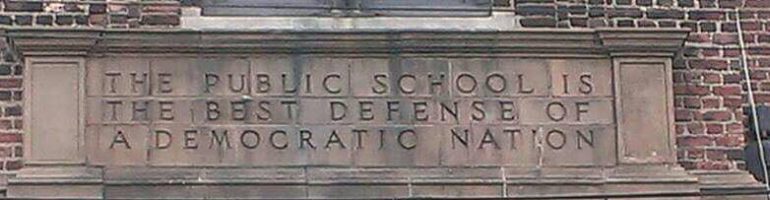
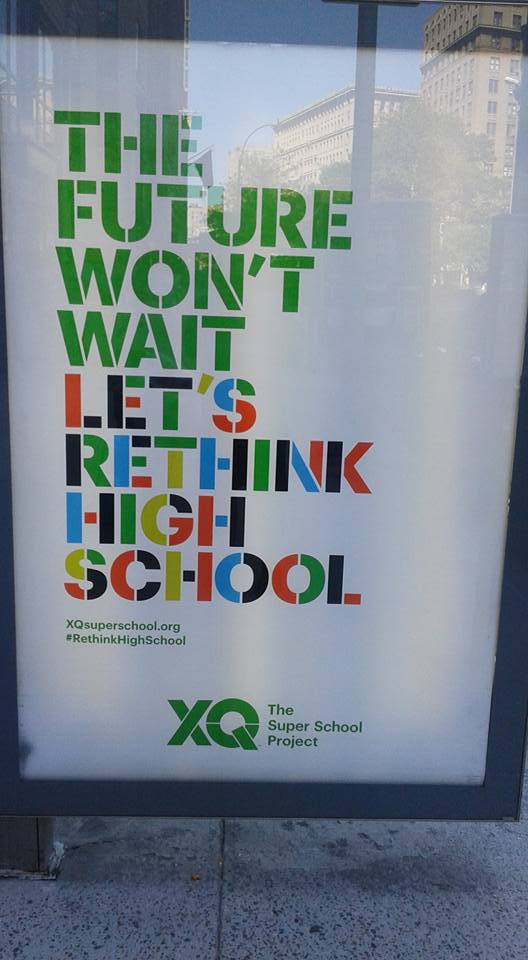
2 Comments

Filed under Funding, NCLB, politics, schools, teacher learning, teaching, Testing

Who Will be NYSED’s “Outside Evaluators”?

As more details emerge from the budget agreement hammered out between Assembly and Senate leadership and Governor Andrew Cuomo, more questions seem to need urgent answers.  The Governor got many of the education items that he wanted, especially regarding tenure and teacher evaluations.  His original proposal called for 50% of teacher evaluations to come from standardized testing, 35% from an “outside evaluator,” and only 15% from school principals.  All three of these elements are in the budget framework and potentially the budget bills being debated as the deadline looms, but the final weight of the different items will depend upon work done by the New York State Education Department between now and June 30th.  Regardless of the final weight given to these items, no teacher in the state will be found to be more than “developing” if the test score component is “ineffective,” and all teachers will be evaluated with an outside observer’s input.  Any district that does not submit and receive approval of an evaluation plan using these guidelines will get no increase in state aid for the coming year.

The outside observer component was of special interest to Governor Cuomo who called the current evaluations (that he fought to implement originally) “baloney” and who apparently does not trust that school principals are capable of evaluating their teachers.  Taken out of context, the idea of an additional set of eyes observing teachers using some kind of common metric is intriguing.  Kind of like giving every newborn child in the country a pony.  You like the idea until you start thinking about how it could possibly work.  In the end you realize that the most predictable result is that a lot of people are going to end up with pony poop in their kitchens.

Capital New York reports this morning that a few more details are emerging on the teacher evaluation system:

There will be two required observations, from a teacher’s principal or administrator and an “independent” evaluator, who could be a principal, administrator or “highly effective” teacher from another school or district. As Cuomo originally proposed, a college professor or retired educator could also serve as the independent evaluator. A peer observation will be optional.

The logistics of this will likely prove very daunting.  Who, exactly, will be the “outside evaluators” for all of the schools in New York State?  According to the governor and law makers, they will be a hodge podge of administrators, “highly effective” teachers, college professors, or retirees.  This, at least, is a more qualified proposed group than Pearson Corporation’s essay scorers who were recruited in part by advertising on Craig’s List, but what is the scale of this endeavor?

Classroom observations are currently done by school principals and other related district administrators who are already employed by districts to do a full range of duties, not just teacher evaluations.  There are 4,530 public schools across all of the school districts in New York State (not including charters), and 203,457 classroom teachers who work in those schools (not including paraprofessionals, etc.).  That means that in any given year, roughly 4500 principals are doing some or all of the observations for all of the teachers in their buildings.  This includes scheduling a classroom visit, doing the observation with appropriate notes, optimally having a pre and post observation discussion with the observed teacher, and writing up the evaluation report using the current scoring band system.  Now that work will have to be duplicated over 200,000 times by the outside evaluators who will be approved to observe and to evaluate teachers in the state.

So who will we get to do this?

Will school principals do this for teachers outside their districts? I have my doubts.  Principals are very busy people with a heavy load of time intensive and often politically sensitive work to accomplish.  If a principal is already observing and evaluating all teachers in his or her building, how much time will that person have to travel to other districts and replicate that work for a school system that does not employ him or her full time?

Will “highly effective” teachers do this for teachers outside their own districts?  First, the proposed system is not designed to find very many teachers “highly effective” to begin with, so this will be a limited pool that may change from year to year.  Second, it is highly doubtful that many teachers, regardless of skill level, will line up to undertake this role outside of their own schools.  There is some precedent for experienced and highly regarded teachers taking a role to assist and review peers within their own schools and districts, but such programs are costly and usually require release time from classroom teaching.  Will many of New York’s “highly effective” classroom teachers take on travel and cost their districts substitute teacher costs so they can travel outside of district to evaluate other teachers?  I would not hold my breath waiting for that.

Will college professors do this in addition to their scholarly and teaching pursuits?  For that matter, how many professors are actually qualified to do such work in the state?  The NYSED website says that over 100 university based undergraduate and graduate programs in the state lead to teacher certification, so there may, in fact, be qualified faculty in the state to take on some of the load.  However, recall that roughly 4500 school principals or assistant administrators are responsible for ALL of the teacher evaluations for over 203,000 classroom teachers.  Very few university faculty will likely consider taking on even a partial load of teacher evaluations if it inhibits their ability to teach on campus and to conduct research in their fields.  If the state were considering fostering many more deep university and school district partnerships it might be plausible to use faculty for some of this work, but it is highly unlikely if the call is simply for faculty to take on additional responsibilities that do not serve their professional goals.

Will retired teachers agree to do this work?  I do not know.  Maybe, but I kind of doubt it under current circumstances.  A retired teacher would likely not be qualified to evaluate too many teachers in a single school if it meant observing outside of his or her certification area.  As a teacher education program director, I know many retired teachers who have been willing to give of their time and wisdom to supervise our student teachers.  They do it because they love teaching and want to help mentor new young people into the profession.  Will Governor Cuomo and the NYSED be able to find large numbers of retired teachers who want to do work aimed at REMOVING many more teachers?  I have my doubts.

This will also be an expensive proposition.  Doing all of teacher evaluation twice every year will require a workforce large enough to do that portion of administrators’ work each and every year.  We will need a workforce of at least 1100 evaluators doing at least one evaluation a day during the school year to observe and evaluate every classroom teacher in the state (and, of course, every school day is not a day available for observations), and that assumes a nice, evenly distributed available pool of evaluators matched to teachers.  Unless there is a line item in the budget to pay for all of them, then it will likely be up to the districts to hire evaluators and pay them for their time and travel.  So which art or music teacher will your district have to cut this year to pay for the outside evaluators?

Come to think of it, the pony idea might be more feasible.  And cleaner.

9 Comments

Filed under Funding, New York Board of Regents, politics, schools, teaching, Testing

The New York Times or The Onion? “Is Your First Grader College Ready?”

Every now and again, a serious news outlet runs a story that requires multiple readings to tell that it is not someone trying deliberately to invoke Poe’s Law.  The internet axiom states that it is not possible to construct a satire of an extreme form of belief that will not be mistaken as sincere belief by a substantial portion of readers.  Poe’s Law is most often invoked to humorously highlight beliefs that are both fervently believed but so devoid of actual factual basis or a semblance of reasoning that they lampoon the person holding them.

Welcome to Poe’s Law: College and Career Readiness Edition.

“College and Career Readiness” is language that is plastered all over the Common Core State Standards and the accompanying standardized examinations offered by the Partnership for Assessment of Readiness for College and Careers (PARCC) and the Smarter Balanced Assessment Consortium (SBAC).  In essence, the expression means that every student in the country should be taught a curriculum that prepares him or her with the essential mathematics and literacy skills necessary to succeed in entry level college courses or to successfully complete entry level job training in presumably desirable careers.  Proponents of the Common Core State Standards assure us that the common standards provide a proper and attainable platform from which elementary and secondary teachers can educate students to that level, and proponents of the accompanying PARRC and SBAC examinations, frequently the same people, assure us that exams will help us know that every child is on track to be college and career ready — or not.  Regardless of your assessment of those claims and the foundation that underlies (or fails to underlie) them, that’s the promise for standards beginning in Kindergarten and yearly examinations beginning in third grade.

So enter the New York Times with an article asking, and this is not a headline stolen from The Onion, “Is Your First Grader College Ready?” detailing various programs and efforts to raise preparation for college with children as young as first grade:

What is college? To Madison Comer, a confident 6-year-old, it is a very big place. “It’s tall,” she explained, outlining the head of Tuffy, the North Carolina State mascot, with a gray crayon. “It’s like high school but it’s higher.”

Elizabeth Mangan, who plans to be a veterinarian because she loves her puppy, pointed out that she, too, would attend North Carolina State. “Me and Madison are going to the same college,” she said.

And what is college? “It’s someplace where you go to get your career.”

Billy Nalls, meanwhile, was drawing curving horns and jagged teeth on Rameses the Ram on a paper pennant representing the University of North Carolina. “I’m drawing him as angry,” he said. In college, Billy wants to learn to make a Transformer (“It’s like a robot that comes from Cybertron”). And what happens at college? “You get smarter and smarter every day.”

Let me say that some of what is discussed in the article is not precisely off base.  Proponents of these approaches are correct that many students who will eventually go to college grow up in homes with college educated parents and with an underlying assumption that college is just a normal part of growing up.  When both of your parents had post-secondary education and career paths requiring that education, it is simply a background assumption in your life that college is likely compared to growing up in entire zip codes were very few of the adults have studied beyond high school.  It is also true that many first generation college students face challenges to their success that are not common among families with a history of college education, and that they often require support beyond the traditional college “bridge” programs.

So what is almost satirical about some of the approaches described in the Times?

It is one thing to talk to first grade students about what they want to be when they grow up.  For students who are growing up without many community models of post-secondary education, I can see potential in the middle school activities described that emphasize recognizing what would be needed to accomplish their ambitions.  However, the early elementary discourse transforms from surprising to comical to frustrating in very short order.  Six year-olds are not simply talking about what they want to be as grown ups; they are naming specific schools and filling out mock applications for the bulletin board.  The first grade teacher is quoted discussing that it is not enough to ask children what they want to be: “We need to ask them, ‘How will you get there?’ Even if I am teaching preschool, the word ‘college’ has to be in there.”  The approach is not simply being applied in districts with high concentrations of disadvantage; the article quotes a college planner from Westchester County, New York who compares college preparation to becoming an Olympic skater whose training begins in earnest at age 6.

A 6 year old future Olympian, however, is capable of understanding that she loves skating and perhaps that she is unusually good at it and wishes to spend a lot of time doing it.  It might not be a stretch for that 6 year old to know that the world’s best skaters can get a gold medal and to want that.  Her ability to visualize the path from being 6 to an Olympic medal?  Not there.  And it is pretty much guaranteed that future college graduates, at the age of 6, are simply incapable of envisioning something so distant and abstract.  This is the kind of “program” you get when a vaguely attentive superintendent hears the constant repetition of “college and career readiness” in reform circles and hastily writes a memo.

What is also close to farcical in the described approaches is how ways that students “prepare for college applications” in wealthier communities that first grade mock applications and middle school campus visits miss.  Those children have access to community recreation and athletic leagues.  They have schools with library/media centers that are funded and staffed.  They have community and school based arts and music education.  They have summer camps. Their homes have books and toys suitable for free play.  Their schools are often new or extremely well maintained and upgraded. Very few of them are food insecure or at risk of homelessness.

Everything I have listed is directly connected to students becoming “college and career ready,” so while I can support consciously organizing very young children to play “grown up” and following that with earlier than typical planning for certain students, that does not even qualify as a quarter of a loaf if we do not discuss the kind of cultural capital activities that have nothing to do with pinning mock college applications on a first grade bulletin board. Are we willing to embed resources in beautifully designed community centers that replicate what suburban kids have at home?  Are we willing to fully fund school and community libraries and art and music programs?  Are we going to expand recreation and summer camp opportunities?  Will we rebuild crumbling school infrastructure in our urban and rural communities?  Will we embrace, rather than cut, our obligations to keep people from being hungry and homeless?

Meanwhile I have a suggestion that would do a lot more for the first graders described in the Times article than a “cut and paste worksheet” describing the steps to get into college.  Give every kid in that class a good set of plain Legos, some dolls, and other toys that promote unstructured, creative PLAY — let them negotiate and explore their SIX YEAR OLD MINDS.  There will be plenty of time to stress them out and confuse them in only two more years when they take their third grade PARCC or SBAC examinations:

Ginger graduated high school college and career ready, and she got into Harvard University.  Her parents make too much money to qualify for needs-based financial aid, and they are underwater on their mortgage.  At $60,000 a year for tuition, room, and board, and at 8% interest, calculate for how many years SALLIE MAE will OWN Ginger if she begins her career at Starbucks.  Then recalculate how that will change if Ginger’s loans are bought by a securities bundler after five years and sold as bonds.  Show all of your work.

10 Comments

Filed under child development, Common Core, Funding, Media, schools

Andrew Cuomo to New York State: Your Teachers Stink. I Will Fire Them. I will Break Their Union.

The gauntlet that New York Governor Andrew Cuomo and New York Regents Chancellor Merryl Tisch picked up with their public correspondence in December has been thrown down.  The Governor announced his plans to revamp and revise education in New York with his State of the State address on January 21st, and it was accompanied by a book detailing his policy proposals.  On teacher evaluation, Governor Cuomo is delivering a massive change — and a direct challenge to community control of their teacher workforce.  If the governor gets his way, 50% of teachers’ evaluations will be controlled by students’ annual progress on standardized tests, and no teacher rated “ineffective” in either half of the evaluation will be scored higher than “developing.”   The other 50% of annual evaluations will be comprised of two observations, one by a school administrator and another by an “independent observer” in the form of an administrator from another district or a state approved outside agency.  The so-called “independent observer” observation will count for 35% of the evaluation.  Local administrators are to be restricted to 15%.

New York State principals?  Andrew Cuomo says you cannot do your jobs.  New York State communities?  Nobody in your town is qualified to evaluate your children’s teachers.  Andrew Cuomo wants to take that away for Albany.

Governor Cuomo insists that these draconian measures are necessary because only a third of New York students scored as proficient or highly proficient on the new Common Core aligned standardized examinations, and by his logic that means the teacher evaluation system, which currently weights the results of those exams for 20%, is “baloney” because only 1% of teachers were found ineffective.  However, tying a criticism of the teacher ineffectiveness to the CCSS aligned exams is flagrantly mendacious because “proficient” was never tied to “grade level” or “passing”;  it was tied to SAT scores loosely predictive of college success.

Governor Cuomo’s teacher evaluation plan is set to punish teachers for not graduating vastly more students ready to succeed in college, as measured by one test score, than currently attend college.

What can reasonably be predicted as an outcome of this?  Plenty.  And none of it will be pretty.

First, this policy will fall heavily upon districts with high levels of poverty which are tightly concentrated because of New York’s appallingly high Residential Income Segregation Index.  We know from disaggregated PISA data that schools with high levels of poverty struggle in standardized test achievement compared to schools in affluent communities. Following Governor Cuomo’s logic it is not that these schools and their teachers struggle with the long established deprivations of poverty upon their student population and would benefit from aggressive plans of economic renewal and integration; it is that their teachers are ineffective and need to be fired.

Second, no teacher in New York will be actually safe no matter how good they are or how talented their students.  The value-added models (VAMs) of teacher performance based on standardized tests are by now subject to so much research demonstrating their unreliability that using them at all is indefensible.  The American Statistical Association (ASA) warned last year that teacher input can only account for 1-14% of student variability on standardized tests, and VAM generated rankings of teachers are not stable, meaning a teacher can be in the top 20% in one year and slide below the median in a subsequent year.  If you think that your child attending a selective public school with a math teacher whose students all pass a challenging algebra examination will have that teacher spared via VAMs — think again.  Teachers who are excellent by every other conceivable model of assessment can be rated as the “worst” grade level teacher in New York City via value-added modeling.

And Governor Cuomo wants that to be 50% of teacher evaluations.

The predictable outcome of this will be an objectively worse education for nearly every student in the state.  Consequences from the No Child Left Behind law’s focus on test-based accountability include a steady narrowing of school curricula to subjects that are tested, leaving science, the social studies, the arts, and health as dwindling portions of public eduction.  Teaching to the test as is common practice in “no excuses” charter schools will become a prominent methodology in historically struggling schools, and it will grow in currently successful schools as well.  Teachers and administrators will have little choice — with so much riding on VAMs that unstable and able to find teachers of advanced students in the bottom 10% of teachers, test preparation as curriculum will spread.  Further, as experienced teachers are pushed out, the teacher workforce will become younger, assuming that New York State schools can possibly entice new teachers to start a career under these conditions.  These will be novices whose classroom skills will be on a steep learning curve for their early years, and many of them will be forced out by VAMs before reaching the point where their skills start to level off.

A less experienced teacher workforce teaching more and more to the test — THAT is the likely outcome of Governor Cuomo’s evaluation proposals.  There will also be no local measure that can preserve a teacher in his or her job because the only local component of the evaluation system – local administrator observations – will be restricted to 15%.  Are you a principal whose teachers work in underfunded facilities with students who live in poverty?  Tough.  Are you a parent whose child’s teacher works with gifted students in a curriculum accelerated 2-3 years beyond the test?  Tough.  Are you a school board member who wants to preserve the social studies, sciences, art, music, and health?  Tough.  85% of your teachers’ evaluations are outside the input of any local stakeholders; Albany will be in control.  And Governor Cuomo will hold nearly three quarters of a potential increase in aid for schools hostage unless he gets his way.

It is impossible to not connect the dots here.  Among Governor Cuomo’s most reliable donors are Wall Street supporters of charter school expansion who can turn such schools into revenue streams for private corporations using public money.  Charter schools, among whose strongest supporters at the Thomas B. Fordham Institute recently admitted are in the business of pushing out harder to educate children, have been turned into a way to monetize our public education budgets.  Governor Cuomo, who raised half of his $40 million election war chest from just 341 donors, owes that sector.

The only entity with enough members and resources to resist that is the NYSUT.

Most of Governor Cuomo’s teacher evaluation plans (and his other education proposals) will make our schools objectively worse places to learn with many fewer experienced teachers and a diminishing curriculum.  However, they will make the teachers’ union much weaker with an unstable and uncertain cadre of members who have less experience and no practical job security — and who will not be able to effectively resist more and more of our public schools turned over to private interests.

Everything about this is wrong.

74 Comments

Filed under Corruption, New York Board of Regents, politics, schools, Testing, Unions