Liberal Apostasy: Is It Time To Downgrade the Federal Department of Education?

Washington has seen recent jockeying for positions on the debate to repeal or revise the No Child Left Behind (NCLB) as Republican Senator and former Secretary of Education Lamar Alexander takes over the Senate Committee on Health, Education, Labor & Pensions.  Senator Alexander has signaled that he intends to engage in significant overhauls of the 2001 law which updated the Elementary and Secondary Education Act of 1965 and which has been due for re-authorization since 2007.  He will likely find atypical allies from traditionally Democratic leaning teacher unions who will join more conservative advocates in calling for a decrease in standardized testing and walking back Obama Administration initiatives that have pushed states to evaluate individual teachers and make tenure and dismissal processes tied to such scores.

Current Secretary of Education Arne Duncan laid out some of his priorities for an overhaul of the legislation in a speech on January 12th, and he was joined by a group statement from a number of venerable civil rights organizations that, among their other priorities for federal education law, called on lawmakers to preserve the annual standardized testing requirements from NCLB.  Given the historic problems in many state with both resistance to integration and with neglecting urban and rural student populations which led to more vigorous federal education laws in the first place, it is not surprising that such organizations would want a new education law to retain tight oversight provisions for the states.  Secretary Duncan, in his planned remarks, emphasized accountability:

I believe parents, and teachers, and students have both the right and the absolute need to know how much progress all students are making each year towards college- and career-readiness. The reality of unexpected, crushing disappointments, about the actual lack of college preparedness cannot continue to happen to hard-working 16- and 17-year olds – it is not fair to them, and it is simply too late. Those days must be over.

That means that all students need to take annual, statewide assessments that are aligned to their teacher’s classroom instruction in reading and math in grades 3 through 8, and once in high school.

As he continued, he framed the need for accountability in civil rights language:

Will we work together to ensure that every public school makes a real priority of the educational progress of minority students, those living in poverty – be there rural, urban, or someplace else — those with disabilities, those learning English, or other groups that have struggled in school in the past? Should unacceptable achievement gaps require action? Or is that simply optional?

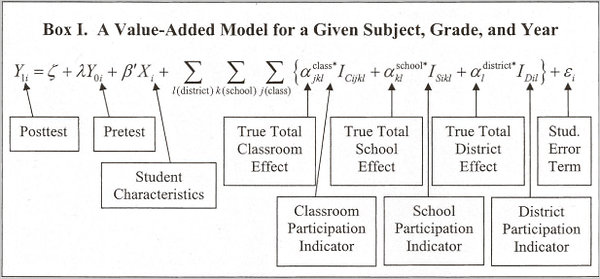
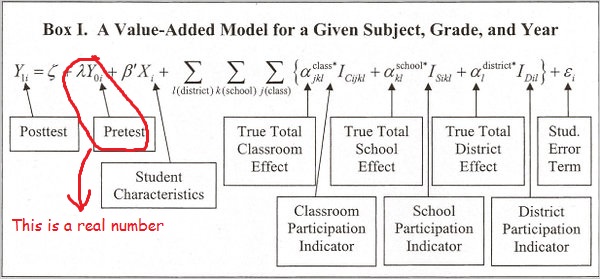
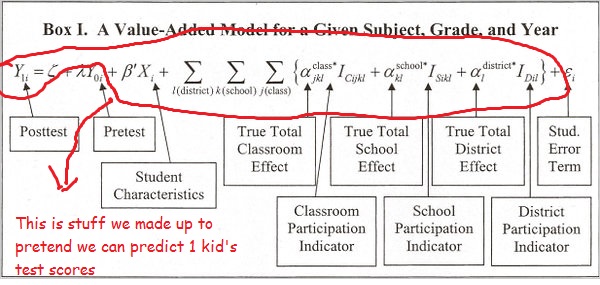
Secretary Duncan’s questions were poignant, and the moral authority of the NAACP and the ACLU should have reminded listeners that we have historically done a poor job improving educational opportunity for students minority students and students in poverty.  However, the insistence that annual, standardized test-based accountability is the only solution to making certain that we are accountable to all of our students is deeply flawed.  It is flawed because the testing regimen that Secretary Duncan supports has already narrowed the curriculum received by huge swaths of our student population, even though Secretary Duncan declared that non-tested subjects like science and the arts “are essentials, not luxuries.”  It is flawed because even though Secretary Duncan stated that teachers and principals deserve support, the national reality is that most states are still spending less on education today than they did before the Great Recession even as the federal government has pushed those states to demand much more from those same teachers and principals.  It is flawed because while Secretary Duncan said he believes “teachers deserve fair, genuinely helpful systems for evaluation and professional growth that identify excellence and take into account student learning growth,” his favored metric is the value-added model (VAM) of teacher performance, and the research simply does not support using VAMs as either “fair” or “genuinely helpful” and they certainly cannot “identify excellence” with reliability.

Secretary Duncan once famously said that “We should be able to look every second grader in the eye and say, ‘You’re on track, you’re going to be able to go to a good college, or you’re not,’” so his faith in power of standardized testing data is long lasting and probably sincere, but it has led his department, under the guise of relieving states from the most punishing aspects of NCLB, to push states in educational directions that are legitimately damaging to the public’s trust in education and which incentivize schools and teachers to further narrow their curriculum in search of higher test performance.

Which leads me to a question: Is it time to downgrade the federal department of education?

This is not an idle question because while I believe that the federal legislation from the 1960s and 1970s was a necessary beginning to address systemic inequalities in educational opportunity for the poor, for minorities, for women, and for people with disabilities, the Cabinet level role of the Department of Education has become highly problematic in today’s hyper-focus on standardized testing.  The federal DOE was actually created by Congress in 1979 in order to strengthen the federal commitment to public education and to increase coordination and accountability for the various federal laws that have direct impact on schools.  The department was immediately under fire from conservative activists interested in a smaller federal government, and President Reagan, riding the conservative wave that put him in office, pledged to abolish the fledgling department.  This did not happen, and by the 1990s, the department was secure under the successive Presidencies of George H.W. Bush and Bill Clinton.  With the bipartisan passage of No Child Left Behind, the department was firmly entrenched in pushing states to hold schools accountable to student achievement on standardized test scores, and while the Obama administration Race to the Top grants allowed states to apply for waivers on NCLB requirements that all children read and do math “at grade level,” states had to agree to adopt common standards, expand charter schools, and use standardized test scores to evaluate teachers.  Secretary Duncan made it clear that he would hold states receiving waivers to those agreements when in April of last year, he stripped Washington state’s NCLB waivers for not meeting the federal department’s “requirements for reform.” 

The federal government provides roughly 12% of the annual national spending of $550 billion on elementary and secondary education.  While this does not represent a sum that comes close to helping states meet federal requirements, it has proven enough for the federal government to use the Department of Education to push policies like test-based accountability and rapid expansion of charter schools upon states and locales that might seek other ways to improve their schools given more flexibility.  Title 1 funds, for example, reach 56,000 schools serving 21 million children, but since NCLB those funds have been tied towards demonstration of student annual progress via standardized testing and during the Obama administration states were required to use standardized tests to evaluate teachers if the received waivers from other NCLB provisions.  The federal government can use its funding to enforce specific policy priorities on the states, but it rarely funds those priorities enough to help school districts implement them effectively.  For example, for 40 years the federal government has failed to fully fund the Individuals with Disabilities in Education Act (IDEA), covering roughly 17% of the cost of the legislation even though it has long promised states to cover a full 40%.

Questioning the Cabinet level role of the DOE does not mean abandoning the landmark legislation in education that proceeded the department’s formation, and it is important to recognize the significant and needed impact of that legislation.  Congress passed the Education for All Handicapped Children in 1975.  In the 1969-1970 school year, a total of 2,677,000 children representing 5.9% of all children in public school received special education services, but none of them were identified with specific learning disabilities.  In the 1979-1980 school year, 4,005,000 children representing 8.9% of all students received special education services, including almost 1.3 million with specific learning disabilities that were being accommodated.  Title IX was passed in 1972 when 386,683 women received bachelors degrees, representing 46% of degrees conferred.  By 1979-1980 school year, that percentage had risen to 49%.  In 1960, five years before the Elementary and Secondary Education Act was passed, the median years of school attended by an African American male was 7.9, and by 1980, that had increased to 11.9 years — more important, the gap in the median number of years in school between white and black males closed from 20 percentage points.

All of these gains occurred in the wake of landmark federal legislation, but before the Department of Education was created in its current form.

What makes the current federal DOE so problematic in 2015 is not the role that it was created to play, but the fact that most initiatives out of it since Congress passed No Child Left Behind resemble a classic case of regulatory capture by the for profit charter school sector, the testing industry, and the data mining industries.  Unlike other cases of regulatory capture, there appears to be no prospect for partisan realignment as administrations change and monied interests involved in the Executive branch shift — successive two-term Republican and Democratic administrations have charged down the current path, prioritizing testing with increasingly higher stakes.

While eliminating the Cabinet level DOE would impede some of these forces, I am also mindful of important considerations.  First, the civil rights organizations that have signed on supporting Secretary Duncan’s priorities are not wrong in their concern that states have historically neglected and have even actively discriminated against certain populations, and that states and localities must be held accountable for providing equal access and equal opportunities for all of their students. While I disagree that yearly high stakes examinations are the way to ensure that, nobody can reasonably look at our history and dismiss the issue.  Second, demoting the federal DOE might complicate the plans of the interests who have worked to monetize public education, but it is not as if they are absent from state level government. When it comes to adding requirements to teachers while cutting funding and when it comes to turning public schools over to charter corporations, there is little daylight between Democratic star politicians like New York Governor Andrew Cuomo, Chicago Mayor Rahm Emmanuel, and former Newark Mayor and now United States Senator Cory Booker and Republican counterparts such as Scott Walker of Wisconsin and Chris Christie of New Jersey.

Finally, as Arthur Camins notes here, our problem of the past 15 years can be described as the federal DOE “reaching for the wrong things:”

The problem over the last several decades of education policy is not overreach. It is that the federal government has been reaching for the wrong things in the wrong places with the wrong policy levers. For example, the nation has largely abandoned efforts to end segregation, arguably a prime driver of education inequity. The large-scale, community-building infrastructure and WPA and CCC employment efforts of the Great Depression have given way to the limited escape from poverty marketing pitch of education policy following the Great Recession. Whereas the 1960s War on Poverty targeted community resource issues, current education efforts target the behavior of individual teachers and pits parents against one in other in competition for admission to selected schools.

Professor Camins’ points are well-taken, but advocates for returning public education to the public’s care need ideas for addressing how education policy has been captured in both Washington D.C. and in state capitols. Consider the case of Andrew Cuomo who raised over $40 million between his inauguration in 2010 and reelection in 2014 — more than half of which came from just 341 donors, donors who expect influence upon the governor commensurate with their investment.  In essence, this is a question of rooting up corruption and the circumvention of democratic processes, but as Fordham Law Professor Zephyr Teacher demonstrates, there are no easy answers.

But we must seek answers, even difficult ones.  What has happened at the federal DOE is dangerous for quality and equitable public education, but it is also a symptom of a problem endemic in our politics.  Mere handfuls of extremely wealthy people can override the wishes of millions of voters and circumvent public debate on crucial issues.

We cannot afford it any longer.

4 Comments

Filed under Chris Christie, Corruption, Cory Booker, Funding, Gates Foundation, politics, Social Justice

New York’s Public Schools Need Some Friends in Albany

This is the text of a detailed letter I am sending to my representatives and other leaders in Albany.  I invite anyone to use any portion of it and the resources in the notes to write your own.  However, the New York State Allies for Public Education has a convenient web form that will generate a letter to your representatives as well.  It can be found here.  The agenda has been set by Governor Cuomo and Chancellor Tisch — it will make our schools objectively worse in every way and it will sweep up all teachers regardless of their capabilities.  We need parents, community members, and teachers to band together to say that this must be stopped.  Let’s dare our representatives in Albany to become friends of public education.

The Honorable Linda Rosenthal
LOB 741
Albany, NY 12248

Senator Jose Serrano
181 State Street Room 406
Legislative Office Building
Albany, NY 12247

Dear Assemblywoman Rosenthal and Senator Serrano:

The public schools of New York need some friends in Albany.

I wish I could say that the parents, children, and teachers of this state could count upon friendship in the Governor’s office or at the Regents Chancellor’s office, but both Governor Cuomo and Chancellor Tisch have made it very clear that they intend great harm to our public education system.  They have powerful backers among Wall Street and private foundations, and they have the encouragement of the United States Department of Education, but regardless, what they say they intend to do will not only harm the 600,000 public school teachers of New York, but also it will degrade the quality of education enjoyed by millions of school aged children and counted upon by their parents and communities.

Governor Cuomo vetoed a bill on December 29th that his own office drafted (1) and which would have given teachers and principals a two year grace period from suffering professional consequences due to the results of the new Common Core aligned state examinations.  The Governor justifies this by claiming that the current teacher evaluation system finds too few teachers incompetent and that student scores of the new exams demonstrates that this is untrue.  Chancellor Tisch has joined the Governor in calling for far more rigid teacher evaluations, responding to a December letter from the State Director of Operations with her own priorities. (2) Chancellor Tisch backs changing teacher evaluations so that the 20% currently set aside for local measures of teacher performance be eliminated and that the portion assigned to student growth in standardized tests be raised to 40% overall.  In addition, Chancellor Tisch proposes that a teacher found “ineffective” by the standardized tests be determined to be ineffective overall, and she believes that two such evaluations should lead to a teacher’s removal.

There are few proposals that could be so immediately harmful to students regardless of Governor Cuomo’s declaration that he is looking out for them and that the NYSUT only wants to protect bad teachers.  This change to teacher evaluation rests upon a flawed premise about student achievement in New York, will subject teachers to an evaluation system with no basis in research, and will dramatically harm the quality of curriculum and instruction across the state in both affluent and impoverished districts.

Governor Cuomo and Chancellor Tisch apparently believe that because the student proficiency levels on the new Common Core aligned examinations are in the 30-35% range then it is “obvious” that many more New York teachers must be incompetent and deserve to be removed from the classroom.  This is a flawed premise and deliberately misleading. Both the Governor and Chancellor know full well that the cut scores for proficiency were set deliberately to match SAT scores (3) linked to specific grades in first year college courses.  The percentage of New Yorkers over 25 with a bachelor’s degree is 32.8 (4),so the argument that THESE proficiency levels on THESE exams mean that many New York teachers are incompetent only works if you assume that there is a demand for college educated workers not being met currently.  The economic evidence for that assumption is weak, however, because while a college wage premium exists, its growth has shrunk dramatically in recent decades (5) and much of that small growth is coming from falling wages for non-college graduates.  It would be worthwhile to question the uneven distribution of college opportunity among racial, ethnic, and economic lines, but it would also be worthwhile to discuss the loss of opportunities for families to move from poverty to the lower middle class (6), losses that keep many more families in poverty than can be lifted by more college degrees.

From that flawed premise, Governor Cuomo and Chancellor Tisch assume that teachers can be accurately measured as ineffective based upon standardized test scores.  Nothing could be further from the truth.  Value Added Models (VAMs) are not widely accepted as valid for teacher evaluation, and the evidence against using them that way led the American Statistical Association to issue a statement warning about the limitations of VAMs (7).  Teacher ratings using VAMs can be highly unstable.  Dr. Bruce Baker of Rutgers notes that teachers who ranked in the top 20% of teachers using value added modeling were likely to shift in subsequent years (8), some even to the lowest quintile and then back to the top, demonstrating how unreliable these methods are.  VAMs take their toll on excellent teachers in excellent schools as well, as demonstrated by the case of the “worst 8th grade math teacher in New York City” in 2012 (9).  This teacher taught at a citywide gifted and talented school, and all of her students passed the challenging Regents algebra exam, but her VAM, based upon an exam testing material her students had learned several years earlier, placed her at the absolute bottom of all 8th grade math teachers.  Hers is not an isolated case, and if Governor Cuomo and Chancellor Tisch have their way, there will be no locally derived measure sufficient to have saved her job.

The tragic impact this will have upon classrooms everywhere should be obvious.  With such dire consequences tied to a single set of standardized examinations and with no other measure mattering, teachers, even in successful schools, will have to teach to the test.  Narrow and relentless test preparation can increase student scores, but it comes at the expense of creativity and subjects not tested.  Research since the passage of No Child Left Behind demonstrates that subjects such as science, social studies, art, music, and physical education have all been reduced because of the consequences attached to low test scores (10).  The Cuomo/Tisch proposals for teacher evaluation will inevitably accelerate this, leading to less time spent in a well rounded curriculum and more time in didactic instruction and seat work.

Meanwhile, the New York Times recognized this week that fiscal inequity is “the central crisis” in New York’s schools, and that Albany is over $5.6 billion dollars short annually of commitments made in 2007 (11).  The New York State School Boards Association estimates that the average district in New York has lost $3.1 million a year in state aid due to the continued use of the gap elimination adjustment (12), and Dr. Baker of Rutgers calculated that New York City alone has lost between $3-4000 per pupil per year through Albany’s refusal to fully fund its own aid formula (13).

In a time when teachers are being told to do far more with their students, Governor Cuomo has consistently starved local districts of funds, and now he and Chancellor Tisch demand that these same teachers produce test results or be fired using statistical models with no foundation in research.

Enough is enough.  The New York State Allies for Public Education has responded to Governor Cuomo and Chancellor Tisch (14), and I implore you to join them in opposing this damaging agenda. It has no basis in fact, it will severely harm all of our schools in every community, and it fully ignores the ongoing failure of Albany to equitably fund our state’s schools.

Our public schools need friends in Albany.  I hope that you will be among them.

Sincerely,

Daniel S. Katz, Ph.D.
Director of Secondary Education and Secondary/Special Education, Seton Hall University
Father of Two New York Public School Students

Notes:

1. Taylor, K. (2014, December 29). Cuomo Vetoes Bill That Would Protect Teachers From Low Ratings. The New York Times. Retrieved January 6, 2015, from http://www.nytimes.com/2014/12/30/nyregion/cuomo-in-reversal-vetoes-bill-that-would-have-protected-teachers-from-low-ratings.html

2. Burris, C. (2015, January 1). Teacher Evaluation: Going from Bad to Worse? The Washington Post. Retrieved January 6, 2015, from http://www.washingtonpost.com/blogs/answer-sheet/wp/2015/01/01/teacher-evaluation-going-from-bad-to-worse/

3. Burris, C. (2014, April 29). The Scary Way Common Core Test “Cut Scores” Are Selected. The Washington Post. Retrieved January 5, 2015, from http://www.washingtonpost.com/blogs/answer-sheet/wp/2014/04/29/the-scary-way-common-core-test-cut-scores-are-selected/

4. United States Census Bureau. (n.d.). Retrieved January 7, 2015, from http://quickfacts.census.gov/qfd/states/36000.html

5. Shierholz, H., & Mishel, L. (2013, August 21). A Decade of Flat Wages: The Key Barrier to Shared Prosperity and a Rising Middle Class. Retrieved January 7, 2015, from http://www.epi.org/publication/a-decade-of-flat-wages-the-key-barrier-to-shared-prosperity-and-a-rising-middle-class/

6. Harris, B., & Kearney, M. (2013, December 4). A Dozen Facts about America’s Struggling Lower-Middle-Class. Retrieved January 7, 2015, from http://www.brookings.edu/research/reports/2013/12/12-facts-lower-middle-class

7. ASA Statement on Using Value-Added Models for Educational Assessment. (2014, April 8). Retrieved January 7, 2015, from https://www.amstat.org/policy/pdfs/ASA_VAM_Statement.pdf

8. Baker, B. (2012, November 17). On the Stability (or not) of Being Irreplaceable. Retrieved January 7, 2015, from http://schoolfinance101.wordpress.com/2012/11/17/on-the-stability-or-not-of-being-irreplaceable/

9. Pallas, A. (2012, May 16). Meet the “Worst” 8th Grade Math Teacher in New York City. The Washington Post. Retrieved January 6, 2015, from http://www.washingtonpost.com/blogs/answer-sheet/post/meet-the-worst-8th-grade-math-teacher-in-nyc/2012/05/15/gIQArmlbSU_blog.html

10. David, J. (2011). High Stakes Testing Narrows the Curriculum. Educational Leadersip, 68(6), 78-80. Retrieved January 6, 2015, from http://www.ascd.org/publications/educational_leadership/mar11/vol68/num06/High-Stakes_Testing_Narrows_the_Curriculum.aspx

11. The Central Crisis in New York Education. (2015, January 4). The New York Times. Retrieved January 6, 2015, from http://www.nytimes.com/2015/01/05/opinion/the-central-crisis-in-new-york-education.html?_r=1

12. Q&A: New York State’s Gap Elimination Adjustment. (n.d.). Retrieved January 7, 2015, from http://www.nyssba.org/clientuploads/nyssba_pdf/Q&A/Q&A-Gap-Elimination.pdf

13. Baker, B. (2012, December 7). Forget the $300m Deal! Let’s talk $3.4 billion (or more)! Retrieved January 7, 2015, from http://schoolfinance101.wordpress.com/2012/12/07/forget-the-300m-deal-lets-talk-3-4-billion-or-more/

14. NYSAPE Response Letter to Governor on Public Education. (2015, January 5). Retrieved January 7, 2015, from http://www.nysape.org/nysape-response-letter-to-governor-on-public-education.html

3 Comments

Filed under Activism, New York Board of Regents, politics, schools, Social Justice, teaching, Testing

A New Year’s Resolution for Ed “Reformers” — Remember Our Future Teachers Are In The Schools You Are “Reforming”

About five years back, I got my first impression that our older child might potentially decide to become a teacher.  It was during what I thought was going to be a game of “Hungry Hungry Hippos” which took quite an unexpected turn when our child took all of the marbles, placed them neatly in the center of the game, and told the hippos that they all had to “wait for snack time.”  Over time and with more time in school, other hints have cropped up such as an almost immediate affinity for any teacher at the head of the classroom, a willingness to respect norms of classroom behavior, an almost obsessive love of certain stories and storytelling, a fascination with explaining acquired knowledge to others, giddy excitement at the opportunity to do a presentation for students in a lower grade, and a certain flair for the theatrical.  While this same child is also a bit of a homework resister and not a fan of rote tasks, I can see aspects of a “born teacher” growing up (even though these same traits could apply to other fields).

This lines up well with what we know about how individual students make the decision to become teachers.  It is not a process that begins simply with a sudden decision to teach.  Rather, it unfolds over time during the some 13,000 hours that students spend in contact with classroom teachers from Kindergarten to 12th grade, a period that Dan Lortie called the “apprenticeship of observation” in his 1975 work, Schoolteacher: A Sociological Study.  Those who decide to teach have prolonged and substantial experiences with people practicing their chosen profession over the course of 13 years, and many potential teachers wish to teach because they, themselves, enjoyed being taught.  They found the study of subjects and school itself to be enjoyable.  While many of the ideas about what teaching actually is that are formed during this observational period are simplistic and need to be challenged both in teacher preparation and throughout the career, it remains true that school is the most active recruiter of future teachers.  If my older child does decide to become a teacher, like most others who choose the field, it will be out of a desire to share with future generations of students a love of learning and to make their school experiences enjoyable, joyous, and inspirational as well.

That is, if Governor Andrew Cuomo and Board of Regents Chancellor Dr. Merryl Tisch manage to not ruin New York’s schools first.

That statement is not made even a little bit tongue in cheek because both Governor Cuomo and Dr. Tisch have made it abundantly clear in the past month that their dissatisfaction with New York teacher evaluations will not go unanswered and their likely “solution” will unleash a torrent of perverse incentives upon our schools.  Andrew Cuomo signaled his intentions to make teacher evaluations more “rigorous” just before the election with newspaper interviews and public statements.  The process was set in motion last month with a letter from Jim Malatras, director of state operations, to Dr. Tisch and outgoing New York State Education Department Commissioner Dr. John King.  The letter opens with the now familiar refrain that the new Common Core aligned state examinations are showing far too few of graduating seniors being “college ready” (even though the proficiency levels, which were set with cut scores pinned to the SAT scores of successful college freshmen, slightly exceed the percentage of New Yorkers over 25 with a bachelor’s degree), and then laments about the unacceptability of the situation.  Teacher and blogger Peter Greene nearly dissects the letter in this post, and among its many facets is a clear desire to make it far easier to get rid of teachers and to increase the number of teachers found ineffective and thus able to be removed from the classroom.

On December 29th, Governor Cuomo vetoed a bill his office had originally drafted that would have given teachers a two year grace period from the new exams being used to remove them from the classroom, a move that starkly reversed his pre-election promises to give the new systems more time to be understood.  Questioned on his change of course, the governor raised the irrelevant specter of child abusers remaining in the classroom, “I understand the union’s issue; they don’t want anyone fired,” Cuomo said. “But we have teachers that have been found guilty of sexually abusing students who we can’t get out of the classroom.”  He did not explain himself with any specific cases of teachers actually found guilty of sexual abuse still teaching, nor did he explain how tying more of teachers’ evaluations to student test scores will get abusers out of schools faster, but he did join both Michelle Rhee and Campbell Brown in trying to scare people into endorsing radical changes to teachers’ workplace protections.

Dr. Tisch responded to Mr. Malatras’ letter with her own set of priorities to tie far more of teachers’ evaluations directly to student progress in the state examinations and possibly eliminating local measures of teacher effectiveness altogether.  2013 New York Principal of the Year Carol Burris explains in this article what Dr. Tisch and Governor Cuomo appear to be proposing:

The system she wants to change is one that she created several years ago with former education commissioner John King, which was put into law by the New York Legislature and that was rushed into place by Gov. Andrew Cuomo who denied districts state aid if they did not adopt it. It became mandatory for teachers and principals to be evaluated in part by student standardized test scores.

The short version of what she wants to do now is this—double down on test scores and strip away the power of local school boards to negotiate the majority of the evaluation plan. Tisch would get rid of the locally selected measures of achievement, which now comprise 20 percent of the evaluation, and double the state test score portion, to 40 percent. She also recommends that the score ranges for the observation process be taken out of the hands of local districts, and be determined by Albany instead.

Principal Burris further notes that Dr. Tisch appears intent on ensuring that the predicted growth of students on standardized tests be the supreme measure of teacher effectiveness, suggesting that teachers found ineffective by those measures be found ineffective overall and removed from the classroom after two such ratings.  Such a system would provide no room for a principal to protect a teacher known locally as both effective and valued by the community, as Principal Burris relates in the story of a teacher from Great Neck who would fall victim to Dr. Tisch and Governor Cuomo.  Given the growing understanding that value added measures (VAMs) of teacher effectiveness rely upon tests not designed to detect teacher input, are highly unstable, and cannot account for teacher impact on variability among student scores, it is quite apt that Dr. Audrey Amrein-Beardsley of Arizona State University and a leading researcher on value-added measures, described the proposal as going from “bad to idiotic.”

This aggressive move to double the value added portion of teacher evaluations and to override local measures in favor of standardized tests is bad for teachers, and it is potentially even worse for students.  By doubling the state examination’s role, eliminating locally chosen measures, and potentially overriding any consideration other than the state examination, Dr. Tisch and Governor Cuomo are proposing a system where teachers would face strong incentives to push test preparation into a central role in the curriculum.  Michelle Rhee’s tenure as Chancellor Schools in Washington, D.C. demonstrated the not excusable but entirely predictable results of tying people’s job security to capriciously unstable measures of their effectiveness.  Less drastic, but potentially more widely damaging for more students, is the evidence that raising the stakes on standardized tests to these extremes will result in an even narrower curriculum than under the original No Child Left Behind provisions which have already reduced time spent on non-tested content and increased teacher centered instruction.  In New York State this will be compounded by the constant gaming of state aid from the Cuomo administration that has coincided with increased demands on districts, especially struggling districts, to perform at higher levels.

It takes no powers of prognostication to see where New York schools are headed if the Governor and Chancellor get their way.

John I. Goodlad, a giant in education research in the second half of the 20th century, passed away at the age of 94 on November 29th of last year.  In his 1984 book, A Place Called School, he asked, “Boredom is a disease of epidemic proportions. … Why are our schools not places of joy?”  The Cuomo/Tisch goals for teacher evaluation are almost guaranteed to drive a huge amount of joy right out of our schools alongside art, music, civics, and health.  Teachers and students will have less room to explore, make mistakes, learn from those mistakes, and shared purposes for education outside of test performance will be even further diminished.

And this is where education “reformers” need to think especially carefully because it is not just the schools of today that they are impacting.  Children in Kindergarten today were born in 2009.  Several 100 thousand of them will likely be first year teachers by the year 2031-2032, and the kinds of teachers they will become will be greatly influenced by what school is like for them between now and their graduation from high school as the class of 2027.  Will their schools be places of extreme test preparation, didactic instruction, and a curriculum that is narrowed by the parameters of tests?  Will these future teachers learn that school is supposed to be emulate even a fraction of the stress and narrowness of the Chinese cram school portrayed in this recent New York Times Magazine? Will there be joy?  And if not, what kinds of future teachers will emerge from those schools to teach the generations behind them?

So, education “reformers” — a New Year’s Resolution for you just as America’s teachers are returning for the second half of the year: The next generation of teachers are currently in the schools that you are reforming. Resolve not to wipe out the joy.

2 Comments

Filed under schools, Stories, teacher learning, teaching, Testing

2014 in review

The WordPress.com stats helper monkeys prepared a 2014 annual report for this blog.

Here’s an excerpt:

Madison Square Garden can seat 20,000 people for a concert. This blog was viewed about 66,000 times in 2014. If it were a concert at Madison Square Garden, it would take about 3 sold-out performances for that many people to see it.

Click here to see the complete report.

Leave a comment

Filed under Uncategorized

On My Twelfth Year of Common Core, David Coleman Gave to Me…

…a tightly written College English 1 essay.

And not a whole heck of a lot of anything else.

Three months ago, I wrote about the very narrow theoretical perspectives that appear to inform the Common Core Reading Literature standards from Kindergarten to 12th grade, and I followed it in October with an exploration of how the incentive systems written into the Race to the Top grant programs are likely to lock in a very narrow reading of the already narrow standards.  This entry takes a look at those same Reading Literature standards and posits what possibilities and pitfalls await young readers as the potentially learn reading via these standards.  This is speculative and highly dependent upon a certain degree of fealty to the Common Core State Standards project that is not precisely guaranteed.  However, in all of the discussions on the process and content of the CCSS English Language Arts standards, I’ve seen little that takes these standards and posits what they would mean in classroom implementation for teachers approaching literature instruction using them.

I want to open by stating that people I admire think that aspects of the CCSS ELA standards have potential, and it would be a mistake for any opponent or advocate to assert that the literacy acquisition standards are entirely with or without merit.  In any complex endeavor such as the adoption of common standards for the ELA, there will be conflicting views of the research and developmental appropriateness of the standards.  Regardless, the International Reading Association (IRA) has taken a stance of what I would call cautious optimism that, if implemented correctly, the CCSS ELA standards have strong potential especially in literacy acquisition, fluency, and vocabulary development.  Throughout the chapters in the linked book, authors offer hopeful visions of what teachers could accomplish with the standards, but also sound cautionary notes about the need for development, education, quality materials, and systems that do not narrow what teachers are doing.  P. David Pearson of the University of California at Berkeley notes:

Teacher prerogative and the comprehension model, two assumptions that are strongly represented in the standards and clearly based on research, will not, in my view, be implemented with a high degree of fidelity because the guidelines in the Publisher’s Criteria (Coleman & Pimintel, 2011) are likely to undermine the standards as they are written. Only if schools can resist these guidelines and stay true to the version of the standards in the original document do we have a hope of a high fidelity implementation of what we know about reading comprehension and about teacher learning within school change efforts.
He goes on to state that he still supports the standards because he believes they are an overall improvement because they are “the best game in town”, a hope that they can be used as a “living document” that can reflect best research knowledge, and his reading of the research literature on reading and comprehension supports that the standards are a “move in the right direction.”
I should note that I know Dr. Pearson personally, having studied with him in graduate school, and I have a deep admiration for his body of work and his perspective.  I also note that the qualifications he has made on his endorsement are striking to me because given the policy environment that surrounds CCSS most of his cautions, just like the cautions of his fellow authors for the IRA volume, are being plainly ignored in states that adopted CCSS alongside the high stakes testing and teacher evaluation models based upon them.  Further, while the questions of early literacy acquisition and text complexity are worthy of continued discussion, I remain convinced that the CCSS ELA standards on reading are so text-centric that questions of student engagement and the very purpose of a complete English Language Arts curriculum remain woefully underdeveloped as the nation moves into full implementation of the standards.
Blogger Peter Greene took the CCSS chief architect, David Coleman, to task recently in a response to an essay entitled “Cultivating Wonder” where Coleman, who has never studied early or adolescent literacy and who has never taught in a secondary ELA classroom, posits the “proper” way that teachers can inspire students to engage deeply with texts with “good questions.”  Greene shrewdly notes that Coleman’s perspective on reading literature is so tightly confined to reading within the “four corners” of a page that he misses that Shakespeare’s lack of stage directions is a likely byproduct of the playwright being present at productions himself, and he misses aspects of Shakespeare’s story telling craft that are common across his plays.  Professor Nicholas Tampio of Fordham University goes further than Greene, postulating that Coleman’s approach to reading does not prepare students for college because his intense focus on what is just in the text limits students from being able to make insights within and across texts, and preparing them to be graded by software:

As a professor, of course I demand that my students provide evidence to support their arguments. Coleman’s pedagogical vision, however, does not prepare students for college. He discourages students from making connections between ideas, texts or events in the world — in a word, from thinking. Students are not encouraged to construct knowledge and understanding; they must simply be adept at repeating it.

His philosophy of education transfers across disciplines. After analyzing literary passages, he observes, “Similar work could be done for texts … in other areas such as social studies, history, science and technical subjects.” Like a chef’s signature flavor, Coleman’s philosophy of education permeates the myriad programs that the College Board runs.

Computers can grade the responses generated from his philosophy of education. Students read a passage and then answer questions using terms from it, regardless of whether the text is about history, literature, physics or U.S. history. The Postal Service sorts letters using handwriting-recognition technology, and with a little tinkering, this kind of software could seemingly be used to score the SAT or AP exams.

Grading writing by computers is probably a long way off, but taken together, both Peter Greene and Professor Tampio’s critiques highlight that David Coleman’s reading perspective is narrowly confined to the “four corners” of the page of text which, when coupled with high stakes testing and teacher evaluations based on testing, will likely produce students responding narrowly, citing small segments of text, in ways that will fall into predictable patterns.

Looking at the CCSS 11-12th grade Reading Literature standards, we can see the boundedness that Peter Greene calls the “four corners of the page” because even in standard number 7 which deals with “multiple interpretations of a story, drama, or poem” the language of the standard draws readers immediately to evaluate “how each version interprets the source text” with no indication how it is that different actors, designers, and directors might come to various stagings of a play as representative of time, place, and audience; the analysis remains text bound.  The other anchor standards are similarly bound, with standard 1 calling on students to “Cite strong textual evidence to support analysis of what the text says explicitly, as well as inferences drawn from the text, including determining where the text leaves matters uncertain;” standard 2 stating students will “Determine two or more central themes or central ideas of a text and analyze their development over the course of the text, including how they interact and build on one another to produce a complex account; provide an objective summary of the text;” standard 3 requires students to “Analyze the impact of author’s choices regarding how to develop and relate elements of a story or drama (e.g. where a story is set, how the action is ordered, how the characters are introduced and developed);  standard 4 requires students “Determine the meaning of words and phrases as they are used in the text, including figurative and connotative meanings; analyze the impact of specific word choices on meaning and tone, including words with multiple meanings or language that is particularly fresh, engaging, or beautiful;”  standard 5 puts students to work to “Analyze how an author’s choices concerning how to structure specific parts of a text (e.g. the choice of where to begin or end a story, the choice to provide a comedic or tragic resolution) contribute to its overall structure and meaning as well as its aesthetic impact; and standard 6 says that students will “Analyze a case in which grasping a point of view requires distinguishing what is directly stated in a text from what is really meany (e.g. satire, sarcasm, irony, or understatement).”

I do not have enormous difficulties with much of this.  The Reading Literature standards for the upper grades of high school outline a tightly textual approach to analysis that, if done well, could train college bound students in the kind of “text as puzzle” thinking that is often rewarded in introductory level college courses.  The standards require students to support their statements about the meaning of the text with “strong” evidence from the text, and they set students both to understand the tools of text that authors employ when writing and to speak and write analytically about those tools.  It seems very likely to me that a student armed with a mastery of these Reading Literature tools would be capable of crafting spoken and written arguments that would satisfy the grading criteria of many introductory college English courses.

But (and you knew there was a “but” coming, right?) this remains a narrow vision of what an English Language Arts curriculum can be.  For example, the standards make frequent notice of Shakespeare, and Mr. Coleman’s “Cultivating Wonder” essay includes a pass at making students “wonder” at Hamlet, but can one truly imagine a English Language Arts classroom bounded by just the tools needed to write a competent college English essay?  It is not that those tools are unimportant, but given the Sword of Damocles hanging over teachers via assessment, can they expand their vision of powerful engagement with literature outside of those tools?  I have my doubts, and I have my doubts that David Coleman sees that engagement as important.

However, most English teachers I have known would agree that it is critically important.  Hamlet, for example, even for students in a college preparatory curriculum, is far more than a textual puzzle to be picked apart and analyzed to determine if Shakespeare believes that Hamlet has actually lost his mind or if the scholarly and dickering Hamlet is actually ill-suited to rule compared to the villainous but capable Claudius, the noble and active Laertes, or the militaristic and decisive Fortinbras.  It is a play worth reading and performing because it holds up an uncomfortable mirror to our own human failings, and it asks ourselves what we value in our most human of endeavors, seeking understanding of our place in the continuity of human experience.  And that is because the English Language Arts are much more than tools for advancement to the next phase of education or economic obtainment; they are an exploration of the richness and power of language, which ranks with religion and art as the most universally deployed tools for understanding ourselves.  William Shakespeare has not survived for four continuous centuries of reading and production because his works provide interesting textual puzzles for essays; he has surveyed because he remains one of the English language’s greatest instructors in the meaning of being human.

There are more things in heaven and earth, Mr. Coleman, than are dreamt of in your philosophy.

Also troubling is that the Common Core way of reading literature makes no express acknowledgement of what we know about sophisticated reading in adolescent literacy.  There is no mention of students reading intertexually, using what they know from other texts and applying it to create nuances in the meaning of what they are currently reading.  Nor can one tease out an understanding of the processes by which a student reads in order to make sense of how they will use the close reading perspective so privileged by the standards themselves.  Before a student can deploy the directives of the standards to create a piece of close reading analysis, that student will first need to read and comprehend, and as demonstrated in the Rosenblatt text I’ve linked to, that is a layered process that deploys an incredible number of resources both inside and outside of the text.  This cannot be emphasized enough:  it does not matter that the lesson is directed at citing “strong textual evidence” in order to substantiate a point about the text, if the lesson does not allow for the face that two different readers will be drawn to different points and different “strong textual evidence” depending upon factors that exist entirely outside of the text itself.

It is not that teachers and readers cannot acknowledge that reality within the confines of the standards; it is, however, something they will have to acknowledge entirely on their own because the Reading Literature standards provide no vision of a reading process.

If teachers were holding that perhaps this tightly contained vision of the ELA was restricted to upper secondary levels, it looks like that hope is in vain.  The first three Reading Literature standard looks like this in 8th grade:

CCSS.ELA-Literacy.RL.8.1
Cite the textual evidence that most strongly supports an analysis of what the text says explicitly as well as inferences drawn from the text.
CCSS.ELA-Literacy.RL.8.2
Determine a theme or central idea of a text and analyze its development over the course of the text, including its relationship to the characters, setting, and plot; provide an objective summary of the text.
CCSS.ELA-Literacy.RL.8.3
Analyze how particular lines of dialogue or incidents in a story or drama propel the action, reveal aspects of a character, or provoke a decision.
And like this in 5th grade:
CCSS.ELA-Literacy.RL.5.1
Quote accurately from a text when explaining what the text says explicitly and when drawing inferences from the text.
CCSS.ELA-Literacy.RL.5.2
Determine a theme of a story, drama, or poem from details in the text, including how characters in a story or drama respond to challenges or how the speaker in a poem reflects upon a topic; summarize the text.
CCSS.ELA-Literacy.RL.5.3
Compare and contrast two or more characters, settings, or events in a story or drama, drawing on specific details in the text (e.g., how characters interact).
And like this in 3rd grade:
CCSS.ELA-Literacy.RL.3.1
Ask and answer questions to demonstrate understanding of a text, referring explicitly to the text as the basis for the answers.
CCSS.ELA-Literacy.RL.3.2
Recount stories, including fables, folktales, and myths from diverse cultures; determine the central message, lesson, or moral and explain how it is conveyed through key details in the text.
CCSS.ELA-Literacy.RL.3.3
Describe characters in a story (e.g., their traits, motivations, or feelings) and explain how their actions contribute to the sequence of events.
Even in Kindergarten, children who are not yet fluent are tasked with being little reading detectives:
CCSS.ELA-Literacy.RL.K.1
With prompting and support, ask and answer questions about key details in a text.
CCSS.ELA-Literacy.RL.K.2
With prompting and support, retell familiar stories, including key details.
CCSS.ELA-Literacy.RL.K.3
With prompting and support, identify characters, settings, and major events in a story.
What is striking in this backwards engineered set of reading standards is not what is included, but what is excluded and how it remains excluded (and how it cannot help but remain excluded given that states agreed to add no more than 15% of their own material to the standards upon adoption).  I have no problem with Kindergarten students having reading discussions with teachers to practice recall and retelling.  I have no problem with 3rd graders asking questions that can demonstrate whether or not they comprehended what they read.  There is no harm in a 5th grader being asked to locate where in a text he or she developed a particular idea about the text or in an 8th grader honing that skill into a more formal tool.  None of these things harm children, and for those on a path to a four year liberal arts education, the end goal is defensible.
But what is left out absolutely harms them.
What is left out is an understanding of both reading as a process to be fostered and developed over the lifetime of a reader, and what is left out is also any reason for reading that strays from that eventual college English 1 essay and into the multitude of reasons why people read.  As written, these Reading Literature standards would make at least somewhat subversive a teacher who asked students to consider why certain features of the text attracted their attention, who asked students how a piece of reading made them feel initially, who asked students to place authors and literature in the context of place and time to see them as social commentary, who connected works of literature to other works of art, who asked students to connect the text to other pieces of literature except to delve into the author’s use of allegory, who explored the role of literature in the history and sociology of a culture…all of these can only be squeezed into the standards after the total fidelity to close textual reading has been duly observed.
And with the policy system that is currently in place, I fear many teachers will have no idea how to find the space for all of the other purposes for reading literature.  I can think of few tactics more likely to DISCOURAGE a lifelong relationship with reading outside of the classroom.
I’ll take my A on that essay now, Mr. Coleman.  Can I have my Tolkien back, please?

3 Comments

Filed under Common Core, teaching

The only thing I can think to say about the news from Peshawar

May G-d bless and keep the children, families, teachers, and citizens of Peshawar, Pakistan.

1 Comment

Filed under Uncategorized

The First Rule of Ed Reform Club is: You Do Not Talk About Ed Reform Club

For years now, advocates of the “no excuses” brand of charter school have denied the obvious.  While loudly proclaiming the test scores and graduation rates of the students who remain at their schools, they have denied that their application processes combined with the harsh discipline environments that emphasize extreme conformity to extreme behavioral expectations are forms of “cream skimming” designed to drive out students less likely to burnish their reputations as “miracle factories.”  As time has gone by and evidence piled up, this has become much harder for them to deny with even a hint of honesty.  For example, Dr. Diane Ravitch of New York University, presented the reports of an insider at the New York City department of education on the extreme attrition at most of the so-called “miracle schools”, and demographics of these schools differ greatly from their fully public neighborhood schools.  Part of this comes from charter schools using extreme in-school discipline tactics that emphasize how only a certain type of child is welcome in the school, and discipline is often coupled with overt and covert pressure for parents to transfer struggling students out.  The evidence is by now substantial that charter schools in the “no excuses” category seek different applicants to their schools via complicated procedures prior to admissions lotteries, and once students enter they quickly seek to push out students who will not fully and promptly comply with their expectations.

Defenders claim that this evidence is misrepresented.  They claim that their attrition rates are comparable to the district schools (but they fail to mention that district schools backfill any seats vacated by children who move or transfer while many of the charters do not).  They claim that their demographics are comparable to district schools (but they tend to compare themselves to entire communities instead of the specific neighborhoods in which they locate and the fully public schools in which the co-locate).  They claim demand for their kind of school environment leads to massive waiting lists, but when students do leave, somehow the waiting list students do not move into the charters in any great numbers.  For years, the supporters of these brands of charters (Success Academy, KIPP, Uncommon Schools, etc) have defended them by obfuscating the issues of cream skimming and selective attrition and by changing the subject on the very different demographics their favored schools serve.

And then there’s President of the Thomas B. Fordham Institute Michael Petrilli, who broke the first rule of ed reform club: he talked about ed reform club.

The New York Times ran this “Room For Debate” piece on the question of whether or not charter schools are “cherry picking” the students they want despite their supposedly “open” lotteries for admission, and, surprisingly for the New York Times in the past few years, the balance of the authors represented the balance of the evidence: yes, charter schools HAVE been pushing out large numbers of students and their “successes” need to be evaluated with that in mind.  Mr. Petrilli did not try to deny this evidence.  Instead, he embraced it, and he declared that this was by design and desirable:

Because these are schools of choice, they have many advantages, including that everyone is there voluntarily. Thus they can make their discipline codes clear to incoming families (and teachers); those who find the approach too strict can go elsewhere.

This is a good compromise to a difficult problem: Not all parents (or educators) agree on how strict is too strict. Traditional public schools that serve all comers have to find a middle ground, as best they can, which often pleases no one. Schools of choice, including charters, need not make such compromises. That’s a feature, not a bug.

It’s not too strong to say that disruption is classroom cancer. It depresses achievement and makes schools unpleasant, unsafe and unconducive to learning. We need to think long and hard about taking tools away from schools — especially schools of choice — that allow their students to flourish.

Wow.

There have been excellent responses to the ease with which Mr. Petrilli assures us that it is okay to make so-called “disruptive students” somebody else’s problem.  Blogger Sarah Blaine notes that Mr. Petrilli is essentially “writing off ‘those kids'”:

Is it really okay to openly advocate for charter school discipline policies that weed out a significant portion of the student body (without, in most cases, replacing those expelled or “counseled out” students, of course)?

Is it really okay to say that our public schools are places of compromises that please no one?

Is it really okay to imply that public schools truly are the schools of last resort, that their highest and best purpose is to serve as dumping grounds for those students who are not good enough (or malleable enough, or terrified enough, or controllable enough) to succeed in charters?

Ms. Blaine also reported that on Twitter, Mr. Petrilli asserted that fully public schools should be allowed to force out disruptive students and that those students could always end up in alternative schools:

Ms. Blaine keenly notes what allowing schools to behave this way will result in:

Presumably in an all-charter system this will mean dumping the unwanted students into low-performing charters until those charters either kick them out or are closed and a new batch of substandard charters arise to take them on. In a mixed public/charter district, this will mean dumping those kids back into the traditional public schools, further damaged by the alienation, sense of failure, and disruption that go along with getting kicked or counseled out of a charter school. But according to Petrilli, there is no need to worry about that, since bringing stability to the lives of students with anger or behavior issues is apparently not a priority. And stratification of students in publicly funded schools is apparently “a feature, not a bug.”

Peter Greene of the Curmudgucation blog adds to this argument by pointing out just how much of a betrayal of fundamental American values Mr. Petrilli commits:

The fundamental promise of US public education is that we will educate every single child for as long as there are children in this country. The fundamental promise of modern charters, as deftly delineated by Petrilli, is we will educate the students we feel like educating for as long as it suits us to do it. That is probably the smallest promise that any culture has made to its children in the history of ever; even elite medieval schools promised to stick around till the job was done. Charters have tried to claim success by redefining success, and their new definition is tiny and unambitious.

This is also emblematic of another forgotten American promise. Modern charters are predicated on the idea that we will no longer try to fix things. They are predicated on the idea of “escaping” bad neighborhoods, bad conditions, bad poverty– which of course means we have no intention of addressing those issues. We are standing in front of a burning building with no intention of putting the fire out. We’re just going to rescue a few kids. The right kids.

Ms. Blaine and Mr. Greene do excellent jobs highlighting the amorality of Mr. Petrilli’s position and the reality of charter school practices. His position does not withstand scrutiny in other ways as well.  First, he claims that national polls show that up to a third of teachers “know someone” who left teaching because of “discipline problems” at his school, but this does not match what we know are the key issues cited by teachers who leave the profession, especially in the early years of their careers.  It is not a very high bar to say that, among all the teachers in your school, that someone left because of not being able to implement classroom management.  Meanwhile, solid research from Harvard’s Project on the Next Generation of Teachers found that no student demographic characteristics are significant to young teachers’ decisions to leave teaching in high poverty schools when school culture issues are taken into account.  While how the school manages disciplinary issues certainly factors into school culture, the teachers in the Harvard study focused primarily upon principal leadership and support for teaching and the quality of their collegial relationships.  Teachers wanted and valued administrative and collegial support in disciplinary matters, but they did not cite a need to be able to expel or push out students like at “no excuses” charter schools.

And we should rightly question just how many children Mr. Petrilli thinks all public schools, fully public district schools and charter schools alike, should be able to drive away.  Mr. Petrilli says that the attrition is a “feature not a bug” and he wants to support district schools in doing the same, but the schools he is supporting have genuinely alarming rates of student disappearance.  Success Academy 1 began its first class with 73 students in 2006, but only 32 of those students made it to complete 8th grade in Spring of 2014. North Star Academy in Newark is part of the Uncommon Schools Network and likes to brag how 100% of its seniors graduate, but what they advertise less is that only half of their students who enroll in 5th grade ever make it to 12th grade.  This kind of attrition is replicated across these networks and across cities nationwide.  Keep in mind:  these are schools that are losing up to or more than half of their students who come from a lottery pool of parents and guardians who sought these school out for their children.

And how is it that schools manage to drive away this many children?  All schools have some attrition, but “no excuses” charters employ not simply discipline, but discipline that ensures large numbers of families get the message that they do not belong.  In the same “Room For Debate” page, Ms. Marilyn Anderson Rhames, a charter school teacher in Chicago, explains how she discovered the extreme discipline that effects the children she works with:

Take, for instance, one alumnae who passed all her classes in the 9th grade but was retained because she “failed behavior.” She was extroverted and a bit rebellious as my middle school student, so I wasn’t surprised to learn that she had broken her charter high school’s arbitrary rules (with 37 detentions), which among other things prohibit dying hair an unnatural color (say, pink or green), wearing dangling earrings instead of studs and talking in the hallway between classes. I was shocked, however, that the punishment was to hold her back, making her take the classes she had passed again to make her attitude “college ready.”….

…The principal told me that if my former student wanted an “easier” high school, someplace that doesn’t prepare kids for college, then she was free to leave. That sounded to me like “cherry-picking,” but in reverse.

If readers express little sympathy for a “rebellious” teen, then take the case of Matthew Sprowal, a Kindergarten student in Success Academy 3 in 2008.  Young Mr. Sprowal can be easily distracted and while he was never disciplined for acting out in 3 years of preschool, in S.A. 3, he was subjected to so much behavioral “correction” that by one month in he was throwing up most mornings and asking his mother if he was going to be “fired” from school.  Mr. Sprowal is hardly an isolated case, and the Success Academy chain has discipline and suspension rates far eclipsing their fully public district peers.

Since he has stated on Twitter that he believes that district schools should be allowed to discipline in ways similar to the “no excuses” charters, and he has said that “disruption is classroom cancer,” it is worth asking Mr. Petrilli just what percentage of children in fully public schools do you think should be suspended until they drop out or transfer?  What percentage of students do you think are the equivalent of carcinogens?

I will never assert that alternative schools are never an answer for some children because, as Peter Greene notes here, some of them are genuinely innovative places that work very well with the hardest to teach children (which was supposedly the original mission of charter schools).  However, if Mr. Petrilli is to be taken at his word that the disciplinary procedures and student attrition rates of the “no excuses” charters are things to be replicated at fully public district schools, he has to accept that he is saying a vastly larger percentage of children do not “deserve” to remain within the traditional schools OR the charter schools.

Finally, Mr. Petrilli’s position demonstrates a staggering lack of imagination.  In essence, he is arguing that some students are unable to or unlikely to conform rigidly to the disciplinary expectations that he deems “necessary” for serious learning, and that it isn’t just charter schools that should be able to punish and pressure them until they leave for someplace else.  He has no answer for them; he just sees them as the “carcinogens” that create the “classroom cancer” of disruption and wants them sent away from the “good kids”.

So what is left unexamined and unadvocated for?

  • Community health and nutrition programs with greater reach than current models
  • Universal, high quality pre-K
  • Smaller class sizes
  • Co-teaching models
  • Teacher mentoring and phased entry to the classroom for novices
  • Building capacity for principal leadership
  • Embedding community services such as social workers, medical, and mental health care within the school
  • School within school programs for high achievers AND special needs/at risk students
  • Fully funding federal special education legislation

“Send the trouble makers back to district schools and then to alternative schools” explores NONE of these options, all of which are more likely to extend educational opportunities than a charter school model that is predicated on refusing to accommodate even KINDERGARTEN children who do not readily adapt to extremely narrow disciplinary expectations.

Of course, these policies will cost more money than we are currently spending, and they might require that the top 1% of income earners, who have pocketed 95% of the income gains made since the 2009 recession ended, pay more in taxes.  These same 1% denizens, just 4 of whom earned more money last year than every single Kindergarten teacher in America combined, would much rather take their money and “invest” it in growing charter school chains that give them a return on their investments via tax credits than pay any more of it in taxes that would go to help all of our nation’s school children.

Thanks, however, to Michael Petrilli, they can no longer claim that they really care about helping all of America’s students. At best, they just want to help a handful of the neediest whose successes will make them look good.  At worst, they are cynically manipulating the problems of educating in communities with inter-generational poverty to run up a new investment bubble until they lose interest, cash in, and run off to ruin something else — maybe our public water works.

So, thank you, Mr. Petrilli for your honesty.

23 Comments

Filed under charter schools, Social Justice

Exit The King….An Opportunity for Union Leadership?

Dr. John B. King Jr., the Commissioner of Education and President of the University of the State of New York, is stepping down from that position and will become a senior adviser to United States Secretary of Education, Arne Duncan.  While the announcement drew praise from the usual suspects who support Dr. King’s agenda of charter schools, Common Core State Standards, high stakes testing, and teacher evaluations based on test scores, supporters of traditional, fully public, schools had harsh criticisms for the outgoing Commissioner. Education activist and director of Class Size Matters, Leonie Haimson stated:

John King was the most unpopular commissioner in the history of NY State.  He showed no respect for parents, teachers or student privacy.  Ironically, he was intent on protecting his own privacy, and routinely withheld public documents; our Freedom of Information request of his communications with inBloom and the Gates foundation is more than 1 ½ years overdue.  His resignation is good news for New York state; hopefully he will be unable to do as much damage at the US Department of Education.

Dr. King’s problematic tenure began in May, 2011, and he swiftly moved to push through the implementation of the Common Core State Standards and accompanying testing systems that his predecessor Commissioner David Steiner had committed to when Dr. King served as his Deputy Commissioner.  This editorial, appearing in the Hudson Valley paper The Journal News, summarizes Dr. King’s time as Commissioner as “tone-deaf” and characterized by his inability to listen to criticism:

Many parents and educators in this region have offered reasonable, passionate and often convincing arguments against the growing state focus on testing, data-crunching, and evaluating teachers with a formula that is easily picked apart. But King has not been willing to engage his critics. This position has enraged many and created a bizarre stare-down between the state Education Department and many school districts that are supposed to be part of the same team.

The problems with Dr. King’s governance of NYSED are multifaceted.  The EngageNY website, set up by the State Education Department as a clearinghouse of information on the Common Core State Standards and materials designed for leaders and teachers, was quickly called out for hurried and poorly designed “resources” placed on the site when it debuted.  New York Principal Carol Burris documents in this article parents who found links to inappropriate materials under “make test prep fun”, and materials posted for modules on 8th grade algebra which included links to topics that are taught in calculus.  As with many things associated with the Common Core, the rush to both develop and implement the standards has led to a “get the product out and clean it up later” mentality that is emblematic of Dr. King’s leadership and many other reformers.

Questionable materials from EngageNY might have been overlooked by many in the public, but the CCSS are tied to high stakes testing on student proficiency in the standards — and Dr. King has been moving New York at a rapid clip in that direction as well.  Predictably, those who have had close contact with the exams have noted, within the allowed parameters of a nondisclosure agreement with testing giant Pearson, how the exams are confusing and inappropriate for the age of students who have to take them, another likely effect of their being rushed to meet Dr. King’s implementation schedule.  Principal Elizabeth Philips of PS 321 in Park Slope noted earlier this year in the New York Times:

In general terms, the tests were confusing, developmentally inappropriate and not well aligned with the Common Core standards. The questions were focused on small details in the passages, rather than on overall comprehension, and many were ambiguous. Children as young as 8 were asked several questions that required rereading four different paragraphs and then deciding which one of those paragraphs best connected to a fifth paragraph. There was a strong emphasis on questions addressing the structure rather than the meaning of the texts. There was also a striking lack of passages with an urban setting. And the tests were too long; none of us can figure out why we need to test for three days to determine how well a child reads and writes….

…At Public School 321, we entered this year’s testing period doing everything that we were supposed to do as a school. We limited test prep and kept the focus on great instruction. We reassured families that we would avoid stressing out their children, and we did. But we believed that New York State and Pearson would have listened to the extensive feedback they received last year and revised the tests accordingly. We were not naïve enough to think that the tests would be transformed, but we counted on their being slightly improved. It truly was shocking to look at the exams in third, fourth and fifth grade and to see that they were worse than ever. We felt as if we’d been had.

As troubling as the quality of the exams used to assess students’ “College and Career Readiness” AND their teachers’ effectiveness is, the way that the scores were deliberately (and opaquely) engineered to rate only 30% of students as proficient and highly proficient is worse.  State officials, including Dr. King, warned that the scores from the first round of CCSS aligned testing would produce dramatically lower results, but those warnings were predicated on schools not having sufficiently aligned curriculum materials yet.  However, Principal Burris provided an in-depth analysis of how the cut scores for each level of achievement were determined, and her conclusion is troubling:  Dr. King asked for a specific analysis from the College Board on SAT scores that predict “success” in first year courses at 4 year colleges and universities, and the result of that analysis was used to determine what scores on the CCSS aligned tests would be labeled as “proficient” and “highly proficient” as the committee worked through the materials with representatives from the State Education Department.  The result was that 31% of students taking the tests scored as proficient and highly proficient — and the evidence points to the conclusion that Dr. King and the SED wanted that result.

By the way — the percentage of New York residents over 25 with a BA?  32.8%Far from finding a vast educational wasteland where only a third of students succeed, the tests found the percentage of students likely to pursue higher education.

Not that Dr. King, the Regents, or anyone from the Cuomo administration was eager to explain it that way and justifying it as a good assessment system for the entire student population.  This became painfully clear when Dr. King attempted a publicity tour of town hall meetings that erupted disastrously in Poughkeepsie  in Fall of last year.  While keeping his usual calm and soft-spoken demeanor in face of extensive and heated criticism, Dr. King also remained entirely impervious to the concerns of the gathered parents and other community stakeholders.  After the Poughkeepsie forum, he also changed the schedule, canceling meetings, and switched formats so he appeared with a number of other state officials — and despite claiming the goal was to listen to concerns, nothing has dissuaded Dr. King from barreling on at full speed.  In early April of this year, he told an audience at New York University that New York was on the right path and “We’re not retreating” from the combined reforms ushered in during his tenure. In the same talk, he essentially dismissed parents who were opting their children out of the testing by saying “they are now denying themselves and their teachers the opportunity to know how their children are performing against a common benchmark used throughout the state.”  While Dr. King’s steadfastness earned him high praise from allies like Regents Chancellor Merryl Tisch and reform organizations, some lawmakers in Albany noted his poor representation of his ideas and his unwillingness to listen to others’ ideas, leading to bipartisan calls for his improvement or resignation last year.  Assemblyman Thomas Abinanti (D. Westchester) noted:

“For quite some time, Education Commissioner John King has closed off all meaningful conversation with parents, educators, administrators, and elected officials who have highlighted serious deficiencies in State Education Department policies,” Abinanti said. “He has exhibited a conscious disregard for their concerns.

“He should be listening, educating where criticisms are unfounded, and adopting changes where criticisms are valid,” the lawmaker continued. “His rigidity makes him unsuited for the position of Education Commissioner. Commissioner King should resign immediately.”

Assemblyman Abinanti was joined in this criticism by Republican Senator Jack Collins and New York State Allies for Public Education, and they were joined in April of this year by the New York State United Teachers’ Delegate Assembly who withdrew support for New York state’s Common Core implementation, supported parents who opt their children out of state examinations, and called for Dr. King’s removal as Commissioner.

But being a failed education reform leader is a lot like being a failed hedge fund manager — others have to live with the consequences of your actions while you get a quiet send off to another lucrative position, so Dr. King is off the join Secretary Duncan in Washington, D.C.

Dr. King is obviously a greatly intelligent man.  His academic accomplishments, which include a B.A. from Harvard University, a J.D. from Yale Law School, and both an M.A. and Ed.D. from Teachers College at Columbia University, are appropriately described as impressive as hell.  He was born in 1975 which means that he was 22 in 1997.  According to his biography, he taught for 3 years, and joined the founding leadership team for Roxbury Prep charter school, and from there moved to become Managing Director of the Uncommon School charter network, a chain on “no excuses” and extremely high attrition charter schools in various urban communities.  Dr. King was 34 years old when he was tapped to become Deputy Commissioner of NYSED, and he was 36 years old when he succeeded David Steiner as Commissioner and became the daily leader for the 7000 public and private schools, the 270 private and public colleges and universities, the 7000 public libraries, the 900 museums, the 25 public broadcasting services, and all of the different licensed professions that comprise the University of the State of New York.  He had never led a fully public school as principal, and he had never been in the leadership of a public school district.

Dr. King is an excellent example of how experience and specialized knowledge matter.  He is an impressively intelligent man who clearly impressed some very important people with his intelligence and commitment to a set of ideas for education reform.  However, understanding the complexities of public education requires both special knowledge and experience.  Public school governance is a peculiar case study where a structure that looks like a typical hierarchical bureaucracy is subjected to multiple levels of democratic control and where various stakeholders have overlapping sets of both complimentary and competing interests.  These same stakeholders are not limited in their access to the organization by the rules of top down corporate management either, and they can access the different layers of authority and practice without having to go through official channels.  Governing such a structure, as any principal or superintendent knows, takes more than intelligence and knowledge; it takes leadership, political acumen, negotiating skills, and flexibility in the face of emergent needs and complications.  While these skills may be innate, all of them are honed by experience.

If Dr. King had been a superintendent of a complex school system for ten years when he was tapped to become Deputy Commissioner, his intelligence and knowledge may have been tempered by a proper understanding of the complexities of public education and the skills needed to leverage the various stakeholders.  Instead, he clearly had no idea how to work with those constituencies and frequently favored opacity and rigidity when implementing major changes to something both parents and teachers take incredibly personally.

With Dr. King on the way out, there is an opportunity for New York and national union leadership to leverage a difference.  The next Commissioner will be appointed by the Regents, so the next Commissioner will still be committed to CCSS, high stakes testing, VAM based teacher evaluation, and charter schools.  However, there is no need for the next Commissioner to be closed off to all stakeholders outside of the NYSED, and there is every possibility that a Commissioner with genuine school and district leadership experience will understand how to negotiate and how to adapt to changing circumstances.  A Commissioner who has led a complex school district will be more likely to understand that leveraging complex changes requires time, resources, development, and a constant process of revising plans to respond to emergent needs that are inherently unpredictable.

I have no doubt in my mind that such a leader is exactly the kind of person that Regents Chancellor Dr. Merryl Tisch has no interest in appointing. But a public campaign to explain the need to the state could pressure her to seek an appointee interested in her reform agenda but with the skills that would blunt it. That is far from perfect, but the current leadership in Albany precludes the perfect.

Last month, I wrote an open letter to AFT President Randi Weingarten, and to my surprise, she contacted me directly and responded on my blog.  She responded to my concerns that union leadership was so concerned with maintaining a “seat at the table” with policy makers that the union was failing to vigorously oppose and denounce damaging policies that were coming from politicians from the union’s traditional political allies:

To advance this mission—which is the soul of the union—we have to use every single tactic and strategy available. That means at the ballot box, the bargaining table, the town square and the picket line, and it also entails the building of community and school partnerships, devising solutions and taking the risk to try things–provided they are good for kids and fair to educators. We must always work as a democratic institution that builds the trust, the agency and the activism of our members. That’s what we mean when we say solution driven, member mobilized and community engaged.

When we have the responsibility of being the bargaining agent, we can’t walk away from the table. It is at the table where we have a legal voice—a voice that many governors, like Gov. Scott Walker in Wisconsin or soon-to-be former Gov. Tom Corbett in Pennsylvania, have rushed to obliterate.

More important, if we want to make a difference in the lives of our students, our communities and the wonderful people we represent, we need to be able to both fight back and find common ground. It can’t be either/or. We can’t take only one of these approaches. Which approach depends upon what will best serve our students, our schools, our profession and our communities. And while those decisions on which tools to employ and which strategies to adopt will vary under the circumstances, our values must always be firmly held. It is about keeping “our eyes on the prize.”

I won’t say that President Weingarten and I are seeing exactly eye to eye here, but perhaps we are on the same step ladder.  And while the union has been more clear of late in challenging the anti-public school rhetoric coming from Albany, the compromise of continuing to engage with the policy makers, of staying at the table, is a compromise that should give the NYSUT and its parent AFT some chips to cash in.  I hope that in the coming weeks, the Regents will hear clearly, forcefully, and PUBLICLY from the teachers’ strongest representatives that our state needs a Commissioner who understands public education, knows the perspectives of the communities, parents, students, and professionals who make up public schools, and is willing to make education reform an iterative process instead of a set of rigid commandments.

New York State’s 600,000 professional teachers and million of public school students deserve a Commissioner with these experiences and skills.  And we need the most powerful voices in the state to call for that in public.

1 Comment

Filed under Common Core, New York Board of Regents, schools, Testing, Unions

Explaining Eric Garner to My Children

Very often, I encounter people who wonder how to explain very difficult and supposedly adult matters to young children.  Readers should know that I am not an early childhood expert; mostly, I am a parent of young children whose professional work and studies for the past 21 years has significant overlap and contact with the work of experts in early childhood development.  That gives me a slight advantage, but I would not claim expertise in this subject area.  This is how my wife and I approached explaining to our very young children, Eric Garner and the problems too many of our fellow New Yorkers have with the police department.

Our first premise from a very early age has been to be honest with our children but to seek framing that is within their actual experiences.  Cultural conservatives often seem convinced that same sex relationships and families are fully beyond the understanding of young children, but that seems far more tied to their unwillingness to call such families, well, families.  This was easy for us;  my uncle and his husband are raising three of our children’s cousins, and we traveled to Vermont for their wedding.  For several years, the apartment next door to ours was home to a gay couple raising three children.  It was simple enough to explain to our children that some families have a mommy and a daddy like ours while other families have a daddy and a daddy and others have a mommy and a mommy.  Other families may have a mommy or a daddy, and others still have grandparents, aunties and uncles helping — there are all sorts of families.  When our daughter was old enough to want to know where babies come from, we added that understanding to our explanation of families.  Not so difficult.

Explaining death was actually harder.  When our daughter was almost 4, my wife’s grandmother died.  Unsure of what our daughter could comprehend on the subject, we decided that she had to know, but that we would rely upon the wisdom of Sesame Street whose production team decided to take the death of actor Will Lee to teach children about death through the eyes of Big Bird.  In the scene, the adults have to explain to Big Bird that Mr. Hooper had died and that he could never come back.  They assured Big Bird that the other grown ups would still be there to take care of him, that they were lucky to have known and loved their friend, and when Big Bird demanded to know why things have to be this way, Gordon tells him “Because.”  We talked in terms very much like these to our daughter to explain to her that her great grandmother had just died.  At first, we were not sure if she had understood, but the next day, she took the large stuffed toy goose that her great grandmother had made for her when she was born and carried it with her for the next week.  She understood.

So there is a principle at work here — when faced with difficult situations and concepts that may be hard to comprehend even as adults, talk with very young children honestly and in terms they can comprehend within their own experiences.

The news of the past two weeks has provided another opportunity.  With protests against the grand jury decisions in both the Michael Brown and Eric Garner cases continuing, our children, now in early elementary school, have encountered another difficult to understand situation regarding justice and racial profiling.  Both my wife and I are contemplating whether planned marches this upcoming weekend are events we want to go to as a family (my wife already went to a protest at Foley Square on the second day of protests).  And on Sunday, I was walking the children home from having gotten haircuts when we saw this:

I fumbled a bit as I tried to explain why that small group of people were singing hymns as they walked up the sidewalk — and why there were 3 police cruisers tailing what was likely a group of Unitarians who had just gotten out of church as several religious leaders across New York City had pledged to do.  So we sat the four members of our family, myself, my wife, our older daughter, and younger son, around our dining room table to discuss the situation.  I did not keep a verbatim record, so this is from memory.

I began by asking my daughter if she remembered anything about Dr. Martin Luther King Jr. from her MLK Day class last year.  She thought for a moment, and she told us that he had fought to change bad laws and that he wanted all people to be able to sit “at the front of the bus” so he organized people to not use the buses anymore until that changed.  We told her that she was correct, and that that was the Montgomery bus boycott which was part of a whole movement to change laws that were unfair to people.

The next part of the conversation was difficult.  Our children go to public school in New York City, and they have classmates who are African American, but while we have told them about Dr. King and his work, we never framed it as an issue of racism.  To break down their “innocence” on the existence of racism was hard to do, and I was reminded of the characters of Scout and Jem from “To Kill a Mockingbird” coming to realize that they lived in an unjust society.  I’ve always liked Atticus Finch, so I jumped in.

“Honey, what we’ve never told you is why Dr. King had to do what he did.  Have you ever noticed that some people you know have darker skin and others have lighter skin?”

They both said yes.

“The laws Dr. King fought against were ones that said that if you had dark skin, you had to sit in the back of the bus, or you could not go to the same schools as other children, or go to the same hospital, or shop at the same stores.  A lot of people back then thought that people with dark skin were bad and should not be able to live with people with light skin, and they passed laws to force people to live like that.  And a lot of people came together and fought those laws and changed them, and that’s why we honor Dr. King today — because he worked so hard to make our country a more just place.”

Our daughter asked if certain classmates of hers might have skin dark enough to be treated badly by those laws.  We told her that was probably true — but then warned her she could not talk to them about it because it was up to their families to explain this to them when they think they were ready.  We also explained that people whose ancestors came from European countries were often called “white” and that people whose ancestors came from Africa were often called “black.”  Our son was perplexed by this and held up  cup of milk and said “But THIS is white!” Pointing to his own skin, he said “This is kind of peach.”  My wife very lovingly affirmed his observation, but tried to explain that was how people talked even if it wasn’t exactly accurate.

We still had to explain the march we had just seen, however.  “Even though Dr. King changed a lot, everything isn’t all better.  Last summer, there was a man named Eric Garner — you should remember his name, kids.  He was approached by some police officers because they thought he was doing something he should not have done.”  Our kids asked what that was.  “They say he was selling cigarettes on the street, and you aren’t allowed to sell cigarettes unless you are a store, and he wasn’t allowed to do that.  The police wanted to arrest him, but they were too rough with him, they used too much force, and this is very sad, kids, but Mr. Garner died even though he wasn’t fighting the police.  And a lot of people, a lot of people, think the police should not have done that, and your mommy and daddy agree with them.”

At this point, our daughter began to look very sad, but we kept explaining.

“And just this week, it was decided that the police who were there when Mr. Garner died won’t have to have a trial in court to answer for what happened to him.  And that’s made a lot of people even more upset and angry, and they have been protesting this all over the city.”  I felt like I was stumbling, but decided to explain why this case was so difficult for so many people.  “The reason why this is all related to Dr. King is that a lot of times, some police are not very nice to the people with darker skin that they meet.  In neighborhoods were a lot of black people live, some police are too rough and stop a lot of people who are just going about their day and that’s wrong.  So people are saying that those police need to change, and that it isn’t good that a lot of people feel like they cannot trust the police.  Do you remember how we’ve always told you that if you are lost or in trouble you can go into a store or up to a police officer and ask for help?  Well, you still can, but there are a lot of parents in this city and all over the country who wonder if they can because they don’t think the police will help them.  We need that to change.”

I could tell that our daughter was wondering if any friends of hers were affected by this.  Our son was dumbfounded.  He told us that “Some police officers have dark skin. How can they treat people with dark skin badly?”

My wife affirmed his observation, and she agreed with him that it “didn’t make sense.”  She also told both of them that most police “are good people who took the job because they wanted to help people, and they do help people every day. But some of them do the wrong thing and we should not let them do that, so it is important to say something when wrong things happen.”

I also told the children that it was okay for them to still trust police, and that they should trust police and listen to them.  But at the same time they had to understand that “not everyone is going to have the same experiences that you have.  You have to know that because you live in the same city and the same country as people who really do wonder when they can trust that police will protect them.  And we should all make certain that we do whatever we can so people aren’t treated badly because of their skin color.”

Our daughter agreed and said that the mayor should do something about it.  My wife agreed with her, and explained that he was trying to do something about it.  “Did you know the mayor’s wife is black, so their children have dark skin.  The mayor was talking to the city about how he and his wife have had to talk to their children about what to do if a police officer ever treats them badly, and there are a lot of other parents in the city who have the same talk with their children.  All the protesters this week are saying it shouldn’t be that way — no parents should have to have that conversation with their children.”

So our children have their blinders to racism removed, and time will tell just how much it impacts their thinking, but we cannot pretend they are innocent of it anymore.  And while it is painful as a parent to feel obligated to do so, it is far, far more painful for the 100s of 1000s of children of color in this city who grow up not knowing if they can trust the police to protect them or to persecute them…and for their parents who have to teach them the world is thus.  We discussed it with our children so that they can begin to understand the unjust differences between their expectations in life and the expectations of their schoolmates.  We discussed it because this cartoon by Ben Sargent describes those differences far too well:

still two americas

And if our children are going to ever help change that, they need to know about it.  They can understand it.  We need to know how to talk to them about it.

Which is a lesson, as a teacher educator, I need to be more active in promoting among my own students who will some day be teachers and whose practice of good stewardship will be vital for their future students.  Thinking about their own experiences, how they differ from so many of the young people in their care, and preparing to stand up for the dignity of those students inside and outside of school?  I have read many over the years who argue this is not the job of teachers, much like many argue young children cannot understand such complex issues.  Young children can — and teachers’ defense of their students is one of the most important tasks they can undertake.  It is all vital, and it is all related.

4 Comments

Filed under #blacklivesmatter, Activism, politics, Social Justice, Stories

Bride of VAMenstein: No Bad Idea Gets Left Behind

When I was much younger, my grandfather, a carpenter and engineer, had an expression he was fond of saying whenever we drove through a particularly poorly designed intersection or highway interchange.  He’d grunt in disgust and comment, “Whoever built this should do the world a favor.  Design ONE more and then drop dead.”

There are times when I’d like the economists who keep insisting they can design value added models of teacher effectiveness to consider following the same advice.

On November 25th, the U.S. Department of Education released newly proposed regulations for teacher preparation in the over 1200 programs that exist across the country.  The press release stated:

“It has long been clear that as a nation, we could do a far better job of preparing teachers for the classroom. It’s not just something that studies show – I hear it in my conversations with teachers, principals and parents,” U.S. Education Secretary Arne Duncan said. “New teachers want to do a great job for their kids, but often, they struggle at the beginning of their careers and have to figure out too much for themselves. Teachers deserve better, and our students do too. This proposal, along with our other key initiatives in supporting flexibility, equity and leadership, will help get us closer to President Obama’s goal of putting a great teacher in every classroom, and especially in our high-need schools.”

This is not a new subject for research and policy speculation.  In 1984, Judith Lanier of Michigan State University contributed a comprehensive chapter on teacher education for the 3rd Handbook of Research on Teaching.  Dr. Lanier concluded that while many spoke of the importance of teacher preparation, there were no entities willing to take robust authority for making sure its many parts worked, and that its quality remained highly spotty and often quite poor.  Since then, there have been numerous proposals to change and improve teacher preparation from the Holmes Group Reports, to the Carnegie report on teacher preparation, to John Goodlad’s proposals for preparing teachers, to the original report of the National Commission on Teaching and America’s Future.  In the 30 years since Dr. Lanier wrote her chapter, there have been numerous proposals, programs, and practices that have worked upon teacher preparation in the United States.

Now it is the turn of the Data Junkies.

The DOE announcement says states will be required to report on the performance of teacher preparation programs based upon the following:

  • Employment outcomes: New teacher placement and three-year retention rates in high-need schools and in all schools.
  • New teacher and employer feedback: Surveys on the effectiveness of preparation.
  • Student learning outcomes: Impact of new teachers as measured by student growth, teacher evaluation, or both.
  • Assurance of specialized accreditation or evidence that a program produces high-quality candidates.

Some of this is benign, some of it is deceptive, and some of it is rank foolishness.  The fact that Secretary Duncan’s statement specifically cited Relay “Graduate School of Education” as an example of an innovation in teacher preparation to be held up does not lead me to a great deal of confidence.  Relay, for those who do not know, is a teacher training “graduate school” that has no actual professors of education and is not attached to an institution of higher learning.  Rather, it is an alternative program housed in North Star Academy Charter School in Newark, NJ using its own teachers to train new hires in the methods of teaching used in North Star and allowing them both to be credentialed and to “earn” graduate degrees.  Relay and its supporters defend this because the charter school has externally impressive scores on standardized tests, but those scores come, as Dr. Bruce Baker of Rutgers University demonstrates, at the expense of more than half of the students who enroll at North Star – because they never make it to graduation.  North Star enrolls over 14% fewer students on free lunch than Newark Public Schools in general, less than half as many students with disabilities, and the students with disabilities at North Star are vastly more likely to be mild or low cost to the school, including no students with autism, no emotionally disturbed students, no intellectually disabled students, and no students with multiple disabilities.  Between 5th grade and 12th grade, half of students attending North Star leave the school, and 60% of African American boys leave.

Just to be clear: The Secretary of Education for the United States of America announced new teacher preparation regulations by praising the “innovation” of a “Graduate School of Education” that does no serious graduate study, has no qualified educational researchers, and that prepares its graduates to teach the methods espoused by a charter school where an African American male student only has a 40% chance of reaching his senior year of high school.

Components of these regulations are puzzling.  The DOE wants states to keep track of teacher retention rates, presumably because of the long known problem of early career teachers leaving both assignments or the profession in high numbers.  Such a requirement raises staggering logistical challenges, as states do not readily have ways to track the careers of teachers certified in their states who teach in other states, teachers who switch teaching in a public school for a position in a private or parochial school, and teachers who take up full time graduate studies — all of which are very different than leaving because of feeling overwhelmed and under-prepared.

More troubling, such data would be largely indicative of the professional cultures and environments of the schools in which teacher preparation graduates teach.  While teacher education has worked in the past three decades to provide prospective teachers with quality experiences to reduce the long recognized “reality shock” experienced by novice teachers, such work is frequently difficult, time and resource intensive, and requires significant rethinking of the relationship between universities and schools where prospective teachers are prepared.  However, significant research also exists that demonstrates that teacher turnover is deeply tied to school factors in initial job placements that are entirely outside university control.  In no place in these regulations on preparing teachers do I see anything related to how states and communities support the local schools to promote collaborative environments that support early career educators. What I do see is a potentially perverse incentive for teacher preparation programs to steer their graduates as far away from struggling schools as possible.

Worse than this provision by far, however, is the proposal to take the already invalid concept of Value Added Measures (VAM) of teacher performance and to use the VAMs of teachers to evaluate their teacher preparation programs.  A VAM is a statistical model based on student standardized test performance that takes a student’s previous year’s test scores, claims to predict how that student will perform given a year of effective teaching, and then generates the teacher’s “value added” based on how well students do based on those predictions.  The American Statistical Association issued a clearly worded statement this year detailing the problems with VAMs, citing both the lack of tests that are valid for the purpose and the very limited impact that teachers have on student variability on standardized test performance.  Research generally agrees that teachers are a very important if not the most important in school factor for students, but research also agrees whatever teachers’ impact is, standardized tests are an exceedingly poor measure of it, accounting for only 1-14% of student variability on the tests.

Despite these inherent flaws, VAMs remain highly popular with the federal DOE which has been influenced by the Gates Foundation funded “Measures of Effective Teaching” study which claims that VAMs can be used as a component of teacher evaluation.  Jesse Rothstein of University of California at Berkeley, however, notes that the data used to justify that claim is strikingly weak, and that teachers who are effective by some measures show up as ineffective by others and vice versa.  Dr. Baker of Rutgers illustrates here that teachers whose students score high in one year (called “Irreplaceables” by Michelle Rhee’s New Teacher Project “thought leaders”) are not all “irreplaceable” in subsequent years (and in fact most drift all over the map), making it absolutely necessary to consider that factors outside of the classroom play significant roles in student test performance. VAMs also potentially damage teachers whose students, far from being low performers, work at an accelerated curriculum that is several years past the material directly tested on the exams used to generate VAMs.  The New York Times reported in 2011 of the tribulations of Ms. Stacy Isaacson, who was universally regarded as an outstanding mathematics teacher whose students got excellent scores on state examinations and over two dozen of whom went on to New York City’s highly selective high schools, got ranked in the 7th percentile of teachers in the city by the VAM formula used that year:

NYC VAM

Ms. Isaacson’s low percentile could not be explained to her by anyone in her administration, and the fault lay at the opaque statistical formula used to rank her based on students’ tests.  Given the inherent flaws with VAMs, my explanation is as follows.  In the New York City Value Added Model, what is circled in this picture is a real number:

NYC VAMreal

Everything circled here is the result of misapplying statistical tools used to model entire national economies to a single teacher’s classrooms:

NYC VAMfake

Anyone who knows children and their development should be troubled by VAMs because in order to believe that they work with such small samples as a single teacher’s classroom, we have to believe that the VAM can adequately account for every factor outside of a teacher’s instruction that can impact how students do on a test.  Did Johnny get an Individualized Education Plan this year that finally provides support for his dyslexia?  Are Johnny’s parents reconciling after a period of separation and his home life is stabilizing?  Has Johnny’s cognitive development reached a point where he is ready for more complex learning and will outpace previous years of instruction because children do not actually develop in straight lines?  All of these are factors that can boost a teacher’s value added score without the teacher actually having done anything especially different for Johnny.  There are as many factors not directly related to a single teacher that can negatively impact a value added score.

So let’s review: Research supporting VAMs ignores its own contradictory research.  No current standardized test is sufficiently well designed for the purpose of generating VAMs. VAMs measure teacher input on student variability in standardized test scores which is as low as 1% and only as high as 14%.  Teachers whose students score in very high percentiles in one year can have students who score far differently in subsequent years. Teachers who are effective by every other measure possible can be placed in the very bottom tier of teachers using VAMs.  This is not the kind of stuff that inspires much confidence, but the federal DOE is going to push ahead anyway.

Have really terrible measures of teacher effectiveness on your hands?  Never mind!  If you are Secretary Duncan, you have Bill Gates backed research and advocacy, and seriously flawed “research” from Michelle Rhee’s pet group to tell you otherwise.  Full speed ahead.

Of course, if you are going to blatantly ignore what a growing body of genuine research tells you about your favored reforms, it stands to reason that you will double down on them and try to push them even further into the system by measuring teacher preparation programs by the VAMs their graduates generate.  There is a lesson here that Secretary Duncan, Bill Gates, Michelle Rhee, and an entire platoon of corporate reformers seem incapable of learning, and it has to do with learning humility when beloved projects turn out to be far more complicated and fraught with failure than anticipated.

In the 1935 sequel “Bride of Frankenstein,” the badly wounded but recovering Henry Frankenstein initially renounces his creation but is forced by his former mentor, Dr. Septimus Pretorius, to assist a project creating a “bride” for the monster.  The monster is excited by the chance to have a companion like himself, but is quickly devastated by her immediate, terrified, rejection of him and destroys himself, Henry’s laboratory, Dr. Pretorius, and the bride, proving again that the power of life and death is not a toy to be trifled with.

I could save Secretary Duncan quite a lot of trouble if he’d just ask.

Well, that didn't go as planned, did it?

Well, that didn’t go as planned, did it?

6 Comments

Filed under Gates Foundation, schools, teacher learning, Testing, VAMs