Tag Archives: shenanigans

Dear NYS Assembly Members: Did We Stutter?

Allies of public education in New York have had some hope that Assembly Democrats were getting the message and were preparing to truly challenge Governor Andrew Cuomo’s appalling education agenda.  Speaker Carl Heastie and his colleagues released a proposal with $830 million more in school aid than the governor’s and with none of the strings attached to the aid that made the governor’s proposals so potentially damaging.  Gone were changes to teacher tenure and dismissal, increases in the state charter school cap, and increased authority for Albany to take over schools, all proposals the governor demands in return for raising school aid by $1 billion.  While the Assembly number is still far short of what is required to fully fund the Campaign for Fiscal Equity settlement that Albany has largely ignored since 2007, it was a push in the right direction.  Senate Democrats are reportedly casting their futures away from Governor Cuomo, and Assembly Democrats and Republicans are calling foul on the governor’s stated intention to shunt aside the Assembly if they do not give him exactly what he wants.  Meanwhile, U.S. Attorney Preet Bharara, having indicted former Assembly Speaker Sheldon Silver, is still sniffing around Albany which cannot be comfortable for a governor who is the top beneficiary of hedge fund money in the state and who assembled half of his campaign cash from fewer that 350 donors.

Even better than the brewing dissatisfaction with Governor Cuomo among law makers, even law makers of his own party, is the evidence that voters are increasingly stacking up against the Governor’s education proposals.   A Quinnipiac University poll released last week showed that Governor Cuomo’s approval rating has fallen 8 points since December, leaving him with a 50% job approval rating.  More telling, however, was that the poll revealed only 28% of respondents approved of the governor’s education plans, and that 55% said they trusted the state teachers union more when it came to improving education in the Empire State.  71% disagreed with tying teacher compensation to student test scores, and 65% said teacher tenure should not be tied to standardized test scores.  Governor Cuomo’s education proposals are so unpopular that his entire approval rating is being dragged down with voter dissatisfaction with those ideas.

Speaker Carl Heastie entered the infamous “three men in a room” negotiations where Albany’s power brokers convene to discuss what will actually be brought for a vote to the Assembly and Senate.  Governor Cuomo was there, as was Senate Majority Leader Dean Skelos whose Republican conference won an outright majority in the 2014 election.  In a break with protocol, Senator Jeffrey Klein, whose 5 person independent Democratic conference previously gave Senator Skelos control of the Senate, was involved in the negotiations, infuriating Senate Minority Leader, Democrat Andrea Stewart-Cousins, who contends that if Senator Klein can be there representing 5 members, she should be there to represent 25. With an increasingly defiant membership and with clear evidence of popular agitation against the governor’s education proposals, observers wanted Speaker Heastie to face down Governor Cuomo.  Instead, sources with the Alliance for Quality Education noted that a hastily made statement on Wednesday spoke about a $1.4 billion “compromise” school aid increase, $400 million less than the Assembly’s proposal.

One cannot help but wonder if Governor Cuomo has the firstborn children of all Assembly members locked up in Azkaban or something like that.

With all due respect (and no small portion of dismay), I must exhort Speaker Heastie and his conference to realize that this is not a time for compromise with Governor Cuomo.  There is no “reasonable middle ground” with proposals that are so pernicious to the quality of education in the state.  Accepting a half dose of poison is not a virtue.  It is worthwhile to note the affronts to our public schools from the governor that demand remedy:

Our schools are starved of monetary resources.  Governor Cuomo likes to say that money isn’t an issue because New York spends a lot, but his statement fails to acknowledge a simple truth that education costs what it costs and when you have high concentrations of poverty and other situations that complicate teaching and learning, you will need to spend more even if measurable results are slow to manifest.  Worse, however, is the fact that the governor’s claim is a blatant dodge of the fact that nobody in Albany has ever tried to actually fund the Campaign for Fiscal Equity settlement that would have increased Albany’s school aid by $7 billion.  Governor Cuomo’s proposal to increase aid by $1.1 billion is barely 20% of the amount needed to fully fund the CFE settlement, and his promise of a mere $380 million if he does not get his full set of proposed education changes is 7% of what is needed.  In addition to simply ignoring the state’s commitments to increase education aid, the governor and legislators have maintained the Gap Elimination Adjustment that Albany uses to take back budgeted school aid in the event of a shortfall, resulting in billions of dollars more in lost school aid cross the state with cuts in personnel and services in most districts.  In his first year in office, Governor Cuomo pushed for and got a property tax cap, which effectively limits how cities and towns might make up for lost state aid due to the GEA and unfunded CFE obligations.

The governor insists that money is not an issue even as he has strangled our schools at every opportunity.  The Assembly’s proposed increase is a mere down payment on correcting this.

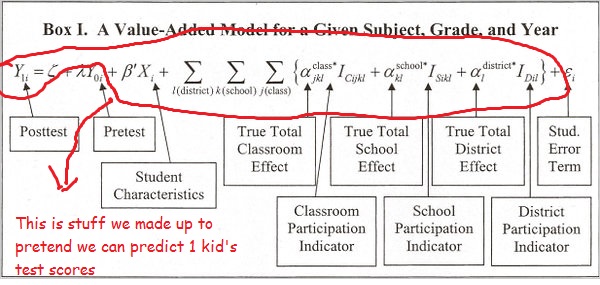
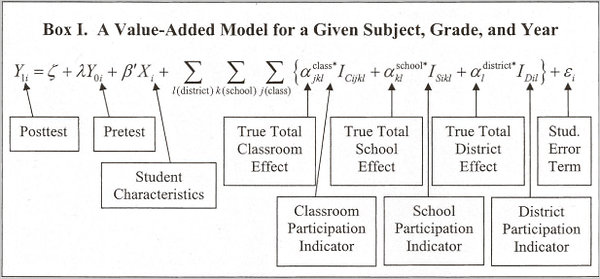
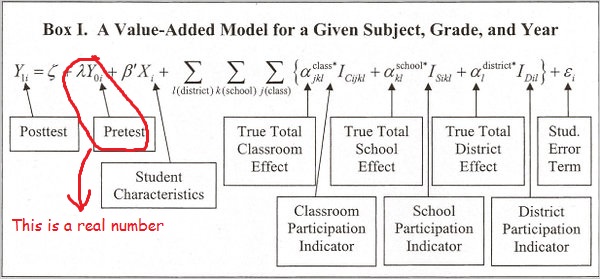
The proposed teacher evaluations have no basis in research and will harm education statewide.  With the exception of a few die hard fans who think if they just wish hard enough, value-added modeling of teacher effectiveness will start to work, there is precious little research saying you can reliably and fairly use statistical modeling based on test scores to evaluate teachers.  Worse, we know that the high stakes testing environment instituted under the No Child Left Behind act has narrowed the curriculum and increased test preparation and given us practically nothing worthwhile in return.  No evidence based or frankly rational person would propose at this point to increase the role of standardized testing in our accountability systems for schools and teachers.

So, naturally, Governor Cuomo wants to increase test scores to a full 50% of teacher evaluations.  He wants a further 35% to be in the hands of “outside evaluators,” leaving a mere 15% for school principals.  The benefits of this approach will be non-existent while the damage is already entirely predictable.  The Assembly cannot compromise on this.

Raising the charter school cap will hurt our public schools.  The original idea behind charter schools was to create small, local, experiments in education that would work with students not well served in their schools and feed lessons learned back into the fully public system to see if they could be scaled.  That quickly morphed into the idea of charters as a form of competition seeking to draw both students and resources out of neighborhood schools, and today, the most prominent charters on the landscape are brands unto themselves.  Those charters are politically and financially connected; in New York their financiers have donated handsomely to the governor who has pretty much adopted their agenda lock, stock, and barrel.  More troubling, however, is the fact that the data shows the barely regulated charter school sector not only fails to feed scalable ideas to local schools, but also it acts parasitically.  In New York, charter schools cream students via lottery processes that put unnecessary barriers between the most disadvantaged students and entry.  Once accepted, parents have to agree to levels of involvement that are pose significant difficulties for families with low wage earning adults, and  behavioral expectations as low as Kindergarten result in students who do not immediately conform being pushed out.

The upshot?  No excuses charter school chains have student populations that are less poor, have many fewer students who are limited English proficient, and have fewer students with disabilities and almost no students with difficult to accommodate disabilities.  Once resource competition is factored in, the conclusion is inescapable:  large numbers of charter schools leave fully public schools with student populations that have much greater needs and many fewer resources available to meet those needs.

If the Assembly “compromises” on the charter school cap, it will guarantee further harm to all students.

Tax giveaways for private and parochial school donations while underfunding state school aid is an unacceptable double blow.  The governor’s proposed “tax credit” for education donations allows wealthy donors to take additional tax breaks on donations to private and parochial schools, and it has been criticized as a “back door voucher” plan that would divert money that might otherwise end up in public schools.  Governor Cuomo has also made the passage of the DREAM Act contingent upon passing the tax credit.  It is a sad state of affairs when a governor who has no intention of fully funding public schools would insist upon additional tax breaks for the extremely wealthy that favor private and parochial schools and would hold up the status of children of undocumented immigrants until those tax breaks are in place.  Unfortunately, at least one former opponent of the tax credits has flipped his position, and it is unclear what will come of these negotiations.

Offering the wealthy additional tax breaks to direct donations into private hands while our public schools remain underfunded by $5.6 billion a year should not even be on the table.

This budget process in Albany is no time for a falsely constructed “middle ground” to prevail in the name of “reasonableness.”  The Assembly’s budget proposal is simply a good down payment on the state’s legal obligations to fund public education at levels sufficient to the task.  Removing Governor Cuomo’s damaging reforms on teacher evaluation and dismissal, state take over of schools, charter schools, and tax giveaways to the wealthy is the only reasonable course of action.  There is no “reasonable compromise” between entirely pernicious and minimally acceptable.  Instead of compromising with the governor, Speaker Heastie should demand:

  • A timetable for full funding of the Campaign For Fiscal Equity settlement, adjusted for inflation, and with additional funds to make up for revenue lost because of the GEA and property tax caps.
  • Full repudiation of the GEA in all future school aid budgets.
  • No increases in the charter school cap unless comprehensive eforms place them on an equal playing field with fully public schools, disallow the practices that result in their very disparate student demographics, and subject them to full transparency in their finances and daily operations, especially their disciplinary practices.
  • No consideration of tax breaks for the wealthy to fund private and parochial schools while our public schools remain financially starved by the school aid budget, the gap elimination adjustment, and the property tax cap.

The Assembly needs to remember that Governor Cuomo enjoys a measly 28% approval of his education agenda.  55% of New Yorkers believe that NYSUT would do a better job of improving our schools.  This is a time to hold firm.

Unless, of course, Governor Cuomo really does have your children in Azkaban.  Trust me; we’d like to know.

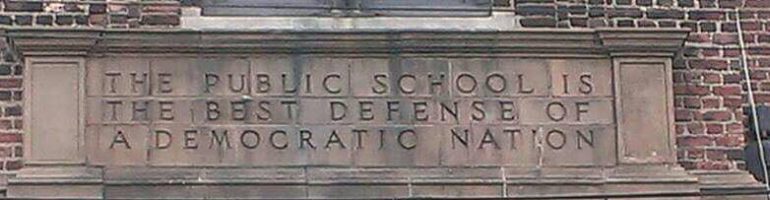
Democrats, did He Who Must Not Be Named lock your children up here?

Democrats, did He Who Must Not Be Named lock your children up here?
1 Comment

Filed under charter schools, Corruption, Funding, Social Justice, Testing, VAMs

Pearson’s Intellectual Property — Why Is This Even a Thing?

Bob Braun, a five decade veteran of the Newark Star Ledger and currently an independent blogger, blew up a portion of the internet on Friday by reporting that Pearson, the international education giant responsible for the PARCC examinations currently underway, was “spying” on students’ social media activity.  According to a letter from Watchung Hills Regional High School District Superintendent Elizabeth Jewett, the district test coordinator got a late night phone call from New Jersey DOE after Pearson initiated a “priority one alert” for a breech of test security within the district.  NJDOE informed the district that they believed Pearson’s alert was for a student who took a picture of a test item during testing and posted it to Twitter, and the state suggested that the district should discipline the offending student.  However, upon examination, the district ascertained that a student had tweeted a comment well after testing was over and included no picture at all.  The tweet has since been deleted by the student, but given the 140 character limit on Twitter, it is extremely unlikely that any significant breech of test security could have possibly occurred.  However, the incident revealed that Pearson is monitoring social media for any and all references to the testing going on and is prepared to initiate state level investigations of individual students (how else would NJDOE know the district and student involved?) over very flimsy circumstances.

The story took off very quickly as did Mr. Braun’s accusation that Pearson is “spying” on students’ social media.  The web site was loading very slowly on Friday night likely due to very high traffic, but by later that night it was completely inaccessible and Mr. Braun reported on Facebook that his web host informed him a denial of service attack was underway from an as of yet unidentified sources.  Meanwhile, outraged parents and anti-testing/anti-PARCC sentiments took off in social media:

https://twitter.com/manville71/status/576851582312054784

https://twitter.com/allionthemove/status/576823310702477312

https://twitter.com/qbgone/status/576806592642969600

Let me state that I am unconvinced that “spying” is exactly the correct word over “monitoring.”  The reality is that most corporations of any size are monitoring social media routinely to check on their reputations and potential scandals.  In a world where social word of mouth is genuinely a thing, it makes business sense for them to do so, and social media is not communication in the private space.  If you don’t believe me, wait until you have a bad customer experience with your cable company and then take to Twitter about it — If you don’t get a response from someone in corporate within 24 hours, I owe you a coffee.

However, even from a “monitoring” social media perspective, Pearson’s actions are troubling.  I will concede that the company — and participating PARCC states — have an interest in test security while a standardized test is being deployed (although I also agree with Peter Greene that this level of test security does not bode well for the quality of these exams), but what, exactly, causes Pearson to raise a “priority one alert” and contact a state department of education with sufficient information to locate a district and specific child in question?  What information about a minor’s social media use does Pearson consider its business to pass along to the top education officers in a state?  To what depth does Pearson consider itself able to impose a gag order on other people’s children and use state capitols to enforce it?

Remember — the child in question did not send out a photograph of the exam, merely a single tweet limited to 140 characters AFTER testing for the day was over.  For that, Pearson initiated contact with the NJDOE that sent Trenton thundering into the student’s social media account and alerting district officials when frankly, nothing should have happened at all.  Thankfully, Superintendent Jewett is reasonable and knowledgeable about social media; it could have easily gone south really quickly.

Pearson’s hyperactive attitude towards test security is disturbing not only because of how it is being enacted without concern of proportion, privacy, and the implications of initiating state level investigations into unremarkable student speech.  It is also disturbing because of its connection to Pearson’s larger perspective on its intellectual property and the allowance the public sector gives them in defense of it.  While discussing this on Twitter, I encountered a user who stated that he “applauded” Pearson “defending its intellectual property,” which led me to a single question:

Why is Pearson’s intellectual property even a thing after it delivers a exam to be used for public education?

Considering the following:

  • PARRC was seeded with part of a federal grant worth over $300 million to create examinations for the Common Core State Standards.
  • Pearson was the only bidder for the contract to write the examinations for PARCC.
  • That makes the Pearson written PARCC examinations the only CCSS examination in 12 states and the District of Columbia — Pearson writes CCSS aligned examinations for other states such as New York.
  • Pearson’s contract with New Jersey alone is worth more than $100 million over 4 years.
  • The examination is high stakes – with implications for teacher evaluation and a possible future role in graduation requirements.
  • The examination is used by the state to fulfill federal requirements under the No Child Left Behind Act that all students in all schools between grades 3-8 and in grade 11 be tested in English and Mathematics.  Unlike other standardized examinations students takes, these exams are mandated by state and federal laws.
  • Pearson has no intention of releasing complete copies of this year’s exams even after they have been fully deployed and assessed.

This isn’t even like copyright rules preventing photocopying textbooks — textbooks publishers rightly expect that schools will buy enough copies of their texts for students using them, and they are in direct competition with other potential text providers.  Pearson has an exclusive contract to provide examinations for millions of students (a contract it did not exactly sweat bullets to obtain).  These examinations are used for high stakes purposes.  The examinations fulfill federal mandates for testing in our public schools, and they inform personnel decisions locally, administrative decisions at the district and state levels, and federal actions nationally.  The company is providing a contracted service in our public education system which is, itself, compulsory and, for the time being at least, democratically controlled.

Once they are done writing the exams, why isn’t Pearson required to turn the entire kit and kaboodle over to the state and thus to the voters and tax payers who provide the vast majority of decision making and funding to public education?

I am unaware of a construction company that, after delivering a highway project, reserves lanes for its own use or to pull up and recycle in other projects.  Generally speaking, government buildings do not have entire floors blocked off for use of the contractors who built them.  When Northrop Grumman delivered the USS Ronald Reagan to the Navy, they did not block off sections of the ship that the Navy cannot access.  If such companies create or develop a process of construction or tool for use in construction, they can protect that via patents, but once the contracted item is finished, we generally understand it as belonging to the public who paid for it.

But when it comes to items that are not physical in nature, we accept an arrangement where the public foots enormous costs to only lease the product in question.  Think of electronic voting machines.  I can think of few things as important as protecting public confidence in the integrity of their vote, but companies are not required to make the code for voting machines open source and the public depends upon leaks to inform us of potential security holes in the devices.  Similarly, Pearson is providing a mandated service for our compulsory public education system, and the results of that service will have actual consequences not just for the individual teachers and students involved, but also for the entire system.  Confidence in what they are providing and informed decision making about whether or not what they are providing is desirable requires open and informed discussion and debate — such discussion and debate is impossible while Pearson’s intellectual property is valued more highly than the public purposes it allegedly serves.

In a small way, you cannot even blame Pearson.  They made contracts with states that allowed them to behave this way, and they are a publicly traded company with $17.75 billion in market capital.  Doing everything to maximize their revenue and return to investors is what they do and not a secret.  However, we elect governors who appoint leaders to state education departments; they represent us.  Craven obsequiousness in making contracts worth 100s of millions of taxpayers’ dollars is unnecessary and unacceptable.  It is possible, I suppose, that if our elected leaders and their appointees insisted upon reasonable contracts and the full disclosure of all test materials after the tests are over, then the cost would go up, perhaps to a level states could ill afford and leading to pulling back of the test and punish regime that is currently driving education policy and warping curriculum into test preparation.

Heavens.  That would be terrible.

18 Comments

Filed under Common Core, Corruption, PARCC, Pearson, Testing

Mr. Petrilli Goes to Albany

Michael Petrilli is the President of the conservative education think tank, the Thomas B. Fordham Institute.  As such, he is a major voice in support of much of today’s education reform agenda, notably The Common Core State Standards, opposing teacher unions, and the expansion of charter schools and their networks.  It was surprising to some when he turned up as the invited keynote speaker at the New York State Council of School Superintendents Winter Institute.  Mr. Petrilli was himself aware of the potential controversy in his invitation to speak, and abruptly changed the title of his talk from “How to End the Education Reform Wars” to “How to Survive the Education Reform Wars.”  Diane Ravitch of New York University notes the irony of this reframing due to Mr. Petrilli’s prominent role in fomenting the “education reform wars” in the first place (Think of Dick Cheney giving advice on how to survive political and military turmoil in the Middle East).

Interestingly enough, there are some bright spots in Mr. Petrilli’s talk. The most notable was his declaration of Governor Andrew Cuomo’s plan to boost standardized testing to a full 50% of teacher evaluations as “insane” and citing that even other “reform leaders” are moving to using those measures less.  This is a positive statement from someone in Mr. Petrilli’s position, even if he gives it scant time in his speech, and hopefully it based on the body of research that plainly shows how value added measures of teacher effectiveness are pretty much bollocks.  It is also possible that someone sees the growing backlash against testing and the evaluation systems that encourage teaching to the test as threatening the entire reform agenda. Whatever his reason, it was notable that Mr. Petrilli chose this forum to condemn Governor Cuomo’s teacher evaluation plans. Mr. Petrilli also spent time critiquing some of his fellow reform-minded allies:

But on the other side, some of the reformers have equally extreme views. They say that public schools are failing unless each and everyone one of their graduates are college AND career ready. Each and every one.

Well.

Keep in mind that our highest performing state, Massachusetts, gets only fifty percent of students to that lofty standard. Should we aim to get more students college and career ready? Absolutely. Do I believe that the Common Core standards, if faithfully implemented, will help? Absolutely. Is a school failing if it doesn’t get every single student to that lofty standard? Of course not

I could spend time quibbling with Mr. Petrilli’s definition of “that lofty standard.” Massachusetts was using the MCAS in 2014, so I assume Mr. Petrilli is referring to the Bay State’s top in the nation National Assessment of Educational Progress (NAEP) results – which never mention “college and career readiness” because it is the NAEP, not Common Core.  Massachusetts was top of the nation in the 8th grade NAEP for 2013 with 48% of students reaching proficient and advanced in reading and 55% in mathematics — proficient represents solid academic performance and an ability to apply that knowledge in real world, analytic situations, so that is a heck on an accomplishment.  Given that 39.4% of Massachusetts adults over the age of 25 have a BA and that the Bay State economy seems to be picking up real momentum, it seems Massachusetts is poised to be a net exporter of college educated adults. Regardless, Mr. Petrilli is correct to note that reformers clinging to some kind of magical thinking that Common Core and a lofty enough set of expectations will get all kids ready to attend college are not playing in a world that resembles reality, so a sincere thanks for that.

Much of the rest of his address is complete bollocks, however.

Peter Greene does his usual indispensable review of the whole talk here, where he does an especially good job pointing out how Mr. Petrilli sets up some nice fantasy anti-reform activists who want to believe that poor kids cannot learn:

Petrilli uses the new fave talking point for reformsters in which he characterizes the pro-public-education folks (and name checks Diane Ravitch) as those who have given up, think that education is hopeless in the face of poverty, believe that schools cannot do any better. This is the new improved straw man version of dismissing reform critics because they “use poverty as an excuse.” It’s a snappy rhetorical point, but it’s a lie, a deliberate misreading of what folks in the pro-public-ed camp are saying.

It’s a particularly galling point coming from the man who has explained on more than one platform that the proper role of charters is to rescue those students who are deserving, snatching them from the midst of the undeserving mob. It’s galling from charter fans in general, as their whole point is that public schools are hopeless and we should not waste another cent trying to help them do better.

But it’s also insulting to the millions of teachers who are in the classroom day after day, doing the best they can with the resources they have. Hey, teachers– if you’re not succeeding with all of your students, it has nothing to do with obstacles and challenges in your path. You just don’t believe enough.

I can’t improve on that except to affirm how utterly disingenuous it is to take people who are trying to point out that our most most struggling schools typically try to work with populations that have heavy concentrations of poverty and that we have long known the lasting impacts of poverty and to portray that as saying “there is nothing schools can do.” Let’s clear this up:  Mr. Petrilli, when I and other critics of your version of education reform raise the issue of poverty and its demonstrable impact on children and the schools they attend, we do not do so to say that there is nothing that can be done.  We do so because if we as a society are truly concerned about whether a child in poverty can do her very best in school, then perhaps we should be concerned about whether or not she can EAT TODAY.  That means giving her school a lot more to work with in terms of special resources and staff, and that means the rest of society stepping up and taking responsibility for alleviating the deprivations she faces outside of school as well.  That’s why we resist your brand of “reform,” Mr. Petrilli.  It has to do with facts, not ideology.

Mr. Petrilli insists that Common Core is necessary because our standards were a joke before them:

Let me say a few words about this. As many of you know, I’m one of the strongest supporters of the Common Core out there. I’m the conservative they send to red states to testify and urge other Republicans not to drop these standards. And I support these standards because they are pegged to success for our young people—success in college or a good paying job.

That’s important because our earlier standards were set so low that they were sending false signals to kids and to parents that all was well, when it wasn’t. That kids were on track, when they weren’t. You know this. Those old standards and tests were set at such a low level that you could be reading or doing math at the 20th or 30th percentile nationally and be considered proficient.

The assertion that Common Core is “pegged to success” in terms of college and career readiness is one of the articles of faith among reformers, but it is also entirely unproven in practice as of today, and the opaque nature of their development does not provide evidence of how that confidence came about.  The statement also belies an odd faith in the seamlessness from standards to practice to achievement that is not so apparent in the world of education.  Consider Massachusetts again.  The top performing state on the 2013 NAEP was also recognized as having very high quality state standards before adopting the Common Core.  Now consider Texas.  According to Mr. Petrilli’s own organization, the Texas English standards from 2008 are of higher quality that the Common Core standards.  Yet in the 2013 NAEP, Texas, having remained with its own standards, was only above 7 other states in 8th grade reading.  Texas has made some improvement since the adoption of those standards, but it has hardly been dramatic.  Perhaps the teachers of Texas simply don’t believe enough, but my suspicion is that it takes a lot more than “high quality standards” to leverage change.

Mr. Petrilli pivoted his talk with a strangely insulting set of points for his audience:

But let me level with you: We’re frustrated with you too. For sure, we understand that your hands are often tied by union contracts, state regulations, and more. I’ll get to that in a bit. But we do see examples of areas where you are not taking advantage of the authority you DO have to do right by kids. My friend Rick Hess writes about Cage Busting Leaders. Some of those cages are of your own design.

The number-one example, of course, is around teacher evaluations. This whole national push for teacher evaluations came about because research showed that the vast majority of teachers were being given glowing evaluations. And it was clear that in many schools, those evaluations were not being treated seriously. Principals did a couple of fly-by observations a year, and that was it. It wasn’t enough to provide good feedback to teachers, and it sure wasn’t enough to identify teachers who might need to be encouraged to leave the classroom.

It is a fascinating approach to speak to an audience and tell them that they are essentially not doing their jobs, but perhaps the Superintendents were encouraged with the following words of sympathy:

Now, I have more sympathy for you than most reformers. As I see it, you’d have to be crazy as a principal in New York State to give your teachers bad evaluations. Because in New York State, it’s damn near impossible to actually fire a teacher. So if that’s the case, why make an enemy by giving a bad evaluation? It’s better to work the system to send that teacher somewhere else. Until and unless lawmakers here in Albany decide they want to make it significantly easier to fire a teacher, they better get used to seeing reports of lots of glowing evaluations.

Isn’t it nifty how this works out?  Superintendents and principals are not doing their jobs at all, but they get at least a little tea and sympathy because, after all, they may not be lazy — they may just be fearful of the mess that might happen if they did their jobs!

Captain-Picard-Facepalm

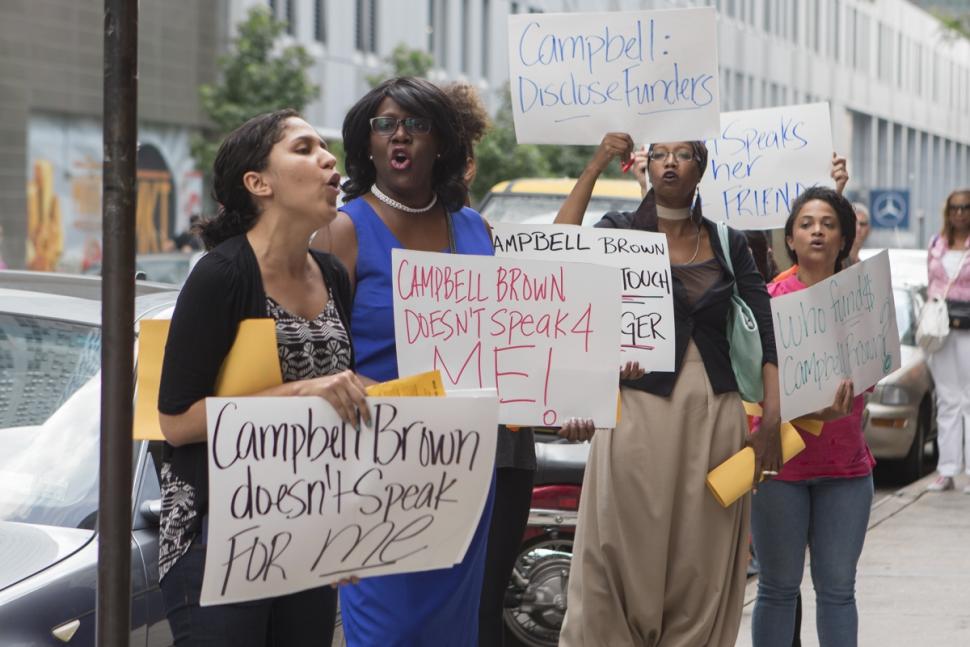
Let’s look at the claim that it is “impossible” to fire a teacher.  It is a common claim, one that anti-tenure activists like Campbell Brown like to repeat as if they are reading from the Gospel, but it is really true?  If your standard is the basic at will employment agreement that corporate managers and CEOs enjoy, then I suppose it is true.  Instead of simply calling an employee into the office and telling her to pack up her desk because security is escorting her off the property in ten minutes, school administrators actually have to employ a process and demonstrate cause to remove a tenured teacher.  That may take time and some effort, but it is hardly impossible.  Dr. Alyssa Hadley Dunn of Michigan State University examined Campbell Brown’s favorite claim that it takes over two calendar years to remove a tenured teacher in New York and found it wanting:

This statistic, which Ms. Brown peppers in all of her speeches, appears to be from a research brief of the New York State School Boards Association. This brief was based on the results of a self-report survey to which only 59% of districts responded and in which New York City (the largest district) was not even included. Jessica Glazer has written about whether or not the numbers are even accurate, and Bruce Baker points out, importantly, that quality may vary significantly between districts. Further, since the data was collected, after 2008, the state made efforts to reform tenure laws, changing the minimum years from two to three. Now, according to one report, only a slim majority of teachers receive tenure on the first attempt, and, in 2013, disciplinary cases took, on average, only 177 days statewide.

Considering the importance of teacher tenure for actually effective teachers — such as protecting them so they can speak out on behalf of their students and colleagues as documented in the link — the fact that removal takes effort should not be a point of contention, but Mr. Petrilli, and others like him, suffer from CEO envy in these matters.  CEOs have enormous power within the corporate world, overseen only by a board of directors.  So if you are the CEO of Apple, you can order everyone to focus like a laser on a handheld computer and release it even if the handwriting recognition software is not ready for prime time.  Then if you are the former CEO getting his job back, you can kill the whole project even though it has been greatly improved and will eventually provide you with the technology that will take over the phone market.  You can do all of this because you are the CEO and disruption by your will is in your tool kit.  School leaders work within organizations that are best characterized as “loosely coupled” which means that although organized hierarchically, schools allow significant autonomy among individuals, allow locally derived adaptations for changing conditions, and can have smaller parts of the system break down without damaging the entire system.  Leaders within such systems need different skill sets than corporate leaders, and simply imploring them to more aggressively remove ineffective probationary teachers, as Mr. Petrilli, does is insufficient to the task of being a real instructional leader within a school system, a role that requires significant rethinking of the role of principal from administrator to staff developer with resources coordinated and time allotted across the entire system.  “Fire them while they are young” just doesn’t cut it.

But is Mr. Petrilli’s contention even true?  Is it true that principals and superintendents don’t give tough evaluations because they know they cannot remove an ineffective teachers?  There’s a possible explanation that is left entirely unexplored in his talk: namely, the scoring bands for teacher evaluation in New York were set so that teachers who did not score as ineffective in any category could still be labeled as ineffective.  Principal Carol Burris explains that here as well as the different system that was imposed upon New York City by then Commissioner John King.  In the 2011-2013 scoring bands, it was possible for a teacher to get a low “developing” mark from the state test and the locally selected test measure, get 58 out of 60 points on the “other measures” and be labeled “ineffective.”  Not one score band in the ineffective range, but ineffective regardless.

So is it possible that principals and superintendents have not been vigorous enough in teacher evaluations because they dread the work of trying to remove an ineffective teacher as Mr. Petrilli contends?  Possibly – if you have a low opinion of their work ethic and professional pride.  It is equally possible that principals and superintendents know that the score bands are set up in a way that teachers can be found ineffective without having a single measure in a range that is labeled ineffective.  Cognizance of that inherent unfairness could easily skew observation scores upwards, especially for school leaders who have multiple and diverse other tasks to attend to.

Mr Petrilli’s biggest whopper comes near the end when he laments the assumed sea of red tape that holds back schools and claims the success of charter schools is attributable to their freedom from such requirements.  Then he tells superintendents to demand the same “freedom”:

The notion with charter schools is that the only way to cut this Gordian Knot is to start fresh, to opt out of the regulatory framework, and the union contract framework, entirely. And create a whole new paradigm.

And if you are frustrated by comparisons between your schools—your over regulated, hyper unionized schools,and the autonomous charter sector—you are right to be. But here’s my advice: Don’t fight em, join em. Ask for similar freedoms. Ask for similar autonomies. And if that fails, use chartering to advance your own goals. Stop fighting with one hand tied behind your back—tied up with red tape. Cut the ties. Come out swinging.

Here is CEO envy all over again, and it is wrong because someone’s (presumably, Petrilli’s) “red tape” is another person’s “Free And Appropriate Public Education” — just one of the many regulations that the “no excuses” brands of charter schools routinely opt themselves out of in pursuit of higher test scores.  Here we have Michael Petrilli, who has never been a teacher, a school administrator, or a qualified researcher, advising the superintendents of New York to push to free themselves from regulatory requirements that were put in place to protect vulnerable children in the first place.  And he tells them to seek this “freedom” to emulate a sector that he has openly and repeatedly said is right to restrict itself to “the strivers” and to rid itself of students who do not measure up.  We know what this looks like in practice — a Kindergarten child with manageable attention deficit throwing up in the morning because he is afraid he will be “fired” from school. 

Even without the emotional and ethical argument, we also know that charters as they are managed now in many urban areas make the local school system worse off for everyone else.  After the charter schools compete for space and other resources and after they effectively skim off the easiest to educate children and push out the ones who are not, you have district schools that have no say in how charters are managed and are left with demographics that are more disadvantaged, more disabled, and less able to speak English, all of whom need many more services from diminished remaining resources.

For Mr. Petrilli to come out and exhort his audience to demand allowance to act similarly and then to advocate, as he did on Twitter, that district public schools should be allowed to push out students as they see fit, is asking for a school system that is pathologically unwilling to work with anyone it doesn’t want to:

It would one thing for charter advocates like Mr. Petrilli to say the cream skimming is okay if he were to similarly advocate that the district public schools, working with the much higher needs students, had resources poured into them so they could accomplish the mission of educating the most needy.  Smaller class sizes, co-teaching, increased numbers of paraprofessionals, increased certified special education teachers, language programs, speech and physical therapy, social workers, health and nutrition programs, renovated facilities — tellingly, none of this made the list of things Mr. Petrilli told superintendents should go to bat for.

Because something else was missing from the speech — money.  Michael Petrilli was talking to a gathering of New York superintendents, a group of school system administrators who have seen their budgets plummet due to a state property tax cap and budget games in Albany that have cost the AVERAGE school district millions of dollars a year in state aid.  I do not know if the Superintendent of Hempstead was in the audience, but if she was, I do wonder if she feels like she needs to be a “cage busting” leader more than she needs Albany to not short her school district MORE THAN $6400 PER CHILD THIS YEAR.  It is something of a sick joke to talk to a group of district leaders about how to “survive the education reform wars” and offer no insight into how to fight to keep their school aid from being raided year after tedious year.  It is not remotely funny to advocate that they push for policies that, objectively, would require huge increases in local and state spending to make happen in a thoughtful and remotely helpful way and to still remain entirely mum about money.

I am sure Mr. Petrilli got polite applause. 

I would not be surprised if he got a significant number of eye rolls.