Connecticut’s Democratic Governor Dannel Malloy does not always grab attention in the annals of corporate education reform. Wisconsin Governor Scott Walker has made battles with public unions more central to his image. New Jersey Governor Chris Christie plainly relishes getting to act “tough” and yell at teachers questioning his agenda. Democratic Mayor of Chicago Rahm Emanuel shuttered 50 public schools, mostly serving ethnic minority children, in one go, without caring to listen at all to the residents of the impacted neighborhoods. Neighboring governor and fellow Democrat Andrew Cuomo of New York staked a huge portion of his agenda for 2015 on ramming through controversial education reforms, and his approval rating both overall and especially on education have tanked in a highly visible manner. Compared to headline grabbers like these, Governor Malloy does not seem to get much attention.
Which is a shame because when it comes to the Holy Trinity of education reform – common standards, standardized testing tied to punitive consequences, and preference for charter schools over district schools, Governor Malloy is the complete package. In 2012, he called for major changes to teacher tenure in Connecticut, earning praise from ConnCAN, an education reform group promoting charter schools. Facing push back from teachers and parents about the pace and nature of education reforms, Governor Malloy was forced to call for a “slow down” in the pace of reforms, especially tying teacher evaluations to standardized test results. $91,000 in campaign donations flowed to Connecticut Democrats from a single wealthy businessman and charter school advocate, Jonathan Sackler, and three members of his family; those donations and others from Wall Street were rewarded with proposals for over $21 million in new charter school funding while public school spending remains flat.
It is pretty clear that Governor Malloy stands shoulder to shoulder with New York’s Andrew Cuomo and Chicago’s Rahm Emanuel even if he prefers to draw less national attention to himself. So it is perhaps not surprising that his education department is contemplating thumbscrews for the Opt Out movement in Connecticut.
Opt Out was not the force in Connecticut that it was in neighboring New York with only 11,200 students not taking the state exams while the state says 267,000 did. However, a number of individual districts did not meet the 95% testing requirement of No Child Left Behind which was continued in the new Every Child Succeeds Acts, and in some districts those numbers were significant. Roughly 7 out of 10 high school juniors opted out in Stonington, and participation fell below 95% in over 30 communities.
This Fall, roughly a dozen states got a letter from Ann Whalen at the US Department of Education, an adviser who is acting as the assistant secretary of elementary and secondary education, reminding them that their districts need to test no less than 95 percent of all students and that the state needs an action plan to deal with those who do not. The letter opens by reminding state chief education officers of the legal requirements to test all children in grades 3-8 and once in high schools, that the examinations must be same for all students, and no student may be excluded from the examinations. Ms. Whalen asserts that the sections of the law she cites “set out the rule that all students must be assessed.” The letter continues to remind the state officers that both their state and local authorities who receive Title I, Part A money assured that they would test all students in accordance with the law. Ms. Whalen also offers “suggestions” for actions state education authorities can take to address participation in the assessments:
Lowering an LEA’s or school’s rating in the State’s accountability system or amending the system flag an LEA or school with a low participation rate.
Counting non-participants as non-proficient in accountability determinations.
Requiring an LEA or school to develop an improvement plan, or take corrective actions to ensure that all students participate in the statewide assessments in the future, and providing the SEA’s process to review and monitor such plans.
Requiring an LEA or school to implement additional interventions aligned with the reason for low student participation, or even if the state’s accountability system does not officially designate schools for such interventions.
Designating an LEA or school as “high risk,” or a comparable status under the State’s laws and regulations, with a clear explanation for the implications of such a designation.
Withholding or directing use of State aid and/or funding flexibility.
Ms. Whalen also reminds the states that they have “a range of other enforcement actions” including placing conditions on Title I, Part A grants or even withholding them. For a real kicker, she goes on to say that if states with less than 95% participation in the 2014-2015 school year do not assess 95% of students this year, then the federal education department “will take one or more of the following actions: (1) withhold Title I, Part A State administration funds; (2) place the State’s Title I, Part A grant on high-risk and direct the State to use a portion of its Title I State administrative funds to address low participation rates; or (3) withhold or redirect Title VI State assessment funds.”
Short version: States with Opt Out numbers that put them or local districts below 95% test participation must bargain, cajole, plead, or threaten districts and schools into making that target. The Federal Education Department has put in writing that not only failure to take action to address low assessment rates, but also failure to meet the 95% target this year, WILL result in some form of punitive action from Washington. Presumably, the degree of the punishment will depend upon how vigorous the state actions are. It is also safe to assume that the Education Department offices in Washington have a new logo:
Connecticut got its own version of this letter from Dr. Monique Chism in the office of state support, and Connecticut’s Commissioner of Education Dr. Dianna Wentzell quietly sent the state’s reply on December 4th, waiting until December 28th to release it to the public. In the letter, Dr. Wentzell assures Washington that although Connecticut met the 95% participation rate statewide, they are “not pleased” that a number of districts did not do so, and the state has devised a tiered intervention system to “ensure that districts meeting the standard are commended, those failing marginally are gently alerted, and those falling behind are strongly reminded of the potential consequences and provided support to remedy the situation in 2015-2016.” In the next school year, Connecticut’s accountability system will “lower a school by one category for low participation rates in the 2015-2016 year.” The system is explained in a graphic:
Districts in Connecticut are now warned: if your test participation rates were below 80% in any category, funds WILL be withheld if this year’s participation rate is not at least 90%.
This remains as problematic as it has been every time the federal government or a state entity has raised it. Yes, it is true that federal law requires that at least 95 percent of all students in all subcategories are tested in the participating grades. Yes, it is true that state and local officials have to do what they can to test the students in the participating grades and have almost no legal authority to exempt any of those students. However, the statute was written to prevent states and local school authorities from hiding low performing student populations from accountability systems. I challenge Dr. Wentzell, Dr. Chism, or Ms. Whalen to find a single line of statutory authority to compel parents to submit their children for examination or to find any legislative intent in the original NCLB legislation or its successor to punish schools and districts for not exerting 95% control of the parents in their district. There have been schools since 2001 who have not managed to test 95% of their students, but there is not a single example of a school being punished for that.
In the end, Connecticut, at the prodding of the Federal Education Department, is setting itself up for an unpleasant confrontation with parents, often parents that elected officials find difficult to ignore, with very shaky legal footing. North Haven High School, for example, had extremely low participation rates on the 11th grade exams. The community also has a median home value $22,000 above the state median and median household income $16,000 above the state median. With only 4% of its residents below the poverty line compared to the state average of over 10% it is unlikely that North Haven’s schools rely significantly upon Title I funds, so it is unclear exactly what money Dr. Wentzell would withhold. However, the loss of any money intended to help children who are in poverty based upon actions of parents rather than upon actions of school authorities is unprecedented, contrary to the intention of any federal and state accountability laws – and far more likely to increase the parental backlash than to bottle it up.
Imagine, for a moment, you are a teacher predominantly of students of color. Now imagine that one of your students’ siblings is a 12 year old playing in a public park with a toy pellet gun when police, responding to a caller who said that the gun was “probably”fake, pull their cruiser within feet of the child, jump out before the car even stops, and shoot him in the stomach within two seconds. Or perhaps your student’s father was shopping in a Walmart where he picked up a BB gun from the store shelves, and police officers approached him and shot him without giving him any time at all to respond – despite the fact that what he was carrying was a toy from the store’s own shelves. Or perhaps your student’s aunt or older sister is driving long distance to begin a job at her alma mater in Texas when she is pulled over for a very minor traffic violation, and during the stop, the officer becomes increasingly hostile to her legitimate questions, threatens her with his taser, violently throws her to the ground and arrests her without ever explaining why – and she is found dead in her jail cell in an alleged suicide that not one of her friends and family believes.
Of course, these tragedies – and the infuriating aftermaths that send a chilling message about how black lives can be cut down on the slightest or imagined provocation by state actors with no fear of consequence – do not have to be directly connected to your students’ lives. All they need to do is watch these events unfold in the news and wonder if it will ever be someone they know and love. Or they can reflect on their own experiences with discrimination and the gradual toll it takes on their psyche. The reality is that if you are a teacher of students of color in America, these events impact the children in your care, possibly more deeply than you have ever known.
Very talented authors with far more authentic ties to these experiences of racism and the horrendous messages we send to young people of color have written on the what these outcomes feel like and the dire sense that our society is inherently hostile to black bodies. Charles Blow’s words upon the death of Tamir Rice are searing. Brittany Cooper astutely points out how the system does not value black lives. Ta-Nehisi Coates wrote to his teen aged son (in an article adapted from his book) about the reality of life for black people to this day:
“And you know now, if you did not before, that the police departments of your country have been endowed with the authority to destroy your body. It does not matter if the destruction is the result of an unfortunate overreaction. It does not matter if it originates in a misunderstanding. It does not matter if the destruction springs from a foolish policy. Sell cigarettes without the proper authority and your body can be destroyed. Turn into a dark stairwell and your body can be destroyed. The destroyers will rarely be held accountable. Mostly they will receive pensions.”
Boys and girls touched and confused by tragedies – both personal and national in scale – enter teachers’ classrooms every day. Young men and women whose consciousness of injustice is flaring brighter than America’s white majority can possibly understand enter teachers’ classrooms every day. In today’s education environment – where achievement scores matter far more to policy makers than the humanity of those in school – this poses a difficult and possibly contradictory dilemma. As teachers, our responsibilities to children demand that we acknowledge and affirm the lived realities of their lives. It further demands that we confirm their sense of injustice in the world in real and substantive ways. Even though most teachers will never experience racism the way their students of color do, it is vital that they work to help those students maintain visions of their futures and how to obtain them as they navigate their lives.
But perhaps most important, and most difficult, is the need for teachers to admit our own culpability in an oppressive social system and to join our students and their communities in actively opposing it. School is, for better or worse, a social institution, funded and shaped by our collective aspirations – and by our numerous failings. If our police departments openly engage in racial profiling and use selective enforcement of the law as a revenue stream, and if politically popular policies of mass incarceration leave millions of mostly black and Hispanic men unable to find work, and if the water minority children in cities like Flint drink can be replaced with toxic sources to save money, and if the right to vote itself is subject to constant and organized obstruction aimed at diffusing the impact of minority voting, can we really absolve our schools and ourselves from any responsibility for the injustices that impact so many of our students?
Individually, teachers may bear little responsibility for the school to prison pipeline and the different policies that quickly consign students to low expectations and betrayal of their right to an equitable education – although there can be no honest denial that many teachers either willingly or unthinkingly support questionable and actively harmful disciplinary practices in their schools. But both individually and collectively, teachers can lend their voices to the public discourse on education and demand that the chief architects of school’s role in devaluing of young people of color be called out. We can speak out against the deliberate and chronic underfunding of schools for our most vulnerable children. We can oppose the constant threats of school closures that disproportionately impact black and Hispanic children. We can demand to know why schools with high proportions of black and Hispanic children are most likely to have police officers who increasingly treat school disciplinary matters like law enforcement on the street. We can argue for smaller class sizes, improved physical plants, and the replacement of rigid zero tolerance discipline with restorative justice practices. We can call out politicians and school officials who ignore that schools cannot afford libraries or librarians and have to cut their art and music programs.
In short, we can demand, loudly and continuously, that all of our students have the schools that the most privileged in society take for granted. For three decades now, we have replaced calls for equity and justice in schools with calls for accountability and consequences in much the same way that we have made policing and our prisons rougher and more concerned with numbers than with justice. Those policies have failed us as a nation, and they have been catastrophic for our most vulnerable children. Millions of children are told that the only choices they have are between chronically underfunded and decaying zoned schools or a privately operated charter school that may work to push them out of the school or whose discipline policies favor total control of behavior rather than fostering leadership. This horrendous dichotomy cannot be the best a society with 17 trillion dollar GDP can deliver. If it is so, it is because we choose to let it be so.
Schools themselves cannot transform society, but if millions of public school teachers can demand the tools and resources we need to truly transform schools into models of social justice that fully affirm the lives of students, perhaps we can lead the way for the rest of our critical institutions. Perhaps we can gain the moral authority to demand it.
Her comment set off a flurry of responses, mostly negative, from numerous sources for several reasons. First, the question of schools doing “better than average” raised eyebrows as determining average performance means adding all schools’ together and then dividing the by the number of schools — in the case of K-12 public education, that’s well over 98,000 schools, a substantial portion of which would have to be “below average” because that’s how math works. Some have posed that her comment meant half of all schools would be open to being closed, but that would only be fully true if the target was “median.” Further, no matter how well schools do, there will, by definition, always be those who are “below average.” Conceptually, it is entirely possible for every school in the country to be doing exceptionally well for all children, and there were still be schools that are below the average.
Also of concern is the implication that schools should be closed, which is one of the central tools of today’s education reform that seeks to label, pressure, and ultimately close schools using standardized test based metrics. Secretary Clinton almost casually mentioned one of the core aspects of education reform as practiced in the United States, indicative of how normalized the concept is even with the growing understanding that market disruption in education ends up hurting the children it claims to help, especially black and Latino children who bear the brunt of school closure as policy. While the federal government has only a peripheral role in policy choices like this, it has played a significant role in encouraging, incentivizing, and funding the expansion of charter schools which can establish themselves in closed schools. Secretary Clinton’s remarks carried the specter of this continuing during a Clinton administration.
So it is hardly surprising that her campaign was treated to swift and pointed remarks:
And so for the life of me, I don’t understand why your state government — and I know Governor Brandstad vetoed the money that would’ve come to help this school, and it was a bipartisan agreement. Y’know those are hard to come by these days. You had a bipartisan agreement in your legislature for more one-time student funding to help deal with some of the financial challenges that districts like this one have.
And Governor Brandstad vetoed it. Yet at the same time you have these laws which require if you have a deficit you may not be able to be a school district. It doesn’t make sense to me. When you- When you- Something is not broke, don’t break it. Right?
And this school district and these schools throughout Iowa are doing a better-than-average job. Now, I wouldn’t keep any school open that wasn’t doing a better-than-average job. If a school’s not doing a good job, then, y’know, that may not be good for the kids. But when you have a district that is doing a good job, it seems kinda counterproductive to impose financial burdens on it.
The full talk is longer than an hour if even more context is needed:
For the sake of argument, I can also accept that “below average” was meant as a clumsy proxy for “not good.” That’s an acceptable colloquial use, and I do not personally believe that Secretary Clinton would mean below the mathematical definition of average; she’s far too intelligent to not know what it means. Secretary Clinton absolutely did not mean that we should seek to close nearly half the schools in the country, as was almost gleefullyreportedin avariety of right wingmedia outlets (who in their normal daily business, it should be noted for irony’s sake, are all too happy to bash public schools full of unionized teachers).
Clinton used “below average” as shorthand for low-performing, which indicates a lack of understanding of exactly how schools end up tagged low-performing, and how the stack ranking of schools is pernicious, inaccurate, and guaranteed to always result in schools labeled low-performing (and for that matter, what “below average” really means). The use of false, inaccurate and just-plain-crappy measures to label schools and teachers as successes or failures is central to what’s going on in education reform. If she doesn’t understand that, she doesn’t understand some of the most fundamental problems we’re facing.
Clinton’s glib use of “wouldn’t keep any school open” shows a limited understanding of just what is involved in “closing” a school. What happens to staff? What happens to students? What happens to the community? Clinton shows no awareness of how huge a task she’s glibly suggesting, nor does she suggest that there are other options that should be considered long before this nuclear option, which should be at the bottom of the list.
This is essentially correct in my opinion, and, as mentioned above, it indicates just how normalized the current language of accountability and threats to schools is without our political landscape. Schools are measured as successes and failures using distant measurements that are absent any locally understood input, and then they are threatened until those measures rise – or the school is closed and frequently turned over to a private operator with absolutely no accountability to local democratic institutions. Secretary Clinton may have been, to her credit, talking about the insanity of a state government financially starving local schools, but she signaled that the essential framework of No Child Left Behind is still alive and well in our political discourse. Given that the new Every Student Succeeds Acts simultaneously maintains annual testing and leaves significant aspects of using that data in school accountability to the states, the tone from Washington will still matter for how the states pursue the law’s requirements.
This reflects a lasting concern among scholars and advocates for public education that in the 32 years since A Nation At Risk was published and in the almost 15 years since No Child Left Behind was enacted, the call for accountability in our education system has been entirely unidirectional – with schools and teachers called upon to lift students and communities from poverty and inequality while the rest of society is called upon to do exactly nothing. David Berliner wrote about this issue a decade ago as NCLB was coming into full force:
All I am saying in this essay is that I am tired of acting like the schools, all alone, can do what is needed to help more people achieve higher levels of academic performance in our society. As Jean Anyon (1997, p. 168) put it “Attempting to fix inner city schools without fixing the city in which they are embedded is like trying to clean the air on one side of a screen door.”
To clean the air on both sides of the screen door we need to begin thinking about building a two-way system of accountability for contemporary America. The obligation that we educators have accepted to be accountable to our communities must become reciprocal. Our communities must also be accountable to those of us who work in the schools, and they can do this by creating social conditions for our nation that allow us to do our jobs well. Accountability is a two way process, it requires a principal and an agent. For too long schools have thought of themselves only as agents who must meet the demands of the principal, often the local community, state, or federal government. It is time for principals (and other school leaders) to become principals. That is, school people need to see communities as agents as well as principals and hold communities to standards that insure all our children are accorded the opportunities necessary for growing well.
It does take a whole village to raise a child, and we actually know a little bit about how to do that. What we seem not to know how to do in modern America is to raise the village, to promote communal values that insure that all our children will prosper. We need to face the fact that our whole society needs to be held as accountable for providing healthy children ready to learn, as our schools are for delivering quality instruction. One-way accountability, where we are always blaming the schools for the faults that we find, is neither just, nor likely to solve the problems we want to address.
The severity of this problem in many of our communities cannot be overstated. Consider Whitney Elementary School in Las Vegas, Nevada. According to the Nevada DOE, Whitney is a “two star” school out of a possible five stars with only 40 points out of 100 on the state’s accountability scale in the academic year ending in 2012. Data for subgroups, such as children qualifying for free and reduced price lunch, children with disabilities, and children who are learning English, show lower performance at Whitney than for similar children statewide, and Whitney’s overall test based performance and growth measured by tests is much lower than state averages.
Using these external measures we would have to concede that Whitney Elementary is “below average” for academics both in the mathematical sense and in the colloquial sense. Is that the bottom line, however? Is this a school that, in Secretary Clinton’s words, “may not be good for the kids”?
I ask because I learned about this school via a story on Public Radio International’s The Takeaway, where co-host Celeste Headlee investigated the trying circumstances of America’s working poor and homeless families in the run up to the 2012 election. Her reporting took her to Las Vegas to a family whose children attend Whitney. I recommend reading this transcript with a box of tissues nearby:
Headlee: Rick’s kids go to the Whitney School where half of the kids are homeless. At the Whitney, the school provides meals not just for the school day but for the weekend as well. Kim Butterfield is a teaching assistant at Whitney. She says her students are clearly hungry and desperate.
Butterfield: I work in the cafeteria for lunch duty, and a lot of times I would see children putting ketchup packets in their pockets, lots of them, to take home for – what they do is put a little water in them to make ketchup soup. And just noticing the kids were very hungry, all the time.
Headlee: Without those free school meals many of these kids would not have anything to eat. Instead of talking about TV shows or music or Facebook, these kids talk about food and how it feels to be hungry.
Child: We don’t have any dinner at home. It’s already happened five times.
Headlee: How does that feel?
Child: Well, it felt kind of weird because it felt like I was kind of getting dizzy one time.
Headlee: And like Rick’s kids, the rest of the students at the Whitney also worry about their families. Eight year old Steven says he tries hard in class, but he can’t stop thinking about his pregnant mother.
Steven: We don’t have enough money to get the food for the baby. I feel really sad for it, so that’s why mother thinks we’re going to give it to adoption. But I’m not sure if it costs money and the good thing about it is my mother gets to choose who it is.
Headlee: Another student, Leslie, is six but without the bubbling energy we often associate with first graders. In hushed tones, Leslie describes what appeared on her dinner table one night.
Leslie (whispering): My mom ate rats.
Headlee: Eating rats? Is that something that happens – a lot or it happened just once?
Leslie: Once.
Headlee: Once. Was that because she ran out of food? Yeah. How did that make you feel?
Leslie: Sad.
Sherrie Gahn, Principal at Whitney, explained what occupies her students’ minds that distracts from their academics: “The dream here is that these children will be on the same level playing field as any other child in America. We know that doesn’t happen because they are in such survival mode and they can’t possibly learn because they are not thinking about learning. They are thinking about their shoes hurting or where they are going to go to sleep at night or if they are going to have a place to sleep at night or their tummies are grumbling.”
Let’s be frank: Whitney is obviously an extreme example of the kinds of schools where students come from struggling families and communities. However, because of our outsized child poverty rate where 45% of children live in families that are either in or near poverty and because of our high rates of income segregation, there are a staggering number of schools classified as “high poverty” by the federal government, meaning that more than 75% of students are eligible for the free and reduced price lunch program. In the 2007-2008 school year, there were 16,122 such public elementary and secondary schools in America, 18% of all public K-12 public schools. While the children at Whitney are in exceptionally dire straights, there many thousands of schools whose students’ families are only a few paychecks from joining them.
With that in mind, I dare anyone to look at a school that is literally all that is standing between its children and daily hunger and call it a failure – or even “below average”. Go on. Try.
Berliner’s concept of “two-way accountability” is absolutely essential here. The teachers and administrators at most of our most poverty stricken schools want what is best for their children. But for decades, they have labored in a policy environment that demands that they lift those children from poverty while the rest of society accepts zero responsibility for the policies that have ravaged their communities. Our child poverty rate is not natural law. In many ways it is a choice that could be addressed by policy as other nations have done.
If Secretary Clinton wants to talk about education in terms that evoke accountability, I challenge her to only do so when similarly challenging our society and our economy to be equally accountable for opportunity and for providing the resources needed for equitable opportunity to become our norm. I challenge her to talk about fully funding the Individuals with Disabilities in Education Act. I challenge her to talk about the estimated $197 billion in capital improvements needed in our school facilities just to get all schools to “good” condition. I challenge her to call for full wrap around services in all “high poverty” schools and to increase Title I funding available to schools serving poor children in general. In short, I challenge her to change the conversation on accountability to one reflected in the title of her 1996 book, It Takes a Village.
She was right on that. She should take up that challenge now.
As Fall semester slides into exams, most of my senior students turn their attention to full time student teaching. They also begin to think very seriously about how to enter the job market for new teachers beginning their careers in the Fall. It can be a harrowing time. In addition to being responsible for teaching a full load of students full time and engaging in deep capstone projects based on that teaching, they have to plan how they will seek out and apply for jobs. Adulthood and difficult choices lie directly on the other side of the most challenging work they have ever done. I certainly cannot find fault if any of them approach it all with at least some trepidation mingled with their excitement.
So it is unsurprising that I occasionally have students who apply for and are selected to join Teach For America. Their reasons are varied. TFA publicly espouses many values that are congruent with my students’ sense of vocationalism in service of their future students. TFA offers to take the confusion out of the job application process by helping them find a classroom somewhere they may have never considered on their own. TFA carries with it an aura of selectivity and prestige, and certainly by this point in its history, the organization has connections and influence among the powerful in education policy.
However, I have advice for my students regarding applying for or accepting a position with Teach For America: Don’t do it.
I don’t come to this advice lightly, and while I respect that my students might be excited to join an organization that says it is dedicated to getting young and talented people into classrooms with our most needy students, there is literally nothing positive that Teach For America offers my students that they cannot do for themselves. And what they package with those positives is entirely negative for our profession. There are a number of truths about TFA that my students should consider before seeking an application.
First, Teach For America needs you far more than you need them. TFA may be influential, and the competitive nature of their system may seem prestigious, but my students do not need Teacher For America anywhere nearly as much as TFA needs them. Anyone willing to join TFA is making two positive commitments: 1) I will go anywhere and 2) I will teach students from vulnerable families and communities. Well, if you are willing to do that, and you hold a valid teaching certificate, there are precious few barriers keeping you from doing just that on your own. Many states practice reciprocal certification with other states, and in other cases, fairly minor additional requirements are all that is necessary. For already credentialed teachers, TFA is just a middleman that makes the process of finding a job in another state less stressful, but it is hardly necessary. I know a great many of my students are deeply committed to working with students in poverty, and I applaud them for that. They don’t need TFA.
On the other hand, TFA does need them, or, perhaps more accurately, TFA looks better every time a fully qualified, licensed teacher joins their corps. My students who have joined TFA arrived vastly more prepared and ready to teach than most other corps members. They have studied child psychology, education law, general methods of teaching and content specific methods, evaluation, classroom management, and they have completed full subject majors in the content they intend to teach. Teachers who graduate from my program also have spent 100s of hours in experienced teachers’ classrooms where they have worked one on one with students, led classroom activities, shadowed teachers’ lesson plans, and planned and taught guest lessons – all before their full time student teaching began. Our entire program is premised on the belief that learning to teach requires careful and thoughtful entry into the classroom using ideas and skills learned from both college faculty and from practicing teachers, and it is premised on thoughtfully planned experiences in classrooms that are crucial at every stage of learning to teach. My graduates have also completed capstone projects working closely with our faculty examining the evidence of how their teaching has promoted student learning – and they have done so using substantive evidence rather than standardized test scores. Further, they have passed difficult examinations of their content knowledge as required by the state of New Jersey, they have maintained GPAs well above their college peers, and all of their programs of study are subject to demanding accreditation requirements.
Compare that to Teach For America’s perspective that all new teachers really need is a great attitude and a summer training institute. While all first year teachers, even those who are exceptionally well prepared, will find the experience more than the sum of their preparation, it is without question that TFA corps members who have actually studied to become teachers are vastly more ready than their counterparts who have not.
My students also benefit TFA in another manner: they all intend to stay classroom teachers. This isn’t something they suddenly decided to do. This isn’t a means for them to “give back” on their way to something else. This is a career they have been thinking about since they were much younger and to which they have dedicated their entire time in college to entering. TFA likes to claim that a huge percentage of their corps members “stay in education,” but they use marketing language to paper over the issue. Consider:
TFA also claims that “the most common profession for TFA alumni” is teaching. These are cleverly stated, but hardly as impressive as TFA wants you to believe. The first claim is worded to encourage you to believe that up to 80% of TFA alumni are working directly in schools, especially in low-income schools, but it obviously means no such thing and can mean something entirely unexpected if the definition of working “in education” is treated very loosely. Finish TFA, go to law school, and end up working with education “foundations” or fake grassroots and advocacy organizations pushing various elements of today’s testocracy and that easily slots in with TFA’s claim. Whether “the most common profession” of former corps members being teaching is impressive or not depends entirely on how many other professions are counted and how large a percentage stay in teaching as a career. 50% teaching out of 20 professions total would be far more impressive than, say, 15% of 20 professions. The language TFA selects is precisely chosen to obfuscate those distinctions.
Survey research conducted with Dr. Susan Moore Johnson of Harvard University has better news for TFA in this regard than many critics might expect, but hardly great news compared to traditionally prepared and hired teachers. The study, conducted with TFA cohorts beginning 2000, 2001, and 2002 found that 60.5% taught in K-12 beyond their initial 2 year commitment, and 35.5% taught more than four years with 27.8% still teaching in their fifth year. 43.6% of TFA members continued teaching at their initial school past two years, but that number dropped to 14.8% at the end of four years. Traditionally prepared education majors made up only 3.34% of corps members surveyed, but 71.3% of them taught longer than four years – well more than double of other corps members.
While not a significant portion of corps members, traditionally prepared teachers placed by TFA help bolster their image by being far more ready to teach than their modal corps members and by staying in teaching for far longer. So when my students join TFA, they get help finding a job they could have found for themselves, and their preparation and career aspirations help TFA look better.
Second, Teach For America will challenge my students’ beliefs about quality education….but not in a good way. Teach For America likes to claim that they do not favor charter schools over fully public schools in their placements:
This means that basically a third of corps members get placed in charter schools – which doesn’t sound like a preference until you look at the numbers. There are just over 6000 charter schools in the country, enrolling roughly 2.3 million students. That’s roughly 4.6% of the public schools in the country, and charter schools are only 10% or more of public schools in Arizona, Colorado, and the District of Columbia. According to the Alliance for Public Charter Schools, charter schools account for 30% or more of schools in only 12 districts nationwide, and there are 147 districts in the country where charter schools comprise 10% or more of the K-12 enrollment in the district. There are over 14,000 public school districts in the United States. The nation’s largest school district, New York City, only enrolls 7% of its students in charters while Los Angeles enrolls 21% and Chicago 14%.
So, sure, Teach For America does not favor charter schools – until you look at how its placements in charters vastly outstrips the percentage of schools that are charters nationwide or the percentage of students in our three largest cities who are enrolled in charters.
And the charter sector as a whole should give my students pause. I always tell my students to look very closely at the schools that offer them jobs to see if the school climate and leadership align with their own values, and that goes double for charter schools which are privately managed, rarely unionized, and whose leadership remains opaque to any scrutiny. With 6000 charter schools in the country, I will not categorically tell my students to never work in one, but they have to be on the lookout for schools engaging in outright financial fraud, schools whose real estate and management arrangements actively harm/steal from the communities that host them, and school chains that boast high test scores but also engage in disciplinary practices that violate everything my students have learned about caring for all children. In New York City, TFA has a strong relationship with Success Academy, a controversial “no excuses” charter chain that has extremely high test scores, but whose academic culture is high pressure to the point of demeaning children and whose disciplinary practices routinely result in suspension of Kindergarten children.
My students have been taught to fulfill a promise that all children deserve an equitable opportunity to learn, not that the only children who deserve to be in school are the ones who can quickly conform to an exercise in extreme behavior modification. But TFA has a significant preference for working with schools that do just that and then brag that they are “closing the achievement gap.” That should worry any professional educator’s sense of ethics.
Teach For America’s own record of helping its own corps members is open to question as well. A growing number of TFA “alumni” are publicly sharing their stories of how the organization failed them and their students. Dr. Julian Vasquez Heilig of California State Sacramento shares the story of his former student who, against his advice, joined Teach For America and was placed in a “Knowledge is Power Program” (KIPP) charter school:
I never thought I would feel so alone in a organization like TFA. I imagined being a part of the Corps would provide me with the support I needed, even though I would be an inexperienced first year teacher. During my first semester, I was visited two times by my TFA manager. Afterward, we met for coffee, and he would ask questions about my vision for my students, but never offered the type of resources and support that I needed to make my teaching life more bearable. Looking back, I’m not even sure what a two-time visitor could have offered that would have really helped me….
Shame has a terrible place in this organization. I never believed that shame would become a motivator in my Teach for America experience, but shame holds onto the necks of many Corps members. Placing young college graduates in some of the toughest teaching situations with 5 weeks of training has negative repercussions on the mind, body, and soul of Corps members. The message is “If only I were stronger, smarter and more capable, I could handle this. I would be able to save my students.” Unfortunately, TFA intentionally or unintentionally preys on this shame to push Corps members to their limits to create “incredible” classrooms and “transformative” lesson plans. Would these things be good for our students? Of course. Is shame a sustainable method for creating and keeping good teachers in the classroom? Absolutely not. It is defeating and draining.
My students understand that having a robust support and collegial system is crucial for good teaching, both for novices and experienced teachers, and this is validated by research demonstrating that schools with “integrated” professional cultures do the best at serving the needs of teachers at all experience levels. It is unconscionable that TFA would take college graduates with no training in education and leave them with both minimal preparation and entirely inadequate support systems. Worse, many former corps members explain that TFA substitutes what amounts to a cartoonish version of “grit” for actual professional learning, support, and development.
TFA appears frighteningly unconcerned with the school conditions and philosophies where they place corps members, plainly favoring working with schools engaged in practices that do not affirm educational equity. Further, TFA fails to provide what is critical for the development of good teaching and expert teachers, preferring shallow mantras over the complex and uncertain work of professional learning. My students are vastly more qualified than most corps members, but they should know that TFA will not help them grow further in any careful or deliberate manner.
Third, Teach For America denigrates our profession, ultimately harming children in the process. Recently, the Center For American Progress announced its campaign called “Teach Strong” based on nine principles that are supposed to “modernize and elevate” the profession of teaching. The campaign so far has some very strange bedfellows. Both national teacher unions have signed on as well the as the American Association of Colleges of Teacher Education, an organization of the nation’s accredited university-based teacher preparation programs. Teach for America is also a partner as well as the fairly odious “National Council of Teacher Quality,” a self-appointed watchdog of teacher “quality” whose signature “study” of teacher preparation quality was conducted by reading online course catalog materials. Seated at the table with some allies but also with organizations long connected to the research on learning to teach and tasked with helping to improve and “elevate” teaching as a profession, one might think that TFA would take a good hard look at their own contribution. Having signed on to a program whose stated principles include “reimagine teacher preparation to make it more rooted in classroom practice and a professional knowledge base, with universal high standards for all candidates” and “provide significantly more time, tools, and support for teachers to succeed, including through planning, collaboration, and development” one might assume that Teacher For America would be willing to reconceptualize their own “preparation” of corps members with nothing more than summer training institute and demonstrably uneven and inadequate support systems once they enter the classroom.
You would think that, but you’d be wrong.
In fact, TFA’s CEO, Elisa Villanueva Beard, told The Washington Post that they see no need to change their training program, saying, “We do great, very rigorous pre-training work.”
It has been clear for some time that TFA is on the side of teacher professionalism that honestly does not care if teaching is a lifelong profession. Consider their obvious favoritism for urban charter schools, which frequently welcome unlicensed, short term, teachers who are easily molded into the school’s way of operating without any pesky baggage like existing pedagogical knowledge or classroom experience. TFA’s perspective on this is well summed up by their founder, Wendy Kopp, who opined, “Strong schools can withstand the turnover of their teachers….The strongest schools develop their teachers tremendously so they become great in the classroom even in their first and second years.”
What Ms. Kopp is describing is not teacher growth and development as familiar to those who have dedicated their lives to teaching children, and I doubt that even former corps members who remained teachers would agree with her. She is describing school models that have such narrow behavioral expectations for both students and teachers that “development” is a matter of drilling people into a single, precise, way of going about business, and the preference for barely trained TFA recruits makes absolute sense because they are more easily molded. This is closely tied to TFA’s continued insistence that its training model is up to the task of preparing young people with no teaching experience and no undergraduate teacher training for work in schools with our nation’s most vulnerable children. The model is painfully inadequate as career teacher and former TFA corps member Gary Rubinstein has repeatedly noted in his blogging. More recently, the Network for Public Education has hosted stories from TFA alumni highlighting their lack of preparation for the often complex classroom situations into which they were placed and the lack of continued support needed to help them and their students thrive. Nothing about the stories host there or in the “preparation” paradigm practiced by TFA does much of anything to “elevate” our profession.
TFA likes to boast about their alumni who are leaders in education, and to be sure, there’s a long list of such alumni who have occupied influential and highly visible positions from which they have wielded power over our public schools. Sadly, as Gary Rubinstein also observed, a great deal of that influence has been entirely negative:
….these leaders are some of the most destructive forces in public education. They seem to love nothing more than labeling schools as ‘failing,’ shutting them down, and blaming the supposed failure on the veteran teachers. The buildings of the closed schools are taken over by charter networks, often with leaders who were TFA alums and who get salaries of $200,000 or more to run a few schools….
….TFA and the destructive TFA spawned leaders suffer a type of arrogance and overconfidence where they completely ignore any evidence that their beliefs are flawed. The leaders TFA has spawned are, to say this in the kindest way possible, ‘lacking wisdom.’
TFA’s brand of education “leaders” are at the forefront of closing neighborhood schools in favor of opaque charters, using test scores to evaluate teachers, and breaking teacher unions. In this school of thought, there are no problems in education of vulnerable children that require increased resources and the dedication of experienced professionals. Rather, all that are needed are energetic but easily replaceable novices, a “no excuses” attitude, and school management that is relieved of any open and democratic accountability. This runs counter to everything we know about our most successful schools. Experienced teachers are more effective than novices. Money and resources matter in educational opportunity and outcomes. Wealthier districts have greater rates of teacher retention, significant levels of parental and community involvement and oversight – and higher test scores. If TFA and its alumni leaders truly cared about righting the inequities in our public education system, they would demand that teachers and students in high poverty districts have equitable situations with their peers in wealthy districts. Instead of denigrating teachers for failing to be comic book heroes, they could shine a clear light on the insanity of calling on teachers to fix some of the greatest injustices in our society armed with nothing more than youthful energy and attitude.
However, there is no sign that TFA or its enablers in board rooms, school districts, and legislative bodies across the country have the least interest in doing so. It is past time for young people to stop lining up to “Teach For America,” and there is no reason that my students – who have earned the title of professional teacher through years of hard work – should ever join them. I work with amazing and talented young people, many of whom are passionate about working with our schools’ most at risk children. They can do that brilliantly, and more effectively, without Teach For America.
The Editorial Board of The New York Times is a reliable source of pro-education reform articles, and yesterday they published their take on the potential new testing environment that will be ushered in if the “Every Student Succeeds Act” (ESSA) is passed and signed into law. The Board was relieved that earlier drafts which “seemed poised to weaken…its protections for impoverished children” were changed in the final legislation and urged its passage by the Senate. What “protections” for our most vulnerable children were at stake?
Annual standardized testing of all children.
The Board acknowledged flaws with how No Child Left Behind labeled and sanctioned schools, noting that testing well beyond federally required exams proliferated as states and school districts administered diagnostic and practice exams lest they fail to prepare students for the examination with potentially dire consequences. They also correctly noted that the backlash against testing is justified – even if they only tangentially admit the central role of federal policy across two administrations in getting us to this point. However, they also celebrated the preservation of annual standardized testing of all students in grades 3 through 8 and once in high school, and they approved of maintaining the requirement that schools must test 95% of all students and called it a discouragement to the opt-out movement.
The Editorial Board treads familiar, almost entirely mythological, ground with their defense of annual testing of all students: Once upon a time, the federal government “kept doling out education money to the states no matter how abysmally their school systems performed,” and the requirement for mass standardized testing was “to make sure that students in all districts were making progress and that poor and minority students were being educated.” This mythology is summarized by the Board’s concern that previous ESSA drafts “would have allowed state to end annual testing altogether, which would leave the country no way of knowing whether students are learning anything or not.” (emphasis added)
This is, as usual, a staggering lack of imagination, and an insistence upon maintaining annual tests because of properties they do not possess. Only testing every child in every grade level lets us know if children are learning. Only testing every child in every grade allows us to hold districts and schools and teachers accountable. If we do not test every child in every grade, then historically disadvantaged populations will be allowed to sink even further and the promise of equal opportunity will be lost.
Such statements might have been viable in 2001 when the NCLB legislation was passed with bipartisan support, but after nearly a decade and a half, there is no evidence to be found that test based accountability is telling us anything we did not already know from other means, nor is there evidence that the children whose plights provided NCLB’s rationale are prospering. To be honest, at this point in our policy cycle, it takes a love of annual standardized testing similar to Smeagol’s love of the One Ring to be blinded as to how thoroughly it has failed to improve our schools. Consider the latest round of data from the National Assessment of Education Progress. NAEP, dubbed “The Nation’s Report Card,” is a set of standardized tests given to a representative sample of students in 4th grade, 8th grade, and high school from all states every other year, and it is the only consistent measurement of student knowledge across 4 decades of administration. The 2015 results were released this Fall, and they do not speak well of test-based accountability and its impact on the “achievement gap” between majority and minority children:
If we mark the NLCB era from the 2002 test administration, then we have to conclude that, in the 8th grade reading NAEP, the gap in scores between white and black students has closed a grand total of one point. The 4th grade gap has closed a more generous four points in the same time. In mathematics, the NCLB era has seen a score gap in both 4th and 8th grade close all of three points.
One might suppose, given the enormous importance of annual testing of all students imagined by The Times and other testing advocates, that we must surely see far worse in data from previous eras, and to be certain, the period from the late 1980s until the mid-1990s saw distressing increases in test measured gaps before they stabilized prior to NCLB. However, before the late 1980s, there was another picture altogether:
In both reading and mathematics for 8th graders, 1973 through 1988 saw sharp decreases in the measured achievement gaps, closing by 21 and 22 points respectively. While no single factor can wholly account for this, it is hardly surprising that the substantial progress towards educational equality began to erode as our nation abandoned policies of active integration and fair housing during the Reagan administration and as courts with larger conservative majorities released school districts from oversight with integration in mind. The reality is that integration is a key improvement strategy for our nation’s most at risk students, and national policy has largely abandoned it in favor of first the standards based accountability policies of the late 1980s and the 1990s and then the test and punish policies of the NCLB era. With soaring inequality impacting the majority of Americans and our communities and with our collective abandonment of integrated, mixed-income housing contributing to the highest levels of income segregation in the post-War period, why do we need to test every child in every grade in every year to learn that the trends which have negatively impacted almost all Americans and their communities have also impacted our schools?
The Times‘ Editorial Board betrays a staggering lack of imagination when they insist that we must test annually to know “whether students (are) learning anything or not.” Dr. Bruce Baker of Rutgers University argues cogently that if the purpose is to use standardized test data to monitor schools and school systems, you do not need to test every child every year at all; that can be accomplished by testing samples of students every couple of years. Further, if your goal is to know if individual students are progressing in their learning then there are far more important tools that could be used by teachers in formative assessments without any stakes attached that could inform them and parents far more effectively than a mass standardized test whose results come back well into the following school year.
It is also entirely possible to hold schools and teachers accountable without our mass testing ritual and all of the distortions it causes to genuine learning. Grade span testing or semi-annual of student samples would give state and federal officials sufficient data to know when a closer look at a district or school is warranted (although, just like with annual testing, it does not remotely explain what will be found when looking). There are nearly infinite alternative measures of schools such as graduation rates, suspension rates, teacher retention and turnover, teacher qualifications, class sizes, post graduation reports, student engagement, parental engagement, parent satisfaction surveys. Every one of these items – and many others – is a way of understanding what is happening inside of a school, and while ESSA allows states to design accountability systems that use them, the role of testing data will still remain grossly outsized. We also have alternative models of accountability that involve both community stakeholders and teachers themselves such as the local accountability and funding formula efforts in California and peer review systems that already have substantial success where they have been employed. Robust models of teacher accountability exist, and they emphasize the role of teachers as professionals capable of engaging in substantive understanding of their own work and the role of evaluation in supporting teachers as its primary goal.
There is a limited role that standardized test data can play in a comprehensive system of school monitoring, development, and accountability, but it must play a small role at best in coordination with a system that is premised on support and development. However, no school accountability system, regardless of premise, is capable of turning around a 40 year long, society spanning, trend towards inequality and segregation. That requires far more than clinging to annual, mass, standardized testing as our most vital means of giving every child access to an equitable education, and if The Times and other testing advocates really cannot see past that, then they are not merely shortsighted; they are clinging to damaging and delusional policies. A bit like our, poor, deluded Smeagol and his final cry of “Precious!”
Barring substantial shifts in the political landscape, both houses of Congress are expected to vote on the re-authorization of the Elementary and Secondary Education Act which has just come out of the conference committee. If passed in both the House and the Senate, the bill, dubbed the Every Student Succeeds Act, is expected to be signed into law by President Obama before the end of the year. This will officially usher us into the post No Child Left Behind era, and, as is typical with legislation nowadays, there is something in the final product to frustrate and worry pretty much everyone. While ESSA represents tangible improvements over the widely hated NCLB, there are worrisome elements in it and a great deal of larger and more fundamental aspects are handed over to the states where we can probably expect prolonged fights over implementation.
Nineteenth Century lawyer-poet John Godfrey Saxe noted, “Laws, like sausages, cease to inspire respect in proportion as we know how they are made.” He probably had something like the agonizing and lengthy wrangling over rewriting the Elementary and Secondary Education Act in mind when he said it, especially this final stretch when lawmakers will vote on a 1000 page long conference bill they have not read thoroughly. And, indeed, it seems some choice bits got chopped up and inserted into this final version, notably a chance for private financial interests to make money on public education dollars.
Consider language for Title I, Part D for prevention and intervention programs for children and youth who are neglected, delinquent, and at risk, section 1424 allowing funds to go to “pay for success initiatives,” and similar language in Title IV, Part A. ESSA defines a “pay for success initiative” as a “performance-based grant, contract, or cooperative agreement awarded by a public entity in which a commitment is made to pay for improved outcomes that result in social benefit and direct cost savings or cost avoidance to the public sector.” The gist is that private entities can put up money as a loan for a public program and if they save money in the process of being more effective or more efficient than the public sector, they can keep a portion of the money saved. This is the kind of creative use of private philanthropy and financing that is supposed to incentivize deep pocketed entities to do good – and end up doing right well in the process.
Goldman Sachs experimented with the model in Utah by financing preschool for 595 additional children in a well regarded program, 110 of whom were expected to need special education services. After a year in the Goldman sponsored intervention, only 1 student entering Kindergarten was found to need those services, and the financial giant will now be paid $2500 per pupil per grade without special education services until students reach sixth grade when the amount of money will go down. That’ll come to $1.9 million dollars on top of the original money loaned and paid back.
Fred Klonsky, a retired Chicago teacher and current blogger, is highly skeptical both of the payments back to Goldman and of the claim that 109 students out of 110 were no longer in need of special education services after a year in preschool. I have to admit that I share that skepticism and certainly think that social impact bond financing allowed in ESSA will require very vigilant monitoring to make certain outfits like Goldman Sachs are not creating perverse incentives to simply overlook a need and “save” money. They are a largely unproven vehicle for creating social change, although some are organized to minimize risk for private capital while giving them a lucrative upside. It isn’t hard to imagine who lobbied to get that language inserted into the Title I and Title IV changes then.
For that matter, as Mercedes Schneider notes in her first assessment of the bill, charter schools get a big, wet kiss, and there are grants that read as friendly to Teach for America’s role in “teacher preparation”.
So – sausage.
That said, there are many changes to the current education landscape contained in ESSA, many of them positive. The Badass Teachers Association has a solid look of the good and the far less than good in the bill. On the troubling side, ESL students are potentially labeled using very crude means, encouragement of merit pay, misplaced confidence in adaptive assessments and misgivings that “individualized instruction” will lead to more time in front of screens rather than with teachers, and, of greatest concern, continuation of NCLB’s requirement of annual testing of every child each year between grades 3 and 8 and once in high school and it caps alternate assessments for disabled students. However, ESSA spins much more authority for accountability and assessments to the states, includes mechanisms to improve teacher workplace conditions, prohibits the federal DOE from interfering in state laws regarding parents opting children out of state assessments, and there are positive developments for homeless children, impact aid, Native American education, state innovation and local flexibility.
Most notable, however, are the repeated smack downs of the federal Department of Education and clear prohibitions on the Secretary of Education taking an active role in shaping state policies regarding standards, assessments, and accountability systems. Consider this from Title VIII, section 8526:
No officer or employee of the Federal Government shall, through grants, contracts, or other cooperative agreements, mandate, direct, or control a State, local educational agency, or school’s specific instructional content, academic standards and assessments, curricula, or program of instruction developed and implemented to meet the requirements of this Act (including any requirement, direction, or mandate to adopt the Common Core State Standards developed under the Common Core State Standards Initiative, any other academic standards common to a significant number of States, or any assessment, instructional content, or curriculum aligned to such standards), nor shall anything in this Act be construed to authorize such officer or employee to do so.
I believe that when historians write the story of the Test and Punish Era of public school reform, this language will be noted as the “Take A Seat, Arne” Act of 2015.
Education Weeknoted a week ago that “accountability hawks” were already unhappy with the information coming out of the conference committee. Sandy Kress, an original designer of NCLB, worried that states were going to be allowed to create accountability systems not based on student learning. Chad Aldeman, a partner at Bellweather Education Partners, worries that states will give in to inertia and not push for improvements for their most at risk students. Meanwhile, the National Association of Secondary Schools Principals applauded the available framework, noting the removal of Annual Yearly Progress (AYP) requirements and “unworkable” school turnaround models. The National Governors Association announced full approval for the conference bill, saying that it “restored the balance” between Washington, D.C. and the states.
So – is NCLB well and truly dead?
Not exactly, no.
While some of the worst provisions of NCLB have finally had a stake driven into their hearts, the states are still required to test and the create accountability systems, so the upshot is that making sure both those tests and the systems are fair and based upon what schools and children need will now have to be done state by state. Monty Neill of FairTest notes that this will not be a simple matter: States still have to rank schools largely on test scores, there is ambiguity on how “additional indicators” for English Language Learners will be weighted compared to test scores, states have to identify the bottom 5% of schools based on test scores and intervene with measures designed by the state. In other words: whether or not schools find themselves under a test and punish regime or in a monitoring and support system will largely depend upon how states treat their newly reclaimed authority.
There is no reason to believe that the advocates of test and punish will pack up shop now that the Secretary of Education has been severely limited. After all, federal help was useful for the spread of the Common Core State Standards, the testing consortia, and the adoption of growth measures in teacher evaluation, but it was hardly to only entity to help. Both the National Governors Association and the National Council of Chief State School Officers were on board with the Common Core State Standards and the shared assessments. The Gates Foundation is certainly active in state and local education policy, using grants and other leverage to push through favored policies. Powerful private interests have financial stakes in declaring public schools failures and turning them over to private management. They give lavishly to their allies in state government. Think about governors like Andrew Cuomo of New York, Dannel Malloy of Connecticut, Chris Christie of New Jersey, and Scott Walker of Wisconsin – advocates of our fully public schools have our work cut out for us.
So – roll up your sleeves wherever you live and work. This has only just started.
It is easy when writing a blog to get caught up in negativity. In a strange way, it can be a form of fun. You sharpen your instincts for sarcasm while deploying your skills skewering policies and people actively causing harm to a topic near and dear to your heart. In today’s public education battles, with billions of dollars being deployed to reshape one of our core democratic institutions without the public’s input, it is almost always easier to state what I am against than what I am for. Sometimes that is intensely necessary as getting past catchy slogans and plans not backed with research requires taking claims apart with deliberation and focus. But it is not enough. It fails to highlight the real good being done by pro-public education activists every day.
So I’d like to take this appropriate time of the year to consider for what and for whom I am thankful in addition to my family, my friends, and my community. Every single group or event for which I am thankful has made significant strides to keep public education public and mindful of its core missions in an age when powerful forces are trying to bend it away from them without bothering to convince the public.
I am thankful for the Opt Out movement. I am not against the prudent use of very limited and minimally disruptive standardized testing for very limited purposes. We have gotten far from that in the age of test-based accountability, and the real consequences for the quality of education are well known. Despite the evident dangers of test-based accountability, the federal government and the states, spurred by intense lobbying by private foundations, actually made the situation worse since the 2008 election, making teachers’ livelihoods tied to statistical uses of standardized test data that is not even supported by the American Statistical Association.
Parents, after watching a decade of standardized testing slowly taking over every aspect of education, are finally saying “enough” and demanding that education regain its sanity. They are tired of being ignored and rolled over. They are tired of being told the schools they cherish are failures. They are tired of seeing test preparation pushing aside genuine learning. They have been insulted by the Secretary of Education as spoiled complainers. They’ve been implicitly called union pawns and openly compared to anti-vaxxers by the powerful Chancellor of the New York Board of Regents. They’ve been threatened if their districts don’t somehow manage to convince and/or force them to test their children.
For Governor Cuomo to be considering, as reported by Kate Taylor of The Times, reducing the role of testing in teacher evaluation – and even contemplating removing it altogether – is tremendous. It is not merely blinking; it is a flat out collapse, and I suspect the governor’s allies at Students First and other reform outfits will be howling their protests soon enough. But for now, this development can be entirely chalked up to Opt Out’s relentless focus and refusal to fold under pressure. Of course, history shows that Cuomo cannot be trusted, and he is probably calculating that if he can mollify suburban voters by relieving some of the testing frenzy, then he and his allies can regroup and focus upon taking away local control from urban districts and converting as many of their schools into charters as possible. In fact, Michael Petrilli of the Thomas B. Fordham Institute already laid out this strategy in 2014 – saying that reformers had overplayed their hands by saying that even suburban public schools were failures and should instead focus as much as possible on getting no-excuses charter schools into place in urban school systems on the false premise that the test prep factories really represent “excellence”.
So the challenge for Opt Out in the future will be to recognize the progress it has made and to keep fighting so that all children are given schools freed from testing mania and full of enriching and empowering curricula. I think they can do it.
I am thankful for the Badass Teachers. True grassroots movements are incredible to watch. They are the result of hard work and organizing, usually spreading because a small group of people kept talking to others until a large group is formed around common principles. It cannot be faked. It cannot be bought with foundation money buying splashy web pages and getting “commitment” in return for funding. It is born out of genuine, lived, passions.
That’s the Badass Teachers Association, or BATs, in a nutshell. This organization of classroom teachers and allies was born out of teachers who were increasingly frustrated by the efforts of reformers to blame them for all of the problems that land in school but for which society at large accepts no responsibility. In short order, it has grown to tens of 1000s of members across the country, and it is a vibrant presence in social media and, increasingly, the wider public discourse on our national educational commons.
And they have had an amazing impact already, influencing both national union leaders and legislation in our nation’s capitol. Because they are a true grassroots organization, BATs leadership and BAT members are in constant and close proximity to each other, and real conversations about real teachers and classrooms are ongoing. That led to genuine concern over the number of teachers speaking about workplace stress increasing under current reforms, leading even to recent suicides. Members of the Badass Teachers contacted the American Federation of Teachers which led to direct conversations with AFT President Randi Weingarten. President Weingarten lent AFT assistance to the BATs in putting together a first of its kind teacher workplace survey which went live in April of this year. In a mere ten days, over 31 THOUSAND classroom teachers responded. The team of teachers who wrote the 80 question survey were told to expect maybe 1000 responses.
The initial results are available online here. On its own, such a survey highlighting the impacts of today’s education environment would be incredible, but the influence is much more far reaching. The survey results gave the AFT enough information to convince Senators Corey Booker of New Jersey and Michael Bennet of Colorado to author an amendment to Title II of the Elementary and Secondary Education Act legislation directing the federal DOE to examine workplace stress among teachers. In a conversation with me, President Weingarten of the AFT expressed her enthusiasm for the work the BATs group did. “This time the process was as important as the product,” she said, “Because the process empowered people.”
To witness the impacts of influence flowing up from the real grassroots – that is empowering and it is potentially very long lasting. I cannot wait to see what the BATs do in the upcoming years.
I am thankful for the Dyett Hunger Strikers. We live in a time when school privatizers have wrapped themselves in the language of the civil rights struggle and have claimed that their efforts to wrest control of our public schools away from democracy is a civil rights matter. Given the history of local and state control fighting integration and racial justice, it is not entirely surprising that they have allies among traditional civil rights organizations on matters like testing and accountability.
But the overall package has little to do with civil rights, and while suburban parent constituencies have been angered recently by the impacts of over testing and loss of local input into schooling, urban communities of color have been experiencing that loss of voice for years now. Dr. Denisha Jones of Howard University makes it very clear how school reform efforts aimed at privatization of public schools are not civil rights advances: privatization is unaccountable and refuses to serve all children as public schools do; school choice leads more to schools choosing the children they want rather than families choosing the schools they want; privatized schools employs huge percentages of novice teachers who they burn out and replace with more novices in short order – experienced teachers are, ironically, reserved for the fully public schools in suburban communities while privatized schools in urban communities get well intentioned do gooders with no experience. In school privatization, wealthy communities retain full control of their schools while poorer communities are given “choices” — but only those the more powerful deign to give them.
With that in mind, it was incredibly powerful when a group of parent and community activists in the Bronzeville neighborhood of Chicago did something astonishing. They went on a hunger strike to demand that the Chicago Public Schools and Mayor Rahm Emanuel listen to what the community had been advocating for and planning for over several years: a fully public, open enrollment high school with a green technology and global leadership focus that had been carefully planned for within the community. The strike continued for an agonizing 34 days during which Mayor Emanuel pettily refused to acknowledge the strikers but during which CPS gave ground in slow dribs and drabs. The strikers won not only the reopening of their community’s high school, but also the commitment that it will be an open enrollment, public school not handed over to an outside contractor. And while CPS would not commit to their specific plan, there will be elements of the green technology and global leadership focus in the school.
The strikers, however, did more than win some concessions on one school. They put a dramatic spotlight on the inequities of how “reform” plays out in impoverished communities in our country. While they were starving themselves for a fully public school, CPS, which had claimed budget woes in efforts to close 50 schools in predominantly African American and Hispanic neighborhoods, unveiled plans for multimillion dollar annexes in schools in predominantly white neighborhoods. Jitu Brown, a lifelong community activist in Chicago, made this discrepancy in education reform crystal clear:
“There’s a huge fight now that I hope this hunger strike has helped to energize and that is the fight for sustainable community schools not only in Chicago but around the country. You shouldn’t have cities like New Orleans where the largest base of African American home owners in the United States are labeled as refugees and their city is taken from them. They lose their county hospital. They lose their schools and now virtually every school in New Orleans is run by a private company that makes a profit off of administering what is supposedly a human right. Children in New Orleans have a perfectly good school across the street but they can’t go because they didn’t win the lottery to go.”
Mr. Brown’s fellow hunger striker, April Stogner, spoke on this with John Hockenberry of Public Radio International:
“When you talk about community, the community should be involved in the decisions, and we were not involved. We submitted this plan. We’ve been working on this plan for well over five years, so it’s funny that he said you’re doing what’s best for our community. You don’t know what’s best for our community, or we wouldn’t have had 49 schools closing at one time. Tell the truth and say what it is. They just want to make money off the backs of our children, and they feel like they can just come into our community and take what they want. But we’re not having that anymore.”
This was a fight that refused to cede the moral high ground to school reformers and put a clear spotlight on how little community voices matter to the people who claim to be acting on their behalf. The fight for Dyett High School was a powerful message that while the civil rights movement has made great strides using federal power for equality, that does not mean that school privatizers can claim that mantle by grabbing power from afar and then steamrolling communities. Mr. Brown went on to say:
“There is no group of people who is better than the others. We are different. You know, we have different cultures, but we all bring something…. and we should not stand for inequity. Because an inequitable school system an inequitable system denies us the joy of knowing each other. It denies us the joy of building a country together. Building a community together. Building a system together. And we have for too long – I mean our white brothers and sisters, but I mean as Americans period — we’ve ignored the racism that flows through this country, that feeds it like food. We’ve ignored it.”
In a time when one of the most important discussions we are having as a nation is the one prompted by the Black Lives Matter movement and its insistence that we face the systemic inequalities built upon racism permeating our society still, it is incredibly powerful for a community to rise up and insist that their SCHOOLS matter as well. It is absolutely shameful that people had to put their very bodies on the line for more than a month to make that message completely clear, but it is inspiring that they did so. I hope to hear much more from them in the coming years.
On September 25th, 1988, Vice President George H.W. Bush, then the Republican nominee for President, was in a debate with his Democratic Party rival, Massachusetts Governor Michael Dukakis, and declared that he wanted to be “The Education President.”
I want to be the education President, because I want to see us do better. We’re putting more money per child into education, and we are not performing as we should. […] And I would like to urge the school superintendents and the others around the country to stand up now and keep us moving forward on a path towards real excellence.
Eventually, the Republican nominee would become President George H.W. Bush, and his education agenda was a continuation of the path forged under Ronald Reagan that led to the era of test-based accountability. Presidents and Presidential aspirants have all set their sights on making an impact on our nation’s education system, whether it was Bill Clinton calling for 90% graduation rates and “meaningful” national examination standards, or George W. Bush claiming standardized test scores were stagnant and promoting new accountability for teachers and students – including a system of rewards and punishments that would become known as No Child Left Behind, or Barack Obama promising more aid to the neediest schools, touting merit pay plans, and decrying too much focus on testing.
But who was the most recent occupant of the Oval Office who deserves the title “The Education President”? When was the last time an American President signed into law an education bill that has had a substantial, sustained, and positive impact upon education?
Gerald Ford.
This is not sarcasm because it was President Gerald Ford who, on November 29th, 1975, signed PL94-142, also known as the Education for All Handicapped Children Act, into law. President Ford issued a signing statement expressing his concern that the law would cost too much, but over its 40 year history and re-authorization as the Individuals with Disabilities in Education Act (IDEA), the legislation has improved educational opportunities and outcomes for millions upon millions of students who had previously faced neglect and discrimination within school. While the law continuously needs reflection and improvement, especially in the realm of federal funding which has never approached the 40% promised by Congress in 1975, the legislation remains a landmark that provides the basis for a vastly expanded mission for our nation’s schools and progress towards fulfilling opportunity for all.
PL94-142 was not an isolated case of federal legislation signed by the President improving our nation’s schools. President Richard Nixon signed the Rehabilitation Act of 1973 that included Section 504, providing protection from discrimination based on disability when an employer or organization receives federal funding. Section 504 meant that schools could not bar students with physical and mental impairments from receiving an education and required them to provide a free and appropriate public education (FAPE) to all qualified students. Prior to signing this legislation, President Nixon signed the Education Amendments of 1972 which included Title IX, stating, “No person in the United States shall, on the basis of sex, be excluded from participation in, be denied the benefits of, or be subjected to discrimination under any education program or activity receiving Federal financial assistance.”
President Lyndon Johnson, following the landmark Civil Rights Act, signed the Elementary and Secondary Education Act (ESEA) into law on April 11th, 1965. The original law provided federal funds for research, strengthening state departments of education, and, perhaps most importantly, funding to assist the schooling of low income students, and among its earliest amendments were provisions for handicapped children and bilingual education programs. The Title I provisions, especially, noted the inequitable ways in which schools are funded using property tax revenues that immediately place communities with high percentages of low income families at a disadvantage. Although the ESEA has since been subsumed by the standardized test based accountability regime of the 2001 amendments known as No Child Left Behind, the original legislation was intended to help with President Johnson’s “War on Poverty” by bringing resources that only the federal government could leverage to schools serving our neediest children.
Indeed, that focus upon using federal reach and the enforcement of civil rights to expand resources available to schools while requiring them not to discriminate upon race, gender, language spoken, or disability status marked a robust period of education legislation premised upon equity and the recognition that certain populations of students were historically marginalized and required direct action of the law aimed at states and municipalities that might have otherwise ignored them. In many regards, these efforts were astonishingly successful. In 1971, before the passage of Title IX, women were 3.7 million of 8.9 million college students. In 1991, they were 7.7 million of 14.1 million. Before the passage of PL94-142, 5.9% of students in public schools were identified as disabled with no data available on the numbers with specific learning disabilities. In 1989, 11.4% of students were identified as disabled, including more than 2 million classified with specific learning disabilities. These efforts were substantive, aimed at increasing access and equity, and their positive benefits have continued for decades and likely more to come.
Since then? Not so much.
President Ronald Reagan, after campaigning on abolishing the newly minted cabinet seat of Secretary of Education, set education policy away from equity and opportunity and into standards and accountability with the harsh language of school failure that has dominated our discussion ever since the 1983 publication of A Nation At Risk:
If an unfriendly foreign power had attempted to impose on America the mediocre educational performance that exists today, we might well have viewed it as an act of war. As it stands, we have allowed this to happen to ourselves. We have even squandered the gains in student achievement made in the wake of the Sputnik challenge. Moreover, we have dismantled essential support systems which helped make those gains possible. We have, in effect, been committing an act of unthinking, unilateral educational disarmament.
Our society and its educational institutions seem to have lost sight of the basic purposes of schooling, and of the high expectations and disciplined effort needed to attain them. This report, the result of 18 months of study, seeks to generate reform of our educational system in fundamental ways and to renew the Nation’s commitment to schools and colleges of high quality throughout the length and breadth of our land.
The Reagan Administration followed in 1988 with amendments to the ESEA requiring states to “document and define” academic achievement for disadvantaged students using standardized test score measures, and ESEA funds began being tied to academic performance of disadvantaged children. President George H.W. Bush proposed his “America 2000” legislation calling for national standards and testing of students but which failed due to conservative opposition in the Senate. Standards based education policies were similarly advanced, however, by President Bill Clinton whose “Goals 2000” agenda focused upon student achievement, tougher academic standards, application of those standards to all students, and monitoring reform efforts via standardized testing.
The stage, then, was well set by three previous administrations for the 2001 re-authorization of the ESEA which was touted as “No Child Left Behind” by President George W. Bush. NCLB required all schools to demonstrate annual yearly progress for all students in all subgroups, and failure to meet AYP for five years in row could result in school closures, turning schools over to private charter operators, or giving school operation to private or state managers.
Upon passage, the law enjoyed support in both parties and numerous civil rights organizations, and the logic of that is not difficult to understand. By 2001, wide gulfs in test measured achievement remained stubbornly persistent between well off, mostly white, suburban communities and their poor, most African American and Hispanic, urban counterparts, and the language of NCLB demanded that states and municipalities address that through accountability systems with little wiggle room. Given the undeniable need for federal action in both civil rights and expansion of educational equity in the 1960s and 1970s, the federal accountability in NCLB was a logical, if ill-fated, marriage of federal standards and accountability efforts with vigorous enforcement from Washington.
The ill-fated portion of that assessment lies with what was obvious from the beginning: by tying lofty goals to punishing consequences dependent entirely upon the results of standardized testing, NCLB unleashed entirely predictable and increasingly damaging consequences to the depth and breadth of curriculum enjoyed by children, especially children in schools labeled as struggling:
In contrast, since the advent of No Child Left Behind (NCLB), with its high stakes for schools, the traditional pattern of time allocation across subjects in elementary schools has changed markedly. Five years into NCLB, researchers found that 62 percent of a nationally representative sample of all districts in the United States—and 75 percent of districts with at least one school identified as needing improvement—increased the amount of time spent on language arts and math in elementary schools. These increases were substantial: a 47 percent increase in language arts and a 37 percent increase in math. Correspondingly, these districts decreased time allotted to other subjects and activities, including science, social studies, art, music, physical education, and recess (McMurrer, 2007).
President Barack Obama campaigned in 2008 as a Presidential aspirant who was aware of these fact, deriding the test and punish focus of the law, the lack of resources given to schools and teachers working with struggling students, and the teaching to the test that was incentivized by the law:
“Math and science are not the opposite of art and music. Those things are compatible and we want kids to get a well-rounded education. Part of the problem we’ve had is that ‘No Child Left Behind,’ the law that was passed by Bush, said we want high standards, which is good, but they said we are going to measure those high standards only by a single high stakes standardized test that we are going to apply during the middle of the school year…a whole bunch of schools said we gotta teach to this test, and art and music isn’t tested… It’s a shame.”
In reality, the administration of President Barack Obama, while loosening some of the proficiency targets of NCLB, has plainly made the most problematic aspects of the law even worse, and quite likely earning President Obama the label as the worst President for education policy in the post-World War II era. President Obama, acting through Secretary of Education Arne Duncan, has made testing an even bigger focus of school by coercing states to adopt invalid and unproven measures of teacher performance using standardized tests. Instead of merely working in a school that faces negative consequences based on test scores, teachers themselves face career sanctions if they do not “adequately” raise student test scores. President Obama’s Department of Education has lavished money and favorable policies upon the charter school sector while thoroughly failing to oversee the money it has dispersed. The administration was so interested in fulfilling the long held goal of national standards, that it helped the Gates Foundation push through rushed and unproven standards to almost all states by using the promise of federal grants and waivers from NCLB provisions. These changes have been touted as voluntary and “state led,” but when Washington state did not pass legislation tying teacher evaluations to student growth measures, the Obama DOE brought down the hammer and revoked its waiver.
Today, 32 years after the beginning of the standards and accountability movement, 14 years into the test and punish era of school accountability, and almost 7 years into the Obama administration’s doubling down on standardized testing to measure teachers, teacher morale is at all time lows and the nation’s teacher preparation programs are struggling to find candidates. Far from continuing the vital work of expanded opportunity and equity that spanned administrations from President Eisenhower’s use of federal troops to desegregate Central High School in Little Rock, Arkansas to President Ford’s signing of PL94-142, the past five administrations have slowly tightened the grip of standardized testing on our schools until they have become a warped goal in and of themselves and have damaged the very children supposedly helped by them. Standardized tests used to sort children have always disproportionately harmed poor children and children of color, and the frequent, high-stakes, accountability testing of NCLB has both narrowed the curriculum and slowed progress in closing the achievement gap, progress that saw its most sustained and dramatic gains in the 1970s.
So what has been missing from the education policies of Ronald Reagan, George H.W. Bush, Bill Clinton, George W. Bush, and Barack Obama? Equity. The educational policies that came to fruition via the original ESEA, Title IX, Section 504, and PL94-142 all were premised on the federal role of expanding resources and equity for children facing discrimination in school and society at large. They marshaled funding and rules for schools so that they could not deny either access or equity, and they tasked the federal government with treating these as matters of civil rights. More recent “reform” efforts are entirely about accountability without increasing the resources available to schools in order to meet those goals in a meaningful way, nor does “reform” specifically address the conditions within which schools exist, leaving them with the sole responsibility to uplift all children regardless of circumstance. Where once federal education efforts sought to increase access to education and to increase the resources available for that education, today it demands that school increase performance in all situations without any other state actor taking responsibility for the well-being of the children in school. David Berliner noted this in 2006:
It does take a whole village to raise a child, and we actually know a little bit about how to do that. What we seem not to know how to do in modern America is to raise the village, to promote communal values that insure that all our children will prosper. We need to face the fact that our whole society needs to be held as accountable for providing healthy children ready to learn, as our schools are for delivering quality instruction. One-way accountability, where we are always blaming the schools for the faults that we find, is neither just, nor likely to solve the problems we want to address.
We won’t have a President who deserves the title “The Education President” until we once again have a public servant in the Oval Office who sets equity of access and equity of resources as primary goals of federal education policy. Five administrations ignoring the lessons of history and the evidence of research is enough.
Education reformers in the 21st Century seem incapable of seeing any problem as something other than a marketing campaign. Faced with growing grassroots opposition to the Common Core State Standards, the Thomas B. Fordham Institute, backed with fresh cash from the Gates Foundation, launched a #SupportTheCore event on social media to try to make CCSS support look genuine and natural. As they felt control of the education reform narrative slipping from their grip, major corporate backers of standardized testing and school privatization handed $12 million to former Arne Duncan aide Peter Cunningham to launch The Education Post, a pro-reform blogging outpost, providing content for itself and editorial pages. Needing to dress up her campaign to destroy the collective bargaining and due process rights of our nation’s teachers as something more noble, former news anchor Campbell Brown set up her own web headquarters called The 74, referencing the estimated 74 million children under the age of 18 Brown claims she is defending from greedy unions. It seems that whenever they want to tackle difficult and contentious issues, reform advocates turn immediately to the tools of viral advertising and public relations to create the imagery of genuine, natural support rather than bothering with the hard work of building it.
Cue #TeachStrong.
Let’s agree to set aside the choice of a name that inevitably invokes one of the worst doping scandals in the history of sport (although, seriously? millions of dollars in expert branding experience and nobody thought about that??). “Teach Strong” is the name chosen by a new group of stakeholders organized by the Center for American Progress to make teachers and the future of teaching an issue in the upcoming election. The campaign launched this week with a splashy web site and social media campaign, which is is par for the course these days, and a declaration of 9 “principles” that they believe will “modernize and elevate” the teaching profession.
Lyndsey Layton mentioned in The Washington Post that the coalition includes “some strange bedfellows,” and she certainly was not kidding. On one side, Teach Strong has both major national teacher unions, the NEA and the AFT. It also has the American Association of Colleges of Teacher Education, the national association of college based teacher preparation programs, and it has the Association for Supervision and Curriculum Development, a long standing national organization for public school leaders. Also in the coalition is the National Board for Professional Teaching Standards, which grew out of the Carnegie Forum on Education and the Economy’s response to A Nation At Risk and the National Commission on Teaching and America’s Future, whose early work was heavily influenced by executive director Linda Darling- Hammond, indisputably one of the leading experts in teacher preparation. Teach Strong is also joined by the National Center for Learning Disabilities, a long time education advocate for disabled children and by The New Teacher Center, a non-profit that grew out of the nationally recognized teacher mentoring and support program at University of California, Santa Cruz and which now assists states and school districts across the country in developing new teacher induction and mentoring.
On the other side? There is the omnipresent Teach for America which recruits high achieving college students, gives them less than two months of preparation, and then places them in some of our nation’s highest need school districts for two years. They are joined by “Educators 4 Exellence,” a foundation funded astroturf group dedicated to promoting the Common Core State Standards and hosting a pledge that has members standing up for assessing teachers using standardized test scores. The similarly foundation backed “Deans for Impact” joins the table as an extremely small group of education school deans committed to various aspects of current reform efforts, and Relay “Graduate School” of Education is also present, bringing their odd posture as a graduate school that produces no research and which basically uses no excuses charter school teachers to certify other no excuses charter school teachers mainly using online modules. Former Arne Duncan aide Peter Cunningham’s Education Post is present, which is bizarre given its status as primarily a content delivery forum for education reform advocates. Revoltingly, the National Council on Teacher Quality is also on board – NCTQ is a self appointed watchdog of teacher “quality” which has such a rigorous system for reviewing teacher preparation programs that it basically sits in its offices in Washington reading online course catalogs before informing the nation that our teacher preparation programs are all horrible.
I suppose representatives from the Center for American Progress, an organization that has long been on the reform side of the Common Core and standardized testing debate, would call this a “Team of Rivals” to match the famed Lincoln Cabinet. I guess that’s one way of looking at it. Another way of looking at it would be if the Academy of Nutrition and Dietetics partnered with the Hormel corporation to design a school lunch program – you hope the more knowledgeable partner is guiding the work, but you strongly suspect that a lot of snouts and tails are going to get in there too.
What will TeachStrong aim this odd set of partners at? Nine principles are given top billing:
Peter Greene of Curmudgucation rightly notes that many of these principles are laudable – depending upon what actually materializes from them. Given the perspectives and previous projects of many of the partners in this effort, including TFA which stated in The Washington Post article that it felt no need to change its own five week training program to meet the principles outlined above, it is right to be cautious about what will materialize here. If “Reimagining teacher preparation to make it more rooted in classroom practice” means helping to bring more university-school district professional development schools to scale so that prospective teachers can constantly learn from practice while universities and schools inform each others’ work, that would be wonderful. If it means setting up more outfits like Relay “Graduate” School of Education where people with no teacher preparation get competency based modules on no excuses charter school practices, no thank you. If “Provide significantly more time, tools, and support for teachers to succeed” means giving teachers genuine collaborative control of their professional development and having administrators facilitate teachers getting what they determine they need, fantastic. If it just means more “granular” standardized testing data and a few more resources to jump through SLO hoops, that’s a big meh. If “create career pathways” means acknowledging excellent teaches and finding roles for teachers to play in induction and mentoring, curriculum development, and setting school and district policy, let’s talk. If it just means finding teachers with high value added measures on tests and giving them bonus cash, forget it.
While the devil remains in the details, a bit of that devil also resides in some very obvious retreads of past efforts to reform teaching. In fact, efforts to “modernize and elevate” teaching go back to the founding of many of our comprehensive public universities that began as normal schools before morphing into teacher colleges and then to regional universities. At every step of this evolution, there was an odd relationship whereby the field of education was held in disrepute even though the emerging comprehensive universities relied upon the teacher preparation mission of education schools. While the model of teacher preparation within a university setting was well established by the middle of the 20th century, this lack of status for the work persisted, and, following the release of A Nation at Riskin 1983, a flurry of activity was aimed at enhancing and improving teacher preparation. In fairly short order, reports from the Carnegie Forum on Education and the Economy and The Holmes Group produced proposals on how to improve teacher preparation and make it more in line with professional preparation in high status professions. Clinical language and portrayals of teaching as at least a partially technical practice subject to data driven analysis became more common. John Goodlad weighed in with Teachers for our Nation’s Schoolsthat included 19 “postulates” outlining the professional territory and responsibilities of teacher preparation. The National Commission for Teaching and America’s Future also provided a summary report called What Matters Most: Teaching for America’s Future which further detailed a professional vision of teacher preparation aimed at replicating crucial elements of high status professions.
So let’s just stipulate that this is hardly a revolutionary concept, okay?
What might be ground breaking is the standard imprint of 21st century education reform – slick marketing, an emphasis on jamming things through quickly without thinking about consequences, and generally treating problems as public relations issues instead of as structural concerns. I am apprehensive that this is precisely where this is heading in no small part because, like so much else we contend with today, the campaign appears rooted in the notion that everything we are doing in school is obsolete and must drastically modernize immediately or we are all doomed. This is painfully wrong, and anyone who thinks that teacher preparation has remained unchanged in the past 30 years (Yes, that’s you NCTQ) needs to retreat to a library and not come back for at least two semesters. While I will never say that teacher preparation is unable to improve, it is also true that anyone who has gotten a teaching certificate since the 1980s has likely seen significant changes, often positive changes, as a result of efforts previously mentioned. From increased time spent in classrooms prior to student teaching, to stronger pedagogical and content preparation, to vastly improved preparation for working with students with disabilities, teacher preparation has not been standing still, and it would behoove a number of the Teach Strong partners (Again, that’s you, NCTQ) to familiarize themselves with the kinds of evidence that the 656 teacher preparation programs accredited by the National Council for the Accreditation of Teacher Education (since merged with TEAC and changed to the Council for the Accreditation of Educator Preparation) have had to provide in order to demonstrate their strengths.
The reality is that our teacher workforce, whether made up of recent graduates from traditional programs who have benefited from changing preparation in the last 3 decades or whether made up of experienced veterans who have been continuously improving their practice over time, is not a static and obsolete lump that threatens our future as portrayed in the Teach Strong launch rhetoric. How we prepare and license teachers grew and developed over a 100 year long period, and there have been significant efforts to develop that process over the past three decades that have actually impacted change. If Teach Strong can work thoughtfully to help increase the scope of the most beneficial of those practices, it will be a positive influence, but if it simply tries to rush in the shallow metrics of NCTQ and the fly by the seat of your pants preparation of TFA and Relay, well, you get the picture.
There is, however, another, deeper, problem in all of this. While the teacher professionalization efforts of the 1980s and 1990s had some positive impacts, they had one seriously negative effect, an effect that has been compounded since test-based accountability took control of education policy. By emphasizing the type of preparation practices in high status professions, teacher professionalization tended to emphasize teaching as a technical and rational act with special emphasis on those aspects of teaching that can be measured or demonstrated. While this has some merit, over emphasizing it has diminished a critical aspect of teaching: vocationalism. David Hansen wrote cogently on this concern:
To describe the inclination to teach as a budding vocation also calls attention to the person’s sense of agency. It implies that he or she knows something about him or herself, something important, valuable, worth acting upon. One may have been drawn to teaching because of one’s own teachers or as a result of other outside influences. Still, the fact remains that now one has taken an interest oneself. The idea of teaching “occupies” the person’s thoughts and imagination. Again, this suggests that one conceives of teaching as more than a job, as more than a way to earn an income, although this consideration is obviously relevant. Rather, one believes teaching to be potentially meaningful, as a the way to instantiate one’s desire to contribute to and engage with the world.
If Teach Strong is serious about a pipeline of great potential teachers, it had better look harder than most recent reform efforts that constantly emphasize getting the best students into teacher preparation without being concerned whether or not they are driven by the best motivations. It also means that rather than focusing on impossible goals like elevating the salaries of 3 million teachers to the salaries of doctors and lawyers, it would be much better to focus upon working conditions that grant teachers significantly more autonomy and input into how their work and workplaces are conducted. People driven by vocational aspirations may be willing to forgo some compensation – but they cannot forgo having a say in what they do.
This is the kind of teacher we should all be working to see with all of our children:
Eva Moskowitz, founder and CEO of the Success Academy charter school network in New York City, is used to getting her way.
Since founding her first school in 2006, her network has grown to 34 schools with 11,000 students, and she is on track for 43 schools by next year with a goal of 100 eventually. Her school lotteries were portrayed as the only hope of desperate parents in Waiting for Superman, a 2010 documentary/propaganda piece by David Guggenheim, and email records demonstrate that the administration of Mayor Michael Bloomberg lavished her with preferential treatment. When both the state legislature and the office of Comptroller tried to exert legal authority to audit how Success Academy spends the public money it receives, Moskowitz has gone to court to block them – and won. Her deep pocketed backers can raise millions of dollars on her behalf in a single night, and their donations to New York Governor Andrew Cuomo, along with donations from Moskowitz’s own political action committee, have guaranteed preferential treatment from the Governor’s office.
This treatment had tangible results early in the administration of Mayor Bill DeBlasio when Governor Cuomo rode to Moskowitz’s “rescue” after the new administration put a stop to 3 of 17 hastily approved Success Academy co-locations – one of which would have displaced severely disabled students from their school and into district schools far less able to serve them properly. Moskowitz ran to the press, declaring that the new mayor had “declared war” on her and the entire charter sector, and a multi-million dollar ad campaign materialized practically overnight. Moskowitz closed all of her schools to take parents and students to Albany for a rally on the same day that Mayor DeBlasio was in the state capitol rallying for universal pre-Kindergarten, and Governor Cuomo appeared at her side vowing to “save” charter schools. It was later revealed that Governor Cuomo not only attended the Moskowitz rally, but also he essentially helped orchestrate from his office. Later that Spring, Governor Cuomo delivered a budget package that required New York City to either house charter schools in public school buildings or to pay for their private space and that forbids charging such schools rent. Recall that Moskowitz has fought tooth and nail to prevent anyone from knowing how she spends the public funds she collects.
Moskowitz has grown used to adulation in the media as well. Jonathan Chait believes that Moskowitz is a “hero of social justice” and declared her schools “a staggering triumph of social mobility” – an odd claim for a school network that has not graduated a single high school student yet. Chait chalks up opposition to Moskowitz solely to unions grousing that her non-unionized faculty have such staggeringly high test scores. The New York Times’ Daniel Bergner authored a piece for the weekly magazine that was an astonishing exercise in hagiography, plainly ignoring almost any input he got that was not laudatory. Interestingly enough, Mr. Bergner pretty much signaled his intention to write such an imbalanced piece in the comments section of this WNYC story — almost 6 months before his article in the Times was published:
Daniel Bergner from Brooklyn
There’s something bizarre about the way the charter school story tends to be reported by the New York media….Success, the charter organization that’s been most vilified by Mayor DeBlasio, has a stunning record of academic achievement. It’s a record that puts many traditional public schools to shame. This should come at the top of any story like this one by WNYC….Money matters, yes. But the biggest question is how a school run by Success in Harlem, a school that teaches mostly underprivileged kids, has managed to out-perform every single public school in the state on math exams. Let’s look closely at that. We all might learn something infinitely valuable.
In July of this year, billionaire hedge fund manager John Paulson, gave a single $8.5 million gift to the network for creating even more schools. My goodness, but it is good to be Queen.
But things have unraveled a bit for Moskowitz. First, The New York Times ran a fairly comprehensive story in April covering the network’s record of very high standardized test scores and its similar record of extreme practices, including public shaming of students with low scores and practice test environments so high pressure that young children wet themselves. Moskowitz immediately wrote an email to her network’s employees to complain that the article, which included both positives and negatives, was “slanted” and that the Times was “out to get us.” Moskowitz erroneously claimed that the article was the “first time” that the Times had given Success Academy “even moderate praise” — apparently forgetting the Sunday magazine feature by Daniel Bergner less than a year previously. In her email, she continued her long standing habit of telling her employees and families that the outside world is out to get them: “We are disrupters, we are changing the status quo, and that threatens a system that has existed more or less unchanged for decades.”
The new school year began in a manner to which we have grown accustomed: Moskowitz’s political allies in the billionaire funded astroturf organization, “Families” for Excellent Schools, running hit ads on Mayor DeBlasio. The ads were racially charged, accusing the mayor of leaving over half a million students in “failing schools” (up from last year’s accusations of 140,000 students suffering that fate), and the ads drew immediate and harsh criticism. Moskowitz used two scheduled half days of classes to provide students, families, and teachers as window dressing for different “Families” for Excellent Schools sponsored rallies, an action that would likely get any public school superintendent swiftly fired. Moskowitz also teased the media early in October with a planned big announcement on the 7th, which turned out to be her stating that she would not seek the mayor’s office in 2017 as many of her supporters had anticipated. Instead, she declared she would continue to focus on education where she compared the work of her network to the development of the iPhone.
Things went south rather quickly from there.
On October 12th, PBS Newshour aired a story by retiring veteran education reporter, John Merrow, detailing the use of repeated suspensions on children as young as 5 years old within the Success Academy network and accusations that Moskowitz uses her 65 infraction long discipline policy to repeatedly suspend students she does not wish to educate until parents withdraw them from school:
The piece, which includes lengthy segments of Moskowitz looking uncomfortable while claiming her schools don’t suspend students for many of the very minor infractions that are listed as suspension worthy (Mr. Merrow includes the entire disciplinary code, verbatim, on his personal blog), also included material from a mother and son who were willing to talk on camera about some of the incidents that led to his repeated suspensions from a Success Academy. While those incidents were quite minor, his mother also speaks about her son having outbursts, allowing a reasonable viewer can infer that his full range of behavior was broader than discussed on camera, and the mother says her son was suspended in first grade for losing his temper. The mother and son take up a grand total of one minute and 12 seconds in the over nine minute long story. Although the story says their names, I am not going to do so for reasons that should be evident next.
Eva Moskowitz was not happy.
In a lengthy and accusatory letter to PBS that she posted to Success Academy’s website (and to which I refuse to link), she demanded an apology from PBS, disputed Mr. Merrow’s factual findings, and was especially incensed about the inclusion of material from the mother and son who were willing to go on camera. She released a series of a email communications where she claimed Mr. Merrow misled her (although to my reading they also seem to indicate that she wanted practical editorial control over the story), and then she did something that any ethical educator should find completely unthinkable: she detailed specific incidents from the young man’s disciplinary record, including verbatim text of email communications from teachers about particular events. PBS Newshour responded with a clarification that acknowledges the story should have allowed Moskowitz an opportunity to respond on camera to the allegations but that also defended the accuracy of Mr. Merrow’s piece overall.
The reason that I refuse to link to the Success Academy letter or to name the mother and son in this piece is because of a federal law that should have limited Moskowitz’s response to the Newshour segment. The Federal Education Rights and Privacy Act (FERPA) forbids schools and school officials from releasing education records to anyone without prior approval from a parent or a student (if that student is over 18). While I am not bound by FERPA in this matter, as a matter of ethics, I find it appalling that Moskowitz would respond to the situation by publicly releasing information on a child, now ten years old. While the mother and son did go on camera to discuss some of his disciplinary problems at Success Academy, they did not approve of the release of his full disciplinary record and FERPA is written in such a way that such express permission must be granted. Even if one is inclined to think that Merrow did not play fair in his story, the only fully legal response from Moskowitz, and the only one Mr. Merrow could have aired, would be: “We cannot discuss his whole record without permission, but suffice to say, there was more going on than his mother said.” It is also the only moral response, but Moskowitz has always had a scorched earth approach when it comes to her reputation.
Moskowitz was sent a cease and desist letter demanding the letter be taken down from the school web site and disputing a number of facts as portrayed in it. In response, Success Academy put another letter on its website, claiming a “First Amendment” right to respond as they did, saying: “Success Academy had a constitutional right to speak publicly to set the record straight about the reasons that your son received suspensions.” This interpretation is false as FERPA does not prevent them from responding, but it absolutely limits the legal content of that response. As of October 30th, the Federal Department of Education has been sent a formal request to intervene in the case on the grounds of Moskowitz’s violation of FERPA and refusal to remedy the situation.
Moskowitz’s bad month was not over, believe it or not.
On October 29th, The New York Times ran a blockbuster story that the principal of Success Academy in Fort Greene, Brooklyn, Candido Brown, kept a list of 16 students entitled “Got to Go,” meaning they were students he wanted to leave the school due to their difficulties in adjusting to the strict disciplinary policies. Kate Taylor’s story confirms that the mother of one student on the list was actually told that Mr. Brown would have to call 911 if her daughter, who was six years old at the time, continued to defy rules. Nine students on the list withdrew from the Fort Greene Success Academy, parents reported their lives disrupted by constant calls to pick up their children early, and four of the parents told the Times they were directly told they should seek another school. While the “got to go” list may have been restricted to Principal Brown’s school, other sources reported similar behavior at other schools in the network. One principal told employees not to automatically send re-enrollment paperwork to certain families, and another source described a network attorney describing the withdrawal of a particular student “a big win” for the school. Other sources described network staff and leaders “explicitly talked about suspending students or calling parents into frequent meetings as ways to force parents to fall in line or prompt them to withdraw their children.”
Moskowitz quickly threw together a press conference on October 30th with many of her network’s principals standing behind her and denied that Principal Brown was following Success Academy policy. She affirmed her support for the tough disciplinary practices of her schools but insisted they were about having high standards and denied any intention to use them to drive away undesired students. In an interesting twist, Moskowitz declared that, despite advice from others, she would not fire Principal Brown, asserting “at Success we simply don’t believe in throwing people on the trash heap for the sake of public relations.” (That fate after all, is reserved for Kindergarten children) Principal Brown then took the podium in tears and took full responsibility for the “got to go” list, saying “I was not advised by my organization to put children on the list. I was not advised by my organization to push children out of my school.” Moskowitz, true to form, sent an email to staffers on the 30th where she, again, accused the media of having “conspiracy theories” about Success Academy – because when faced with the slow unraveling of your organizational mythology, the best thing to do is harp about how outsiders are out to get you.
It is, honestly, puzzling that Success Academy would continue to go through this charade trying to convince people that they do not force students out as policy – given that in 2010, they pretty much admitted it in the open in a lengthy portrait of the growing network in New York Magazine. Consider this from the last section of the article:
At Harlem Success, disability is a dirty word. “I’m not a big believer in special ed,” Fucaloro says. For many children who arrive with individualized education programs, or IEPs, he goes on, the real issues are “maturity and undoing what the parents allow the kids to do in the house—usually mama—and I reverse that right away.” When remediation falls short, according to sources in and around the network, families are counseled out. “Eva told us that the school is not a social-service agency,” says the Harlem Success teacher. “That was an actual quote.”
…. “They don’t provide the counseling these kids need.” If students are deemed bad “fits” and their parents refuse to move them, the staffer says, the administration “makes it a nightmare” with repeated suspensions and midday summonses. After a 5-year-old was suspended for two days for allegedly running out of the building, the child’s mother says the school began calling her every day “saying he’s doing this, he’s doing that. Maybe they’re just trying to get rid of me and my child, but I’m not going to give them that satisfaction.”At her school alone, the Harlem Success teacher says, at least half a dozen lower-grade children who were eligible for IEPs have been withdrawn this school year. If this account were to reflect a pattern, Moskowitz’s network would be effectively winnowing students before third grade, the year state testing begins. “The easiest and fastest way to improve your test scores,” observes a DoE principal in Brooklyn, “is to get higher-performing students into your school.” And to get the lower-performing students out.
So we’ve known this since at least 2010. Eva Moskowitz does not believe in serving children with special needs as required by federal law, and the network openly scoffs at individualized education plans, blaming them on bad parenting. Her schools don’t provide needed resources and counseling, favoring repeated suspensions and harassing parents until they leave. Moskowitz, referencing special needs children, directly told teachers that the school is “not a social service agency.”
But we’re supposed to believe Principal Brown came up with his “got to go” list all on his own.
And just to make the month complete: Moskowitz is heading for another legal showdown. This time, it is over her insistence that the city of New York give her money allocated for pre-Kindergarten providers but not require her to sign the city contract that every other provider, including other charter schools, has signed. Success Academy already has 72 pre-K students, and the network would be eligible for $10,000 per student in funding, but city Comptroller Scott Stringer declared that Moskowitz cannot decline the contract that every one of the other 277 approved pre-K providers has already signed. This is true to form for Moskowitz who has won other legal fights to prevent any state or city authority from oversight over how she spends the public money she receives. Given how other charter providers have already signed the same contract, some grudgingly, this fight seems more geared towards maintaining her special status as the charter network entirely above public accountability of any sort than over much else.
I suspect that Moskowitz will bounce back from this month. After all, she still has Governor Cuomo in her hip pocket (although he isn’t winning many popularity contests himself). More importantly, she still has her billionaire backed political machine designed to bend public opinion and politicians to her cause, and there is no indication that they are going anywhere. She is still the driving force behind the largest charter network in the city, and her goal of 100 schools is still probably attainable. However, in a very real way, I suspect one thing is changing permanently.
Moskowitz is losing total control of her situation.
Success Academy is run in a very particular way. It has a dynamic, forceful, and very visible personality at the top of the organization. The policies, tone, and demeanor of the organization flow entirely from that person who exerts an extraordinary level of control of the operation right down to the classroom. There is a very narrow band of acceptable behaviors and attitudes. Teachers who embody those behaviors and attitudes can rise very quickly with some becoming school principals in their mid-20s, and students who do similarly well are rewarded with toys and other goodies. Those who do not thrive are subjected to rigorous and frequent “corrections” that either mold them into proper form or convince them to leave. The network has an arguably paranoid attitude towards “outsiders,” frequently declaring to themselves that figures in the press and public are out to get them because they have cracked the code and are disruptors of the status quo. Those who leave and speak out about the network’s inside information are viciously attacked.
But Success Academy has grown far too large to keep the lid on everything now. Moskowitz enrolls 11,000 students in 34 schools. She has around 1000 teachers and staff. With such numbers and given their policies, there will likely be 1000s of former “scholars” and 100s of former teachers in short order, and all of them are not going to be intimidated into silence about what they saw while there. The simple fact is that Moskowitz absolutely cannot keep total control over what people say and know anymore, and it is her own policies of driving away students she does not want and burning out teachers that has put her in this position. So even if she fully recovers from this month, I think it is likely we will see many more months like this.
The Lakeland Federation of Teachers is a union representing the teachers, nurses, and therapist in Westchester County’s largest suburban school district









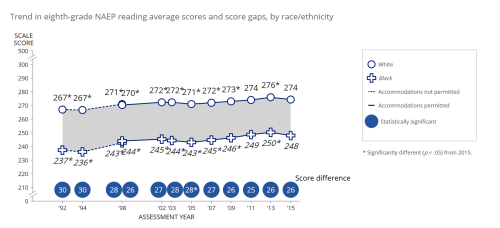






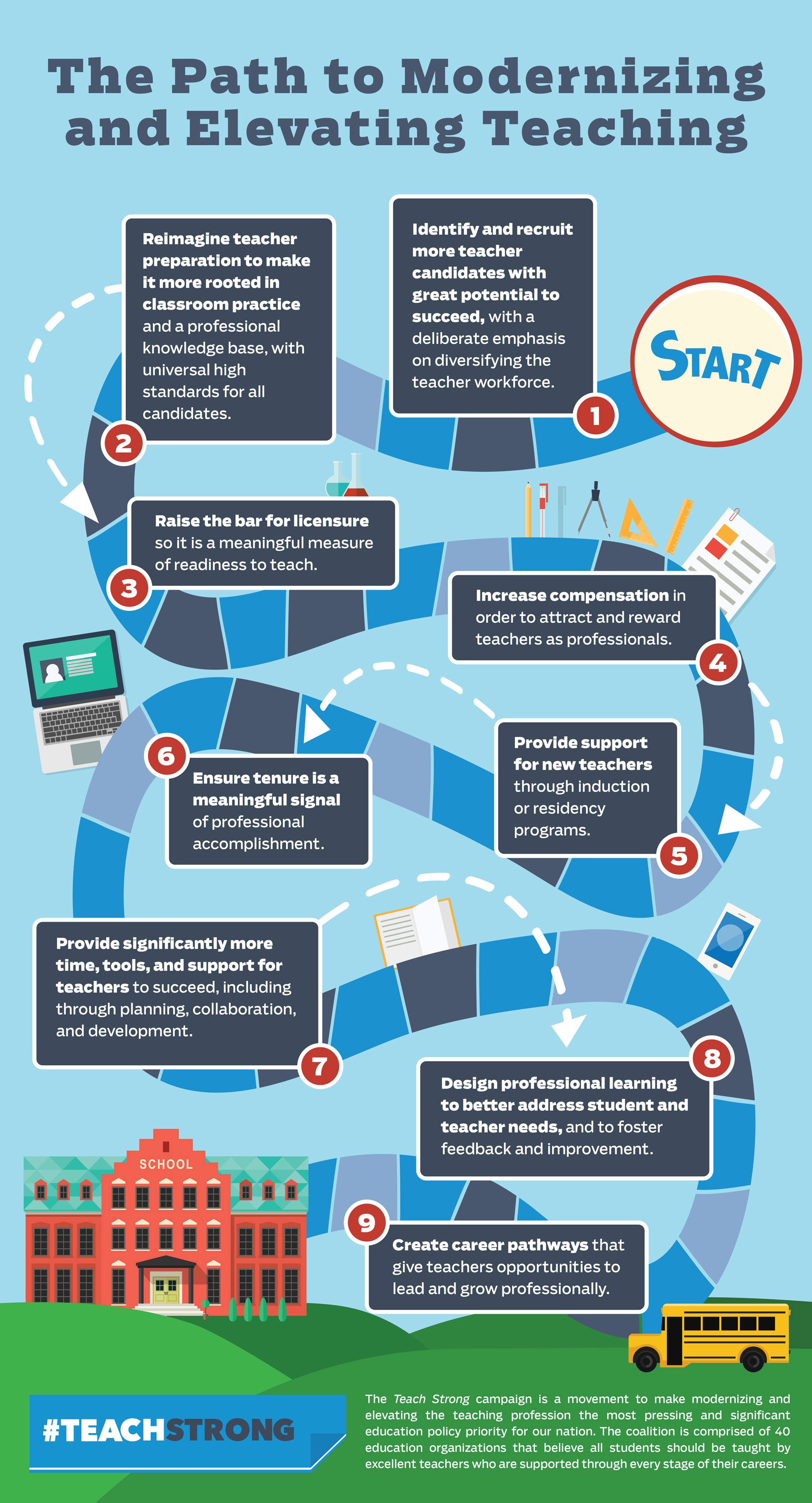




 Daniel Katz, Ph.D.